
Design Thinking: A Guide for Product Managers
Learn how the design thinking process helps product managers solve real user problems. Explore practical examples, essential tools, and frameworks that work.


Table of Contents
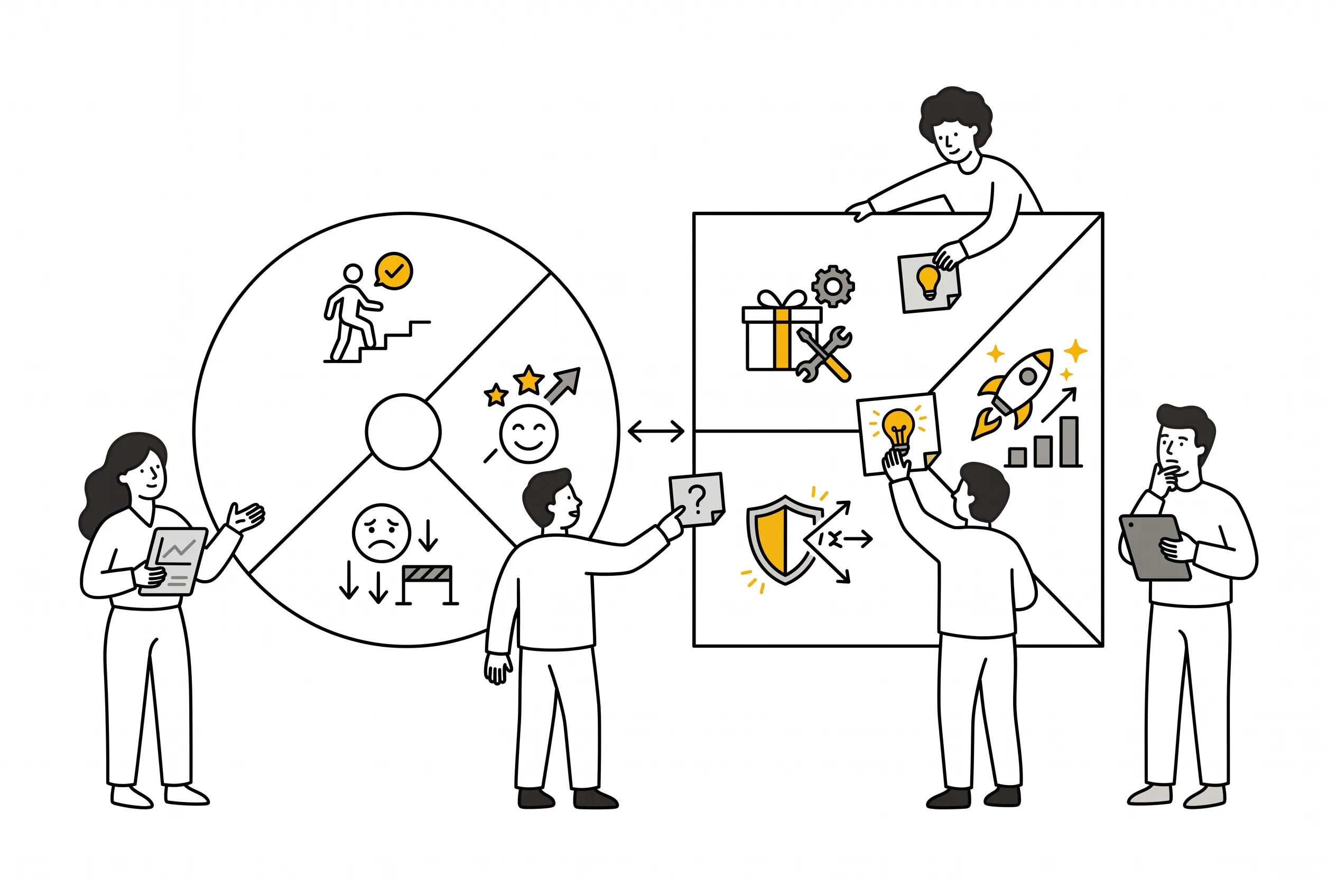
Design thinking is a human-centered approach to innovation that allows product teams to solve complex problems by prioritizing the actual needs of users. Rather than relying on rigid, historical data or top-down assumptions, this methodology encourages continuous experimentation and deep empathy. It fundamentally changes how organizations approach digital product development and problem-solving.
As a product professional, your biggest risk is building a brilliant solution for a problem that does not actually exist. This framework actively mitigates that risk by forcing you to validate your ideas directly with the people who will use your product. It shifts your team's focus from purely technical feasibility to human desirability and long-term business viability.
In this article, we will explore how product managers can leverage this mindset to build better software and drive meaningful user adoption. We will break down practical applications, the essential methods used to uncover hidden user friction, and how to measure the real business impact of a truly user-centric product strategy. By the end, you will understand how to integrate these principles into your daily workflows.
Mastering the Design Thinking Process
The design thinking process is not a strict, linear pipeline but rather a fluid, highly iterative loop. It typically moves through five core phases: empathizing with users, defining the core problem, ideating potential solutions, building rapid prototypes, and testing those concepts in the real world. For product managers, this means you might jump from testing a high-fidelity prototype straight back to the empathy phase if you realize your initial problem definition was fundamentally flawed. This inherent flexibility is exactly what makes the methodology so incredibly powerful for fast-paced digital product development. Academic literature from foundational Stanford design research emphasizes that framing the right question is often much more challenging, and vastly more important, than finding the answer itself.
When teams rush to code and skip the vital empathy and definition phases, they usually end up with technically impressive features that nobody actually wants or knows how to use. To prevent this costly mistake, you must spend dedicated time observing users in their natural environments, rather than just asking them what they want in sterile, theoretical focus groups. People often create workarounds for broken software without even realizing it, and silent observation is the only way to catch those behaviors. By understanding their unarticulated needs and daily frustrations, you can formulate clear, actionable problem statements that guide your engineering and design teams effectively.
During the testing phase, the objective is not to prove that your solution is right, but to discover where it is wrong. By placing rough, low-fidelity prototypes into the hands of real users, you gather immediate, unfiltered feedback. This rapid validation loop prevents months of wasted engineering effort and ensures that the final product truly resonates with the target market. Incorporating this rigorous approach requires a deep cultural shift within the organization, actively moving away from a feature-factory mindset toward an outcome-driven culture. This transition requires patience and executive buy-in, but the resulting alignment drastically reduces wasted development cycles and boosts team morale.
Real-World Design Thinking Examples
Examining practical design thinking examples is the absolute best way to understand how these abstract concepts translate into successfully shipped products. At Product People, we frequently deploy these exact methods when we encounter organizations suffering from mysteriously high churn rates and painfully low user engagement. We use our first-hand experience to cut through internal politics and refocus the entire company on the end user. We recently worked with a complex B2B SaaS company in the global logistics sector that was struggling with a massive new dashboard feature. Their internal engineering team had spent nearly six months building highly advanced data visualization tools, but user adoption remained stagnant below five percent.
We stepped in and immediately halted all new feature development to focus entirely on direct user observation. By conducting contextual inquiries—literally watching the dispatchers use the software during their chaotic, high-stress shifts—we realized the new dashboard was completely misaligned with their actual daily workflow. The dispatchers did not have the time or need for deep analytical charts; they desperately needed high-contrast, immediate alerts for delayed shipments. We utilized standard product discovery frameworks to quickly pivot the entire team's approach. We co-created low-fidelity paper prototypes with the dispatchers themselves and iterated on the designs daily based on their direct feedback.
This direct, hands-on intervention resulted in a streamlined, alert-driven interface that increased daily active usage by over sixty percent in just two short months. This scenario highlights the core value of human-centered innovation: it cuts through internal corporate biases and forces the product to adapt to the user's harsh reality, rather than expecting the user to magically adapt to the software. It proves that the best products are co-created with the market. When you apply these methodologies to your own roadmap, look for areas where user behavior completely contradicts your internal analytics. These anomalies are often the perfect candidates for deep qualitative research and rapid prototyping, yielding the highest return on your investigative efforts.
Essential Design Thinking Tools and Frameworks
Executing this methodology effectively across a large organization requires a robust set of design thinking tools tailored to your specific team's context. These are not merely software applications or digital whiteboards; they are carefully structured exercises designed to facilitate deep collaboration and trigger breakthrough thinking. When utilized correctly, these frameworks break down hierarchical barriers and ensure that the best ideas win, regardless of who suggested them.
Common instruments product teams rely on include:
- Empathy Maps: Visual frameworks that help teams synthesize raw observational data and uncover hidden user motivations or frustrations.
- User Journey Maps: Diagrams that visualize the emotional highs and lows of a customer's entire experience across all touchpoints in your product ecosystem.
- "How Might We" (HMW) Statements: Prompts that allow product managers to seamlessly reframe daunting technical roadblocks into open-ended opportunities for creative innovation.
- Crazy Eights: A fast-paced sketching exercise that forces participants to bypass their inner critic and generate a high volume of diverse ideas in just eight minutes.
However, simply having access to these frameworks does not guarantee success if the underlying organizational mindset remains resistant to change. The true business value of design relies heavily on cross-functional integration, meaning product managers, engineers, and business stakeholders must all actively participate in the ideation and testing phases. When internal teams struggle to break out of their operational silos, bringing in external design thinking consulting can provide the necessary objective facilitation.
An outside perspective often uncovers massive blind spots that internal teams have grown completely accustomed to ignoring over time. Whether operating in the fast-paced private sector or when applying design principles to public service delivery, external experts or interim product managers can actively model the right behaviors. They champion rapid, fearless prototyping, foster a psychologically safe environment for failed experiments, and ultimately train the internal staff to sustain a fiercely user-centric culture long after the initial consulting engagement comes to an end.
Frequently Asked Questions
Conclusion
Embracing a human-centered approach fundamentally transforms how product teams operate, shifting the focus from shipping arbitrary features to solving genuine user problems. By continuously iterating based on real-world feedback, you significantly reduce the risk of product failure and drive sustainable business growth.

Interested in working with us?
Our Interim/Fractional Product Managers, Owners, and Leaders quickly fill gaps, scale your team, or lead key initiatives during transitions. We onboard swiftly, align teams, and deliver results.
Read More Posts
October 5, 2026
Value Proposition: What It Is and How to Write One That Sells
A value proposition tells a specific customer why your product beats their current option. Learn the meaning, canvas examples, and how to test yours.
July 17, 2026
Product Stickiness: Definition, Metrics, and How to Improve It
Product stickiness measures how often users return to your product. Learn the DAU/MAU formula, real benchmarks, and how to improve it.
October 1, 2026
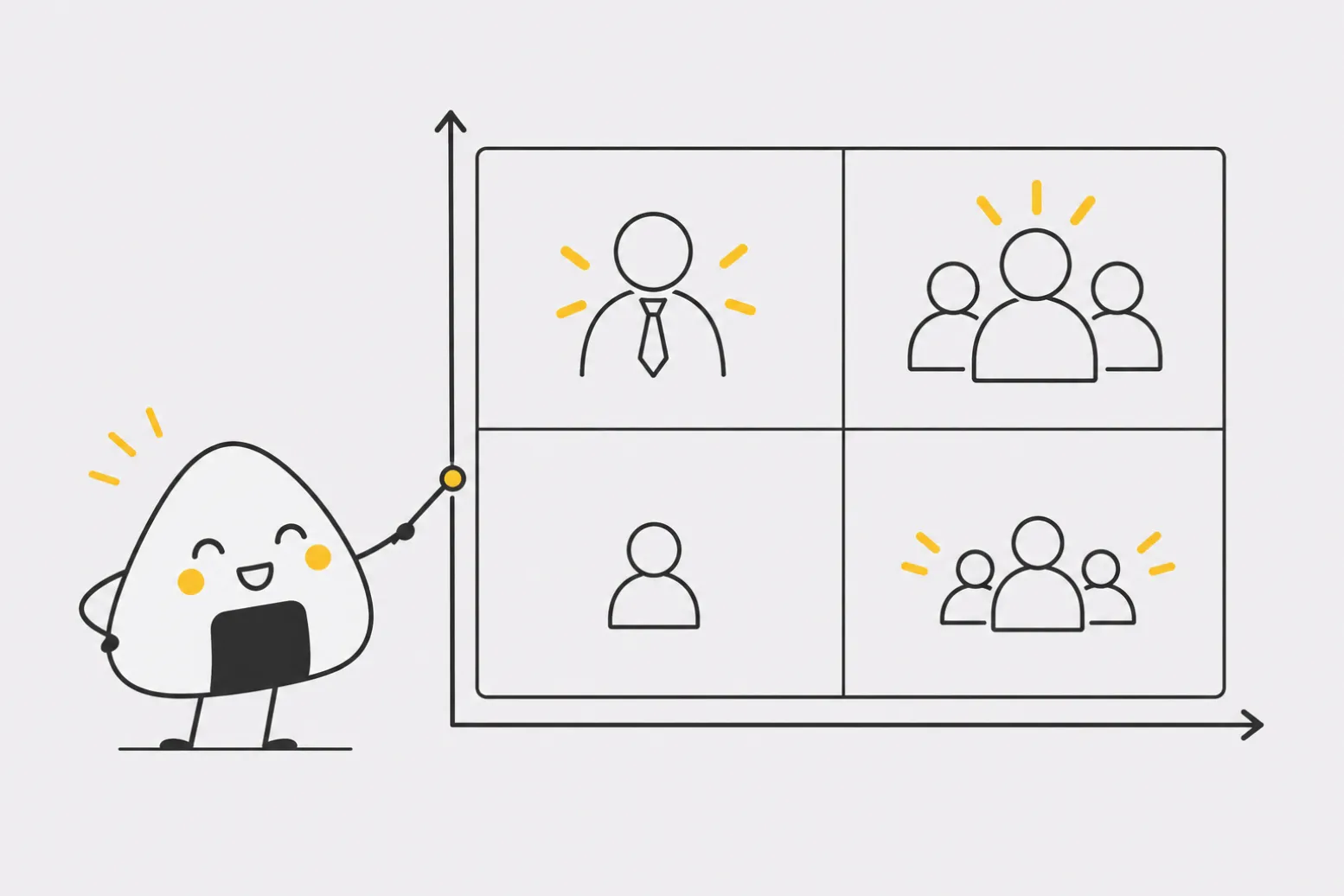
How to Map and Manage Stakeholders with Mendelow's Matrix
Mendelow's matrix sorts stakeholders by power and interest. Learn the four quadrants, see a worked product example, and avoid the common mapping mistakes.