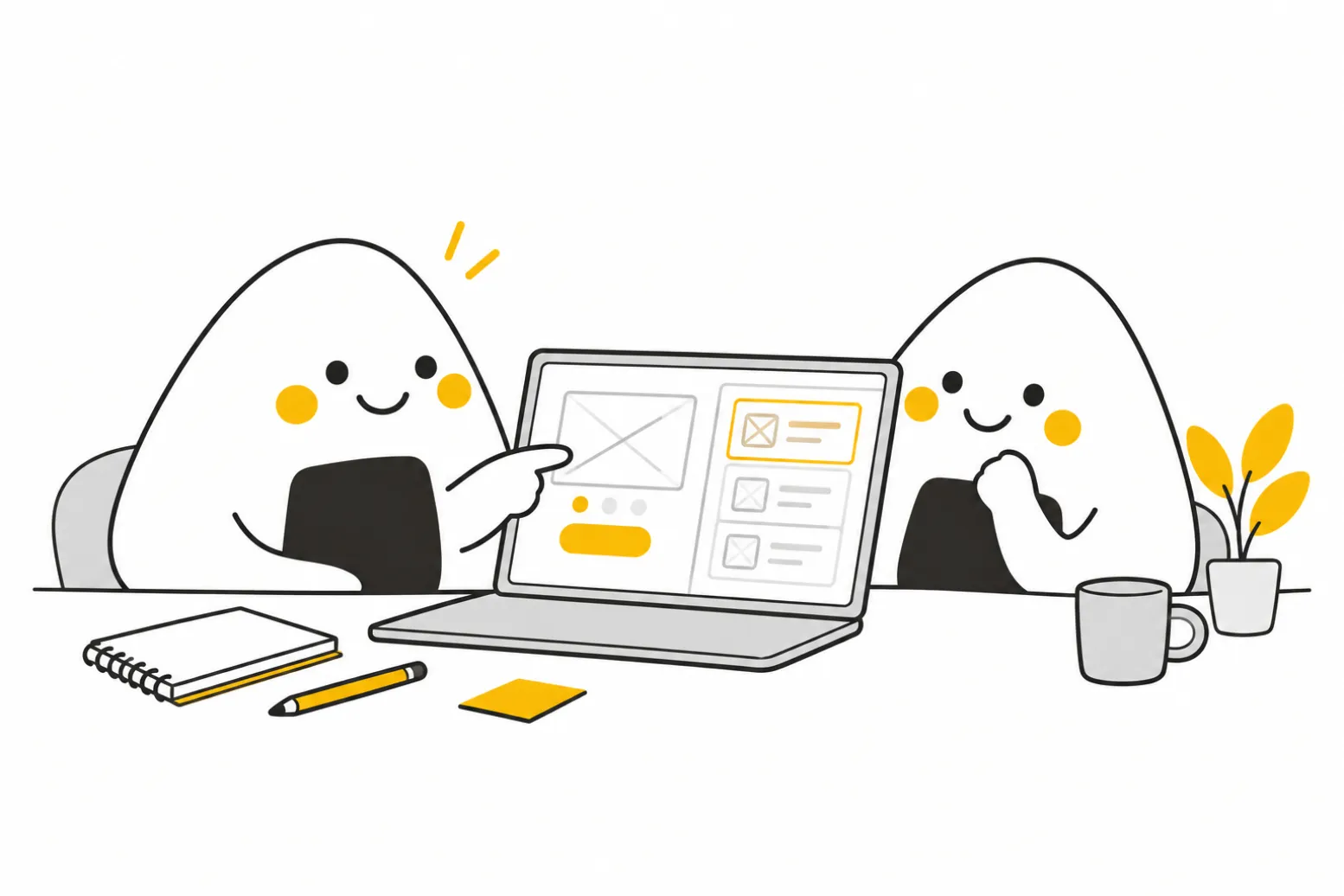

Unlocking the Synergy of UI and UX Design for Product Success
Master UI and UX design with our expert guide. Learn the UX design process, core principles, and how UI and UX designers drive ROI for product teams.



Table of Contents
Unlocking the Synergy of UI and UX Design for Product Success
UI and UX design is the strategic process of creating digital products that are both visually appealing and highly functional to ensure a seamless user experience. While often used interchangeably, these two disciplines represent different layers of the product development lifecycle, focusing on how a user interacts with an interface and how they feel during that journey. This article explores the foundational principles of design, the specific roles involved in the process, and how product teams can leverage these frameworks to build market-leading solutions.
Understanding the nuances between these fields is essential for product managers and designers who want to move beyond "making things look pretty" toward building high-impact products. We will cover the core definitions, the iterative workflows used by top-tier teams, and the business value of investing in design maturity. By the end of this guide, you will have a clear roadmap for integrating design excellence into your product strategy.
Defining the Core Concepts and UI and UX Design Meaning
To build effective digital products, one must first grasp the UI and UX design meaning as two distinct but deeply interconnected pillars of the user experience. UX, or User Experience, is the broader umbrella that encompasses every touchpoint a person has with a company, its services, and its products. It is rooted in cognitive psychology and anthropology, focusing on solving user problems and optimizing the logic of a journey. On the other hand, UI, or User Interface, is the specific asset the user interacts with—the buttons, spacing, typography, and color schemes that translate a product's logic into a tangible, visual form.
When we look at the business impact of these disciplines, the data is clear: design is no longer a "nice-to-have" but a significant driver of ROI. According to research on the business value of UI and UX design, companies that excel in design grow their revenues and shareholder returns at nearly twice the rate of their industry peers. This growth stems from the fact that well-designed products reduce user friction, lower customer support costs, and increase retention rates. For product leaders, this means that every design decision should be backed by user data and aligned with specific business KPIs.
At Product People, we often see teams struggle when they treat UI as an afterthought or "skinning" the product at the end of the development cycle. In reality, the most successful products are built when interface design is informed by deep UX research from day one. This requires a shared vocabulary where the team understands that UX is the "why" and "how" of the product’s navigation, while UI is the "what" that makes that navigation intuitive. By balancing these two, teams can avoid the common pitfall of creating a beautiful interface that is impossible to navigate or a functional tool that users find visually repelling.
- UX Focus: User research, wireframing, information architecture, and usability testing.
- UI Focus: Visual design, interaction design, design systems, and responsive layouts.
- Intersection: Prototyping and accessibility standards that ensure the product works for everyone.
- Key Heuristics: Implementing the ten usability heuristics in the UX design process to ensure the system status is always visible and matches the real world.
The Strategic Role of UI and UX Designers in the Product Lifecycle
The most effective UI and UX designers operate as strategic partners who bridge the gap between user needs, technical feasibility, and business goals. In a high-performing product squad, these designers do not work in a vacuum; they collaborate closely with Product Managers to validate hypotheses and with Engineers to ensure that the designs are implementable. Their role involves a mix of analytical thinking—identifying patterns in user behavior—and creative execution—crafting interfaces that evoke the right emotional response from the user.
A critical part of their work is navigating the ux design process, which typically follows the "Double Diamond" model: Discover, Define, Develop, and Deliver. This process starts with empathy, where designers conduct interviews and observe users in their natural environments. Once the problem is defined, the team moves into the ideation phase, creating low-fidelity wireframes to test logic before any high-fidelity visual work begins. This iterative approach ensures that the team doesn't spend weeks polishing a feature that users don't actually need or understand. And even the best UI cannot save a product if the underlying user journey is broken, a concept further explored in our guide on UI and UX design for seamless adoption.
- User Research: Utilizing interviews, surveys, and heatmaps to gather data.
- Information Architecture: Mapping out how content is organized so users can find what they need without cognitive load.
- Prototyping: Building interactive models to simulate the user experience before committing to code.
- Visual Consistency: Maintaining a design system that ensures every button and icon feels like part of a cohesive brand.
- Accessibility (a11y): Ensuring the product is usable by people with various disabilities.
- Feedback Loops: Regularly presenting designs to stakeholders and users to gather critique.
Master the Basics of UX Design to Drive User Engagement
Mastering the basics of ux design requires a shift from thinking about "features" to thinking about "outcomes." The foundation of any good user experience is the ability to reduce cognitive load—the amount of mental effort required to use a product. When a user has to stop and think about how to perform a basic task, the design has failed. To prevent this, designers rely on psychological principles known as the basics of UX design laws, such as Jakob’s Law, which states that users spend most of their time on other sites, meaning they prefer your site to work the same way as all the others they already know.
In practice, this means adhering to established design patterns rather than trying to reinvent the wheel for standard interactions like "Search" or "Checkout." By following these conventions, you create a sense of familiarity and trust. Furthermore, the UX process must prioritize accessibility and inclusivity. A product that is only usable by a narrow demographic is a product with a limited market cap. Designing for edge cases—like users with slow internet connections or those using screen readers—often results in a better experience for everyone, as it forces the team to simplify and clarify the core value proposition.
Successful product teams treat design as a continuous loop rather than a linear project with a start and end date. They use A/B testing to compare different versions of a screen, track click-through rates on key CTAs, and conduct regular usability audits to find where users are getting stuck. This data-driven approach allows the design to evolve alongside the user's changing needs. Ultimately, the goal is to create a "frictionless" experience where the interface disappears, and the user can achieve their goals with minimal effort and maximum satisfaction.
- Hick's Law: The time it takes to make a decision increases with the number of choices, directly impacting the basics of ux design conversion metrics.
- Fitts's Law: The time to acquire a target is a function of the distance and size of the target, which is vital for mobile ui and ux designers.
- Serial Position Effect: Users have a tendency to best remember the first and last items in a series.
- Aesthetic-Usability Effect: Users often perceive aesthetically pleasing design as design that’s more usable.
FAQs
Conclusion
The synergy between UI and UX is what transforms a functional tool into a product people love to use. By focusing on data-driven research and visual clarity, you can build experiences that solve real problems.
Interested in working with us?
Our Interim/Fractional Product Managers, Owners, and Leaders quickly fill gaps, scale your team, or lead key initiatives during transitions. We onboard swiftly, align teams, and deliver results.
Read More Posts
September 30, 2026
What Product Prototypes Are and When to Build One
Product prototypes turn ideas into testable models before you build. Learn what they are, the types teams use, and when to build one.
September 29, 2026
When Autonomy Turns Discovery Into a Trap
Too much autonomy and too much discovery can leave product teams stuck. Hasan Naqvi explains how to spot the trap and get back to making decisions.
September 28, 2026
You Can't Ask Product Managers to Think Like Owners and Hide the Numbers
Leaders want Product Managers to think like owners but hide the numbers. Learn why that fails and how to build a simple business case without full access.