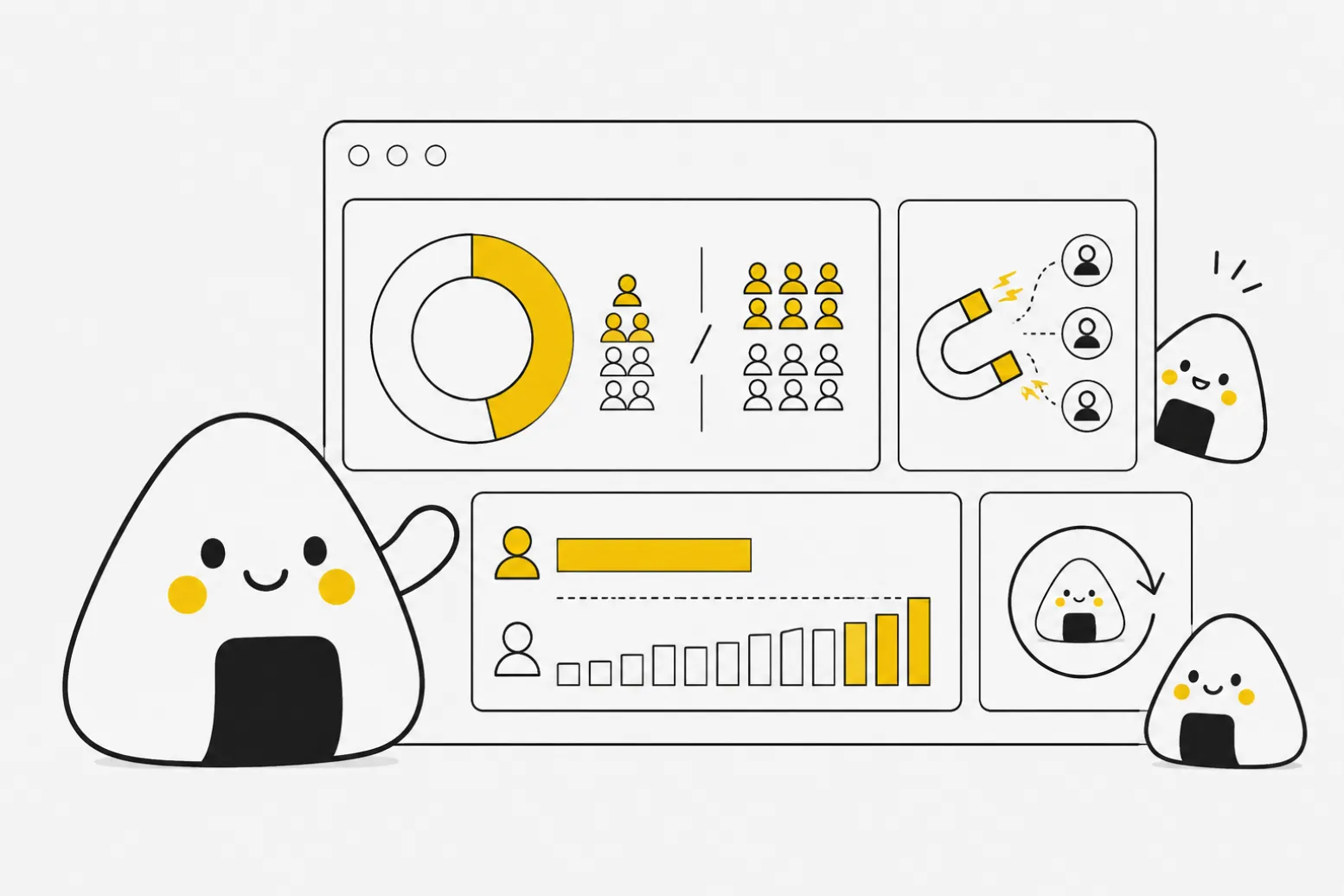

Customer Journey: Optimize Digital Experiences Effectively
Master the customer journey. Learn how to map user touchpoints, reduce friction, and align teams around digital experiences.


Table of Contents
Every successful product strategy is built upon a deep understanding of the customer journey. This foundational concept represents the complete lifecycle of a user's interactions with your brand, from the initial moment of discovery through to long-term retention and advocacy. By visualizing this path, product teams can shift their focus away from isolated feature launches and instead build holistic, user-centric experiences.
As a product professional, your primary objective is to solve real market problems while driving measurable business outcomes. Relying purely on assumptions about how users navigate your application is a guaranteed way to introduce friction and inflate churn rates. When you systematically analyze how people move from one touchpoint to the next, you gain clarity on exactly where they extract value and where they abandon the process.
In this article, we will explore the critical components of mapping user experiences and how you can apply these insights to your daily product decisions. We will cover the core phases of user progression, practical ways to visualize these pathways, and how aligning cross-functional teams around this framework ultimately builds better products.
Optimizing the Digital Customer Journey
In today's interconnected landscape, managing the digital customer journey requires tracking how users transition across multiple platforms, devices, and interfaces. A user might first discover your product through a mobile social media ad, evaluate your pricing page on a desktop browser days later, and finally convert via an email link. Product teams must ensure that the transition between these digital touchpoints feels seamless and contextual. If a user encounters a fragmented experience, such as having to re-enter information they already provided on a different screen, their trust in the product immediately diminishes. To prevent this, product managers must look beyond their specific domain and collaborate closely with marketing, sales, and customer success to create a unified narrative. Foundational research on the consumer decision journey highlights that modern users do not follow a simple, linear funnel; instead, they navigate a complex loop of evaluation, purchase, and post-purchase experience that demands continuous optimization.
At Product People, we frequently step into organizations where a disjointed user experience is directly bottlenecking revenue. We use our first-hand experience to help teams break down silos and identify the exact moments where users drop off. A clear example of this occurred when we worked with a B2B SaaS company specializing in financial compliance. The company was driving massive top-of-funnel traffic, but their onboarding completion rate was stuck below 15%. We realized the problem wasn't the core product value, but rather the sheer overwhelming friction in their digital touchpoints. By actively mapping the steps, tools, and impact of their existing flow, we identified a critical authentication step that was forcing users out of the app and into a convoluted email verification loop. We redesigned the onboarding sequence to keep users entirely within the native application, introduced a progress indicator, and delayed non-essential data collection until after the user experienced the product's core value. This targeted intervention resulted in a 45% increase in fully activated accounts within a single quarter.
When you evaluate your own product's digital pathways, you must prioritize analytics and qualitative feedback at the points of highest friction. Use heatmaps, session recordings, and drop-off funnels to identify exactly where users hesitate. It is essential to remember that you are not just optimizing screen layouts; you are optimizing the cognitive load required to move from one step to the next. The best product teams treat every screen as a continuous conversation with the user, ensuring that the interface always provides clear guidance on what action to take next.
Defining Key Customer Journey Stages
To effectively manage user progression, product teams must break down the overall experience into distinct customer journey stages. This segmentation allows teams to assign specific metrics, define ownership, and tailor their features to match the user's mindset at that exact moment. While the nuances vary depending on your business model, nearly all user pathways can be categorized into five fundamental phases. Understanding what a user needs during each phase is the key to delivering the right value at the right time.
- Awareness: The user realizes they have a problem and begins searching for solutions. At this stage, your product must communicate its core value proposition clearly and concisely without overwhelming the user with technical details.
- Consideration: The user is actively comparing your product against competitors. Product teams support this stage by providing transparent pricing, easy-to-read feature comparisons, and accessible case studies or sandbox environments.
- Conversion (or Purchase): The pivotal moment where a user decides to commit, whether by signing up for a freemium account or paying for a subscription. The product goal here is absolute frictionless execution—removing unnecessary form fields and clarifying terms.
- Retention: After the initial conversion, the user must experience the product's value quickly (often called the "Aha!" moment). This stage requires exceptional onboarding, intuitive navigation, and proactive customer support to prevent early churn.
- Advocacy: The final stage where loyal users recommend your product to others. Features like referral programs, easy sharing capabilities, and community forums thrive in this phase.
Aligning your product roadmap to these specific phases ensures that you are not over-investing in acquisition features while ignoring critical retention mechanics. According to industry standards on the core principles of journey mapping, successful teams build a shared vocabulary around these stages to prevent departmental misalignment. For example, if product management focuses entirely on the Retention stage while sales focuses purely on Conversion, the resulting user experience will feel disjointed. By establishing clear definitions and success metrics for every phase, you create a cohesive environment where every feature release directly supports the user's natural progression.
Building a Customer Journey Map Example
The most effective way to operationalize this framework is to create a tangible visual artifact. Reviewing a strong customer journey map example helps product teams transition from theoretical discussions to actionable backlog items. A comprehensive map is not just a flowchart of screens; it is a complex matrix that plots user actions against their emotional state, pain points, and the internal systems required to support them. By laying out the entire lifecycle on a single canvas, cross-functional teams can immediately spot gaps in the user experience that would otherwise remain hidden within department-specific data dashboards.
When building your map, start by selecting a specific user persona and a clear scenario, such as a first-time user trying to complete their first core task. Along the horizontal axis, plot out the chronological steps the user takes. Along the vertical axis, track their explicit actions, the touchpoints they interact with (like an app, an email, or a push notification), their likely emotional state (frustration, confusion, delight), and the specific pain points they encounter. This level of detail is crucial. Academic research regarding understanding customer experience throughout the customer journey emphasizes that capturing the emotional and cognitive responses of users—not just their clicks—is what drives true service innovation. Beneath these user-centric layers, plot the "backstage" actions: the APIs that need to fire, the support documentation required, and the internal teams responsible for that specific moment.
This holistic artifact is also where the intersection of product and customer journey marketing becomes incredibly powerful. While product managers typically own the in-app experience during the retention and conversion phases, marketing teams own the initial awareness and re-engagement loops. A well-constructed map forces these two disciplines to align their messaging. If marketing promises a simple, automated solution in an ad campaign, but the product's onboarding flow requires heavy manual configuration, the map will highlight this jarring disconnect. Ultimately, the map serves as a living document. It should be updated regularly as new features are released, user behaviors shift, and market dynamics evolve, ensuring your team always builds with the complete user experience in mind.
FAQs
Ending Note
Mastering the complete lifecycle of your users is an ongoing process that requires deep empathy and rigorous data analysis. When you stop viewing your product as a collection of features and start viewing it as a continuous pathway, you unlock the ability to drive meaningful growth and long-term loyalty.

Interested in working with us?
Our Interim/Fractional Product Managers, Owners, and Leaders quickly fill gaps, scale your team, or lead key initiatives during transitions. We onboard swiftly, align teams, and deliver results.
Read More Posts
July 17, 2026
Product Stickiness: Definition, Metrics, and How to Improve It
Product stickiness measures how often users return to your product. Learn the DAU/MAU formula, real benchmarks, and how to improve it.
October 1, 2026
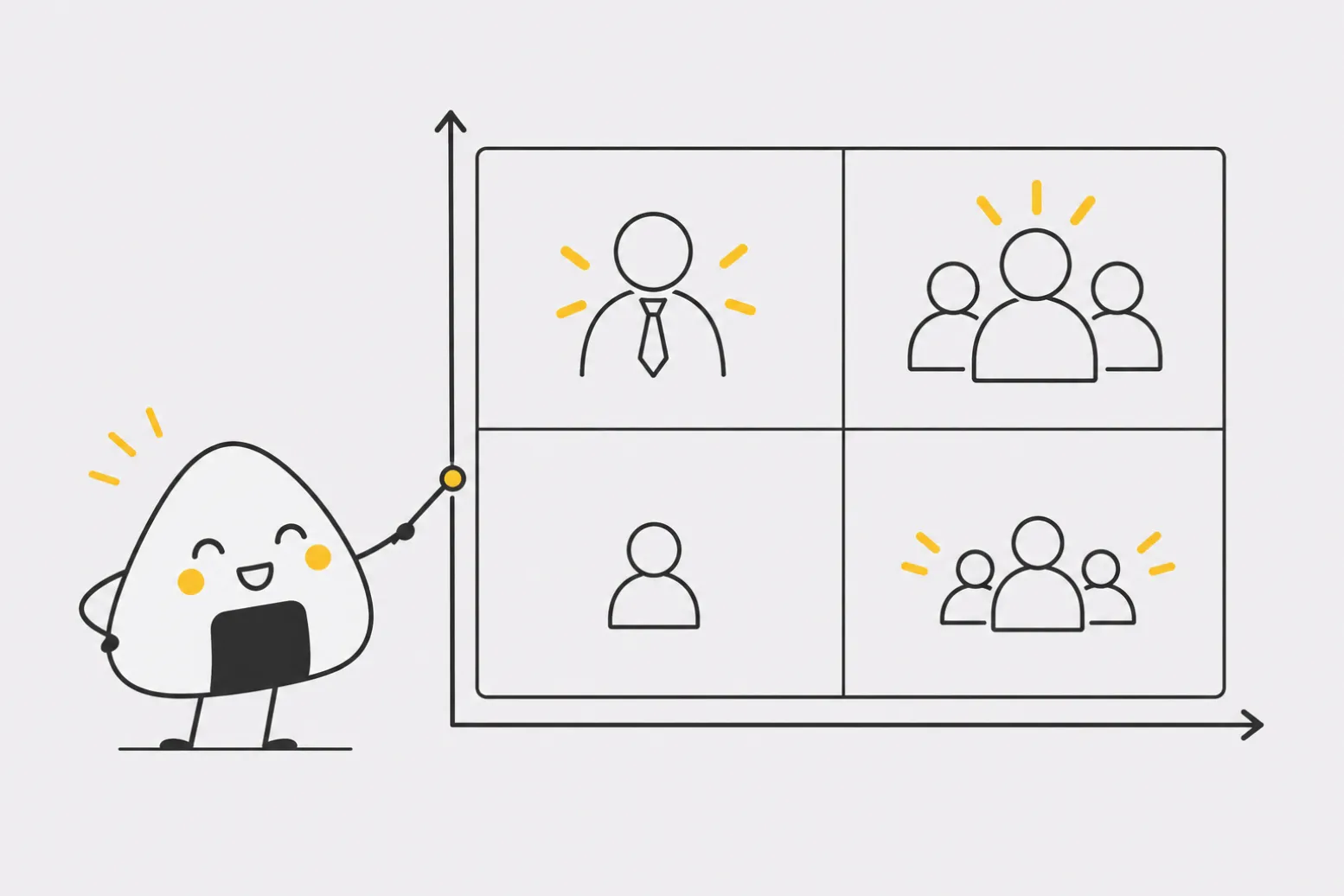
How to Map and Manage Stakeholders with Mendelow's Matrix
Mendelow's matrix sorts stakeholders by power and interest. Learn the four quadrants, see a worked product example, and avoid the common mapping mistakes.
July 3, 2026
Product Management Explained: Roles, Salary, and Skills
Product management defines what to build and why. Learn the role, salary ranges, interview prep, and books every product manager should know.