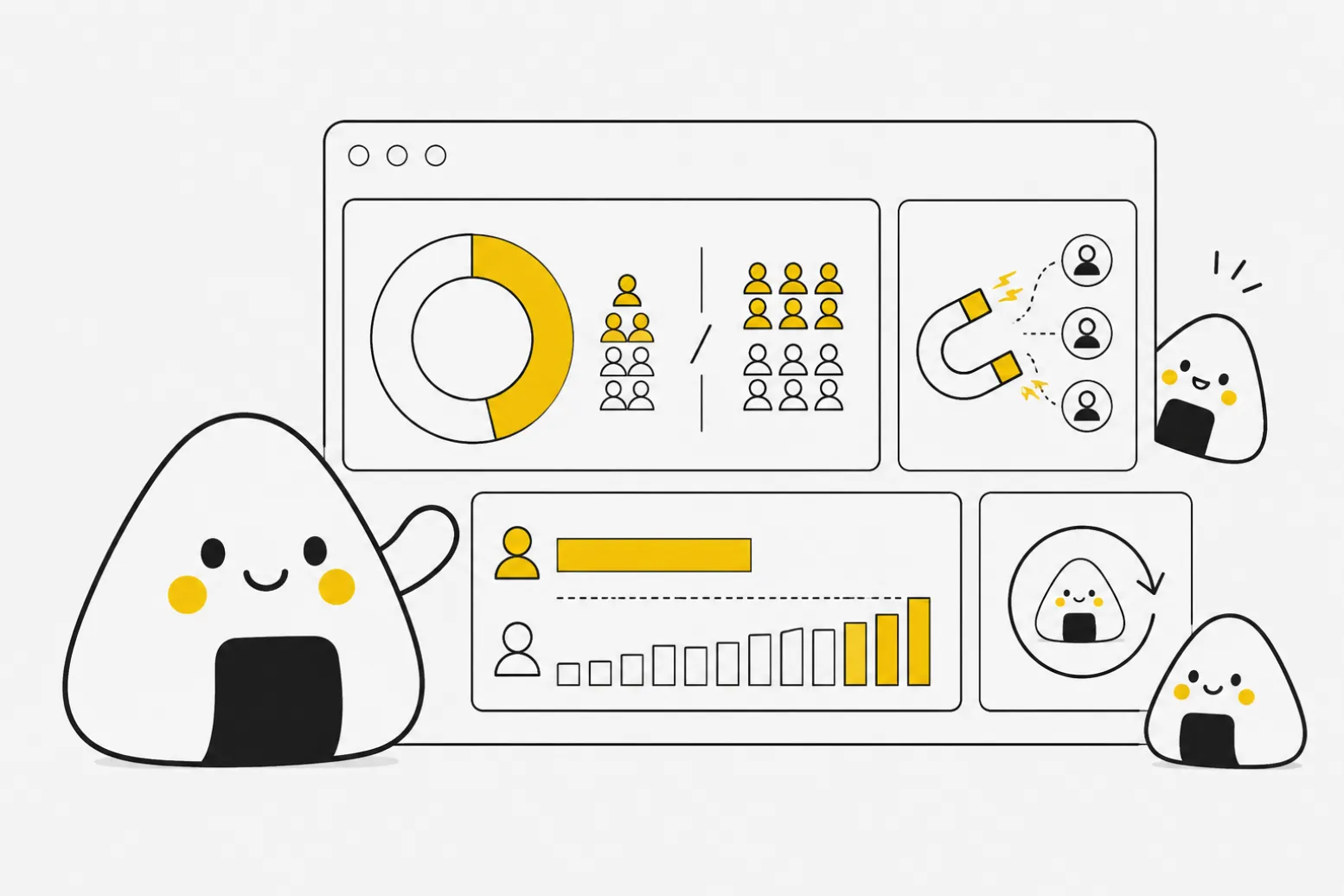

Inspired Product Management: Build Products Customers Love
Learn how inspired product management empowers teams to build products customers love. Discover continuous discovery, risk mitigation, and proven strategies to cut engineering waste by 50%.



Table of Contents
To build truly inspired software, product teams must fundamentally change how they approach problem-solving and value creation. In the modern tech industry, this concept goes far beyond a sudden burst of creative motivation. It represents a highly systematic, proven methodology for designing digital solutions that customers genuinely love and that actively drive revenue for the business.
As a product professional, your greatest risk is dedicating months of expensive engineering effort to a feature that ultimately fails in the market. Relying on top-down executive mandates or unvalidated customer requests is a guaranteed path to wasted resources and team burnout. Instead, you need a rigorous, structured framework to clearly separate the process of figuring out what to build from the process of actually building it.
In this article, we will explore the foundational tenets of world-class product creation. We will break down how to mitigate critical business risks before writing a single line of code, review the financial return on investment of rigorous validation, and discuss how to empower your engineering teams to deliver exceptional user experiences.
The Core Principles of the Inspired Book
When discussing modern tech development, the conversation inevitably turns to the inspired book by Marty Cagan, which serves as the definitive manual for building successful digital products. The core premise is that the vast majority of companies operate as completely reactive "feature factories." These organizations mindlessly churn out roadmap items dictated by internal stakeholders without ever stopping to question if those items solve actual user problems. This outdated, command-and-control approach severely limits technological innovation and almost guarantees a disjointed, frustrating user experience.
To escape this trap, organizations must adopt an entirely different strategic mindset. They must shift from measuring success by the sheer volume of features shipped (output) to measuring success by the positive changes in actual customer behavior (outcomes). This transition requires deep, cross-functional collaboration from the very beginning of a new initiative. In this successful model, product managers, lead engineers, and product designers operate as a cohesive triad. They tackle complex business problems together rather than handing off requirements in a sequential, waterfall fashion.
By giving teams the autonomy to explore different solutions, companies unlock the true creative and technical potential of their workforce. This philosophy insists that the best, most lucrative ideas rarely come from the executive suite; they come from the practitioners who are closest to the underlying technology and the daily frustrations of the customers. Embracing this structural shift is difficult and requires significant executive buy-in, but it is the only reliable way to create technology that genuinely alters the market landscape.
Mastering Continuous Product Discovery
The heartbeat of this entire development methodology is rigorous product discovery. According to insights from the Silicon Valley Product Group, discovering the right product to build is a distinctly different process than delivering it to the market. Before any heavy engineering begins, product teams must actively mitigate four critical risks. They must address value risk to ensure customers will actually buy it, usability risk to guarantee users can figure out how to use it, feasibility risk to confirm engineers can actually build it, and business viability risk to ensure the solution aligns with company constraints.
At Product People, we frequently deploy these exact validation techniques when clients are paralyzed by a massive, unvalidated backlog. We recently worked with a rapidly scaling B2B financial services company that wanted to spend six months building a highly complex predictive analytics dashboard. Using our first-hand experience, we immediately paused all backend development and ran a rapid, two-week discovery sprint. By presenting low-fidelity, clickable prototypes directly to their enterprise clients, we quickly realized the users did not want or trust predictive analytics; they simply wanted automated, scheduled data exports in a CSV format. This targeted intervention mitigated severe value risk and saved the company half a year of entirely wasted engineering effort.
Convincing traditional executives to fund this exploratory phase can be challenging, but the financial data supporting it is absolutely undeniable. A comprehensive Total Economic Impact study of IBM's design thinking practice by Forrester Research proves that teams prioritizing rigorous user validation reduce their overall time-to-market by 33 percent. Even more importantly, this methodology cuts the risk of failed development projects by a massive 50 percent. This definitively proves that upfront exploration does not slow teams down; it actually accelerates revenue generation by actively preventing expensive engineering waste.
Transitioning to Inspired Product Management
Evolving your organization to practice inspired product management requires fundamentally restructuring how you empower your daily workforce. A central thesis of this approach is moving away from dictating specific solutions and instead assigning teams clear business problems to solve. When you hand an engineering squad a predefined list of features to code, you strip away their autonomy, their creativity, and their ultimate accountability for the result. However, when you give an "empowered product team" a clear problem—such as reducing user onboarding drop-off by ten percent—they will invariably find a more elegant and highly technical solution than leadership ever could have predicted.
The operational reality of this empowered team structure is backed by some of the most respected, peer-reviewed data in the software industry. The Accelerate State of DevOps Report consistently shows that high-performing organizations—characterized by high team autonomy, clear goal alignment, and deep psychological safety—dramatically outpace their competitors. These elite teams are twice as likely to meet or exceed their commercial goals and experience a massive 7x lower change failure rate when shipping new products compared to low-performing, top-down organizations.
Building this culture requires strong leadership that is willing to step back, check their ego, and let the data guide decisions. It demands that product managers act as facilitators of innovation rather than mere project coordinators chasing Jira tickets. If your organization is struggling to make this critical transition, implementing a structured design thinking guide for product managers can help bridge the operational gap. By equipping your teams with the right tools to observe users, synthesize qualitative data, and prototype rapidly, you set the foundation for a truly autonomous and highly successful product organization.
FAQ
Conclusion
Transforming how your organization builds software is never an overnight process. It requires a relentless, ongoing commitment to understanding your users and the courage to stop building unvalidated features just to satisfy loud internal stakeholders.
By aggressively empowering your cross-functional teams and strictly separating discovery from delivery, you can dramatically reduce engineering waste and boost morale. Ultimately, this proven methodology allows you to stop guessing what the market wants and start building solutions that drive undeniable business value.

Interested in working with us?
Our Interim/Fractional Product Managers, Owners, and Leaders quickly fill gaps, scale your team, or lead key initiatives during transitions. We onboard swiftly, align teams, and deliver results.
Read More Posts
July 17, 2026
Product Stickiness: Definition, Metrics, and How to Improve It
Product stickiness measures how often users return to your product. Learn the DAU/MAU formula, real benchmarks, and how to improve it.
October 1, 2026
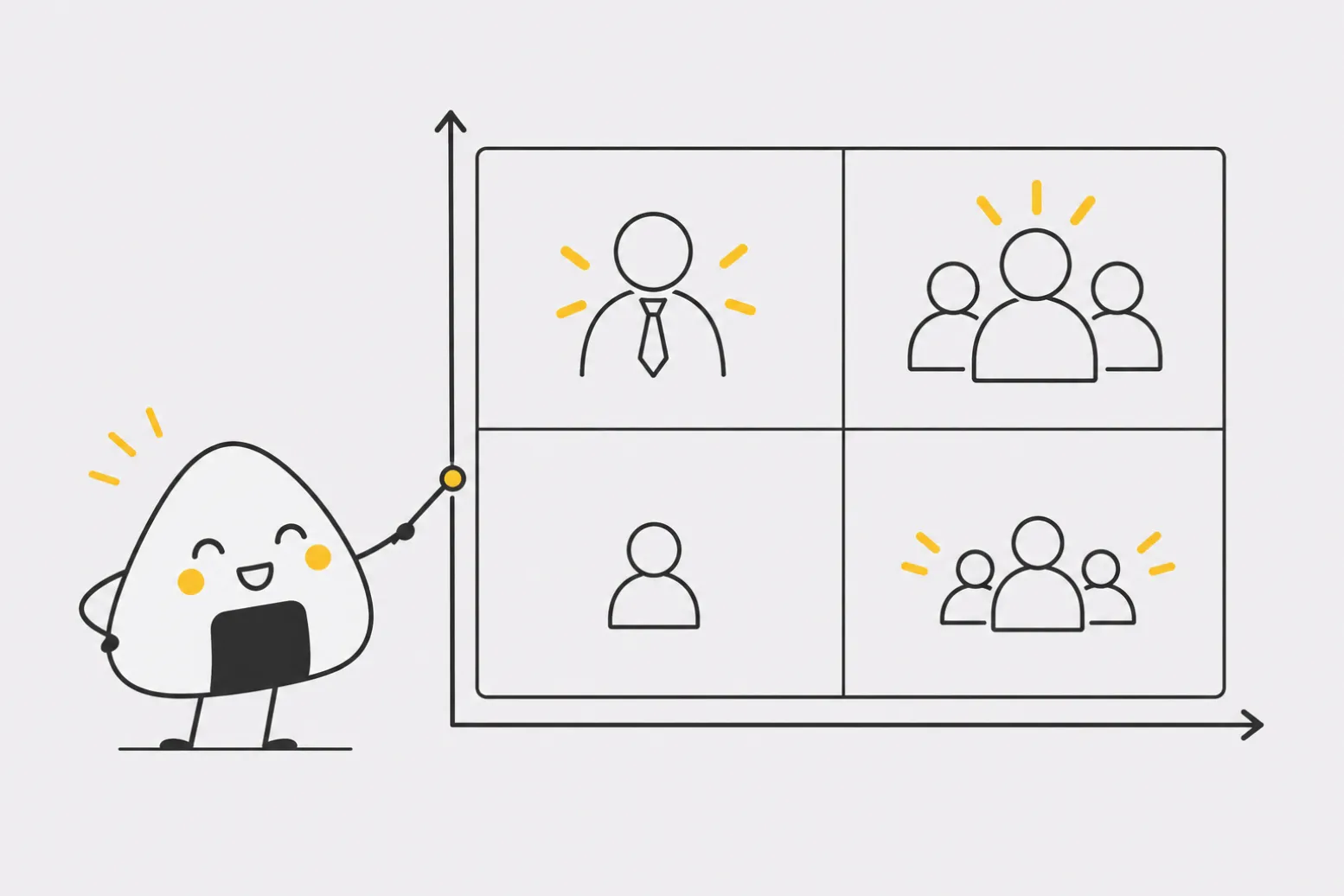
How to Map and Manage Stakeholders with Mendelow's Matrix
Mendelow's matrix sorts stakeholders by power and interest. Learn the four quadrants, see a worked product example, and avoid the common mapping mistakes.
July 3, 2026
Product Management Explained: Roles, Salary, and Skills
Product management defines what to build and why. Learn the role, salary ranges, interview prep, and books every product manager should know.