

Beyond the Laundry List: Aligning Sales and Product for Long-Term B2B Success
Learn how to build a sustainable, high-growth B2B organization by moving beyond transactional incentives and rewiring the reward circuits of the entire team.



Table of Contents
In the high-stakes world of B2B scaling, there is a recurring friction point that costs companies millions in hidden churn and wasted engineering hours: the systemic misalignment between Sales and Product.
On one side, you have a Sales team incentivized by the “hunt", the immediate dopamine hit of a closed deal. On the other hand, a Product team focused on scalability, often feeling like they are merely a feature factory servicing a laundry list of custom promises made during high-pressure negotiations. As a CEO and Product Advisor who has supervised over 50 missions, I’ve seen this play out repeatedly. The result is almost always the same: a short-term revenue spike followed by long-term operational debt and client dissatisfaction.
To build a sustainable, high-growth B2B organization, we must move beyond transactional incentives and rewire the reward circuits of the entire team.
The Economic Reality: Revenue vs. Profit in Year One
The most common systemic failure I observe is a Sales incentive structure tied exclusively to deal closure, with zero accountability for client retention. When Sales has no skin in the game regarding whether a client actually benefits from the product, they are effectively trained to optimize for the signature, not the solution.
This leads to the laundry list phenomenon: a set of custom features promised to a prospect to close a gap in the product. To the Sales rep, it’s a €100k win. To the organization, it’s often a net loss.
When we look at the numbers, the math is sobering. Many B2B companies fail to calculate the true Customer Acquisition Cost (CAC) against the actual profit (not just revenue) of the first year. If a €100k contract requires €80k in CAC and €50k in custom engineering hours to deliver promised gap features, you haven't won a client; you've acquired a toxic asset.
As Product Leaders, our role is to bring this financial rigor to the table. We must shift the conversation from "why we can't build this" to "what is the ROI of building this for one client vs. the scalability of building for many?"
Shifting from Sales Rep to Client Solution Partner
At Product People, we’ve addressed this by evolving the very definition of the role. Our sales team carries the title of Client Solution Partners. This isn't just semantics; it’s a psychological and operational pivot.
A Partner acts as a customer advisor. They understand that an unhappy client is a threat to the company’s most valuable asset: reputation and word-of-mouth. If we sell a solution that doesn't fit, we break trust. This makes future deals harder to close and erodes the brand.
To reinforce this, we align incentives with Customer Lifetime Value (CLV) thresholds. Our sales team receives bonuses not just for the initial close, but retention kickers when a client reaches specific spend or tenure milestones. When a salesperson knows their largest payout depends on the client being successful two years from now, they become the fiercest protectors of product integrity. They start downselling or even walking away from deals where the fit isn't right, because they know a mirage sale will never trigger that long-term bonus.
The Myth of High-Pressure Success
There is a pervasive industry best practice that Sales teams must be kept hungry through high-pressure, hit-the-quota-or-die environments. While this can generate short-term cash, it creates a burn-and-churn culture that treats both employees and clients as consumable fuel.
From my perspective, this is a choice of philosophy. You can build a company that makes money fast and exits, but leaves a trail of burnt-out talent and dissatisfied customers. Or, you can build a Sustainable Growth model.
In a sustainable model, we replace threat-based pressure with inspiration and challenge. We move away from anxiety-driven quotas toward goal-setting that fosters a growth mindset. This doesn't mean we aren't "hungry"; it means we are hungry for meaningful impact and long-term excellence, rather than just hitting a number at any cost.
Engaging the Silent Partners: Tech and Product
Finally, we cannot ignore the Tech and Product teams. For them to care about commercial success, they cannot be insulated from the business reality. To move them from producing output to driving outcomes, two elements must exist: Transparency and Agency.
- Transparency: Build a feedback loop. Does the engineering team know if the feature they spent three months on is actually being used? Do they know if it helped close a major deal or reduce churn? Without this data, they are just coding in a vacuum.
- Agency: Shared ownership. We must stop handing requirements to Tech. Instead, we should present the client’s problem. When engineers and UX designers are involved in solving the underlying need rather than just building a requested button, they find more elegant, scalable, and cost-effective solutions.
The Leadership Call to Action
Aligning a B2B team isn't about a single data point; it’s about a cultural and structural commitment to long-term value.
Stop rewarding the hit and start rewarding the health. Shift your Sales team into Solution Partners, tie their success to the Customer's Lifetime Value, and open the books to your Product and Tech teams so they can see the impact of their work.
When everyone is incentivized by the client’s long-term success, the Sales vs. Product conflict disappears, replaced by a unified engine for sustainable growth.

Interested in working with us?
Our Interim/Fractional Product Managers, Owners, and Leaders quickly fill gaps, scale your team, or lead key initiatives during transitions. We onboard swiftly, align teams, and deliver results.
Read More Posts
July 17, 2026
Product Stickiness: Definition, Metrics, and How to Improve It
Product stickiness measures how often users return to your product. Learn the DAU/MAU formula, real benchmarks, and how to improve it.
October 1, 2026
How to Map and Manage Stakeholders with Mendelow's Matrix
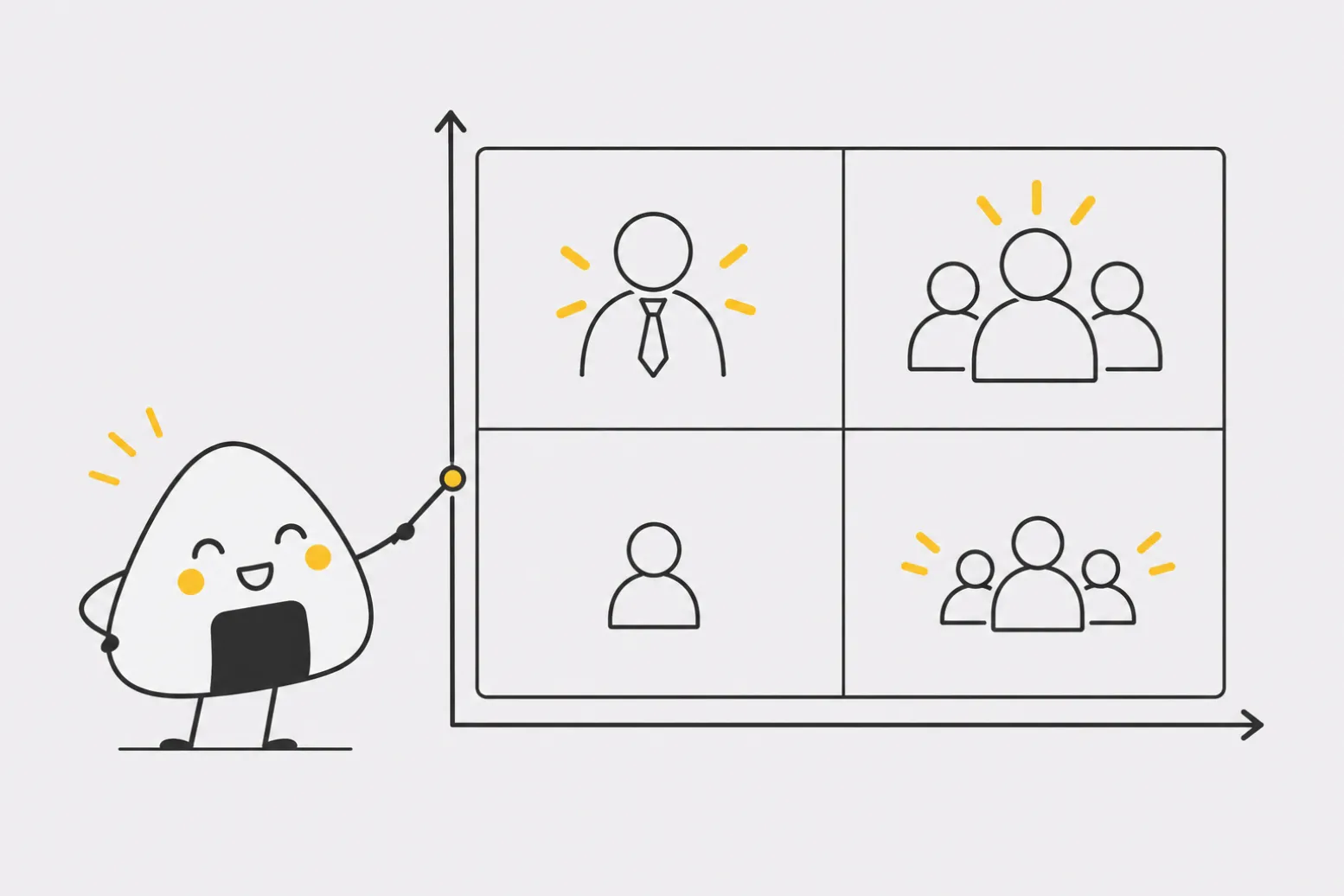
Mendelow's matrix sorts stakeholders by power and interest. Learn the four quadrants, see a worked product example, and avoid the common mapping mistakes.

July 3, 2026
Product Management Explained: Roles, Salary, and Skills
Product management defines what to build and why. Learn the role, salary ranges, interview prep, and books every product manager should know.