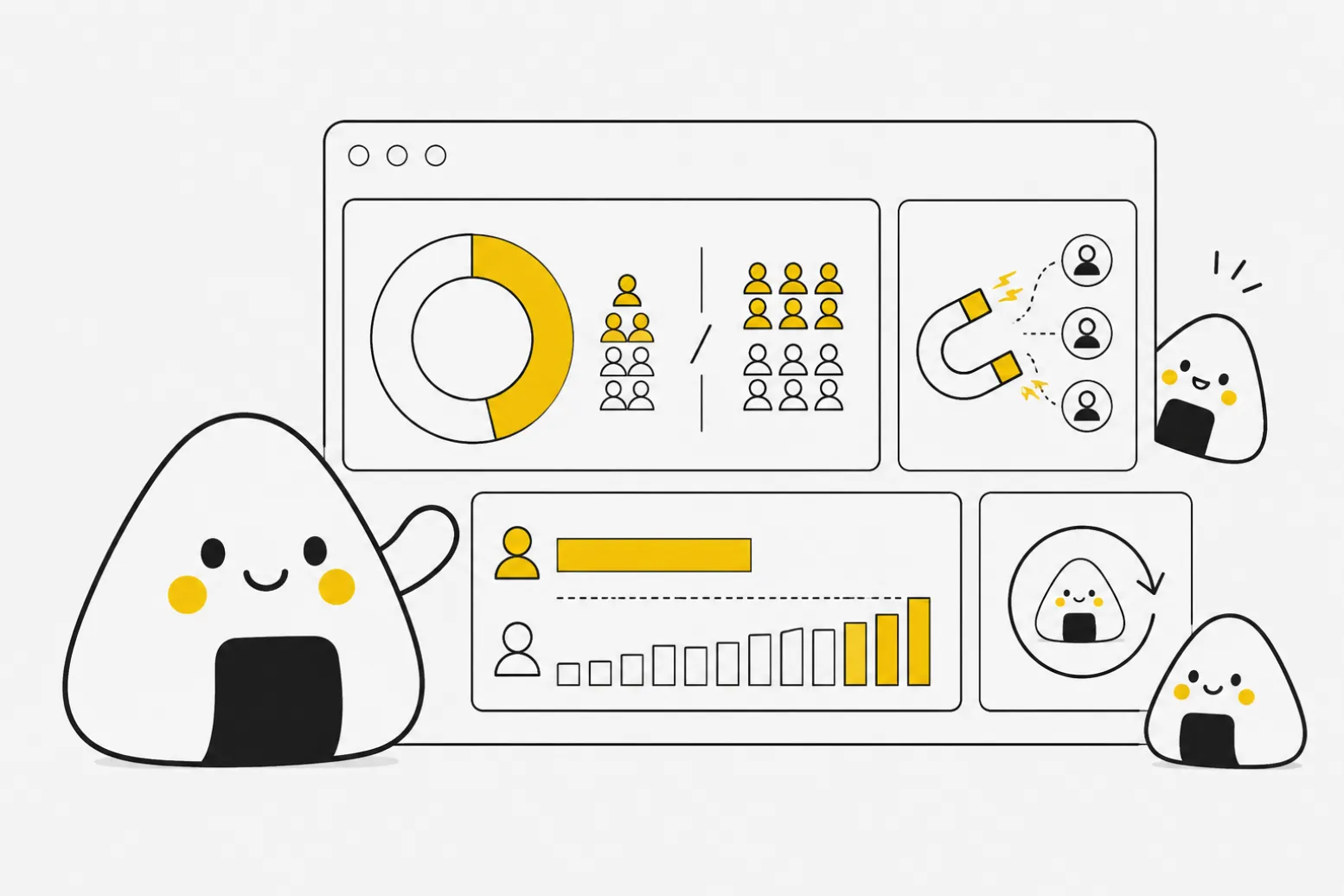

Aha Moment in Product Management: How to Find and Design It
An aha moment is when users first grasp a product's value. Learn how to find, measure, and design for yours to boost activation and retention.


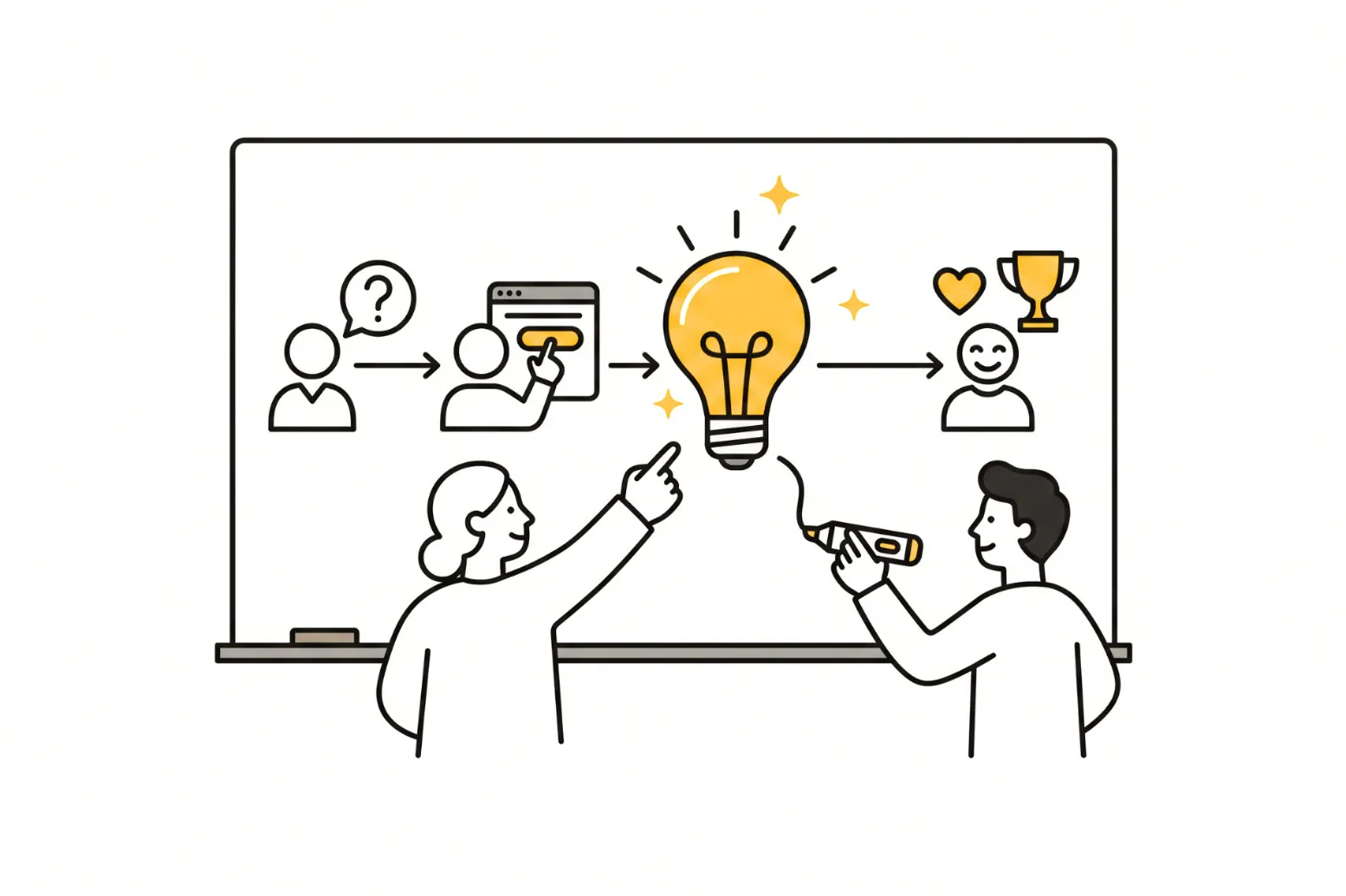
Table of Contents
Audio
An aha moment is the exact point where a user stops evaluating your product and starts feeling its value. It is not a feature tour, a tooltip, or a welcome email. It is the instant someone thinks, "oh, this is what this thing is actually for."
For product teams, that instant matters more than almost any other signal you can track. Users who reach their aha moment early are far more likely to stick around, upgrade, and tell other people about the product. Users who never reach it churn quietly, often without filing a single complaint.
This article breaks down what an aha moment actually is, walks through real examples from products you already use, and shows how to find, measure, and design toward your own. Along the way, we will also answer the questions product teams ask most often when they start hunting for theirs, including how an aha moment differs from a "wow moment."
What Is an Aha Moment in Product Management?
An aha moment is the point in a user's journey when they move from "I signed up for this" to "I get why I need this." It usually is not a single click. It is a small combination of actions that, taken together, make the product's core value obvious.
For a project management tool, that might be creating a first project and inviting a teammate within two days. For a video tool, it might be sending one recording that saves someone a meeting. The specific action varies by product, but the underlying shift is always the same: the user stops thinking about the interface and starts thinking about the outcome.
This is why value is rarely just functional. Bain & Company's Elements of Value framework, originally published in Harvard Business Review, identified 30 distinct types of value that customers weigh when judging a product, from pure time savings to more emotional payoffs like reduced anxiety or a sense of belonging. An aha moment usually delivers on more than one of these at once, which is part of why it feels like a "click" rather than a rational checklist being ticked off.
This growing focus on designing deliberately toward that click, what some teams now call aha product management, is why more roadmaps treat activation as a top-line metric alongside revenue and churn. Product-led teams that get this right build their entire onboarding and metrics framework around getting users to this point as fast as possible.
Aha Moment Examples From Real Products
Seeing the pattern in real companies makes the concept easier to apply to your own product. A few well-documented examples:
- Facebook: users who added 7 friends within their first 10 days were far more likely to stay active, a number the growth team used to redesign the entire signup flow around fast friend-finding.
- Slack: teams that exchanged around 2,000 messages experienced the platform's search and real-time collaboration fully enough that switching back to email felt like a downgrade.
- Loom: the moment a user realizes a short recording resolves something a meeting or a long message thread would have taken far longer to explain.
- Airbnb: completing a first booking, the point where the product stops being a browsing app and becomes a way to actually go somewhere.
Notice that none of these are the moment someone signs up. They all happen after a small amount of real use, once the product has had a chance to prove itself rather than just describe itself. That is a distinction worth keeping straight, because it is different from a "wow moment," which tends to be a more emotional spike that shows up after the aha moment, once a user has already bought into the core value and something delightful reinforces it.
Finding your own version of these examples takes more than a hunch. It requires comparing the behavior of your most engaged, long-tenured users against the behavior of people who churned quickly, and looking for the specific action that separates the two groups.
Using the Aha! Roadmaps Product to Design for It
Once you have a hypothesis for your aha moment, the next job is validating it with data and then building the product decisions around it. This is where tools like the Aha! Roadmaps product come in. They will not find your aha moment for you, but they give teams a place to turn activation hypotheses into prioritized features, link them to strategy, and track whether changes actually move the number.
Before investing in new onboarding flows or tutorials to speed this up, it is worth being skeptical of the most common fix. Nielsen Norman Group's research on mobile app onboarding found that scripted tutorials often fail to improve task performance and add friction of their own, since users rarely read them closely. In many cases, simplifying the interface itself beats explaining it. Design for fewer steps to value first, then use walkthroughs only where a workflow is genuinely new or requires setup.
Data should settle the argument either way. Mixpanel's benchmarks report, built from more than 12,000 companies and 3.7 trillion tracked events, shows how widely early engagement and retention swing across industries, which is exactly why guessing at an aha moment is risky. Instrument the specific action you believe drives activation, watch the cohort split between users who take it and users who do not, and let that gap confirm or kill your hypothesis. Once you have a validated aha moment, protecting it becomes a retention problem as much as an activation one, since the same moment that gets someone hooked has to keep delivering value on every return visit.
FAQs
Conclusion
An aha moment is not just a marketing concept, it is the point where your product's value stops being a claim and becomes something a user has actually experienced. Finding it takes real behavioral data and designing for it means removing friction.
Start by pulling the usage data for your most loyal users and your fastest churners, and look for the one action that tells them apart. That single comparison is usually enough to point you straight at your product's aha moment.

Interested in working with us?
Our Interim/Fractional Product Managers, Owners, and Leaders quickly fill gaps, scale your team, or lead key initiatives during transitions. We onboard swiftly, align teams, and deliver results.
Read More Posts
July 17, 2026
Product Stickiness: Definition, Metrics, and How to Improve It
Product stickiness measures how often users return to your product. Learn the DAU/MAU formula, real benchmarks, and how to improve it.
October 1, 2026
How to Map and Manage Stakeholders with Mendelow's Matrix
Mendelow's matrix sorts stakeholders by power and interest. Learn the four quadrants, see a worked product example, and avoid the common mapping mistakes.
July 3, 2026
Product Management Explained: Roles, Salary, and Skills
Product management defines what to build and why. Learn the role, salary ranges, interview prep, and books every product manager should know.