Product People Turned a Bumpy Product Launch into Momentum
About how we turned a PM-less squad into a structured, confident team during a critical launch
.png)
The Client: Lokalise
Lokalise is a fast-growing B2B SaaS company focused on translation and localization management. Founded in 2017, it offers a cloud-based platform that helps tech-driven teams manage, automate, and streamline the localization of apps, websites, games, and software.
With over 3,000 global customers - including companies like Revolut, Prime Video and DHL - Lokalise supports businesses in scaling internationally by making their content ready for any market. The company raised $67.7M in funding, including a $50M Series B in 2021, to fuel product innovation and global expansion.
The Mission: Interim Product Manager for Activation and Retention
In a critical phase of its product strategy, Lokalise brought in Product People to support the launch of the next iteration of its platform, the company’s most important investment for the coming years**:** an AI-first approach to localization that promises to deliver human-like translations up to 10x faster and at 80% lower cost. We joined the Growth – Activation & Retention squad, stepping in to help a PM-less team just as the first major milestone of the new platform was being launched.
The team had been without Product support for months and was struggling with a growing backlog, unclear priorities, pressing deadlines, and low team confidence. Delivery estimates for future milestones were slipping, and bugs and blockers were piling up. Despite strong technical talent, the squad lacked product direction and structure.
Lokalise needed someone to **bring direction, establish product processes, and keep the new platform iteration delivery moving forward—**all while restoring momentum and bringing clarity to a struggling yet high-potential squad. This included stabilizing the current release, shaping upcoming milestones, and supporting foundational work across permissions and user management.
The company expected us to:
- Quickly onboard and take ownership of complex and strategic parts of the platform.
- Provide structure and guidance in a team that had been operating under pressure.
- Unblock feature delivery, scope down to meet the deadlines, and prepare for long-term scalability.
- Ensure the platform can meet the company’s growth and monetization goals in 2025 and beyond.
Our Main Quest: Restore Confidence and Lay the Foundation for the New Iteration
This engagement required an interim Product Manager who could quickly step into a critical moment: the launch of the invite-only customer beta of Lokalise’s AI-first platform. With the beta launch coming up and the team under too many priorities, our role was not just to cover the PM role, but to restore confidence, set clear priorities, and act as product-oriented guides: bridging across teams to meet deadlines and raise the quality of the new iteration.
We joined the Growth – Activation & Retention squad. The team had strong talent, but was missing clear prioritization. A growing list of bugs, slow progress on upcoming features, and uncertainty around priorities were blocking the team’s ability to deliver on what had been positioned as Lokalise’s biggest bet for the coming years.
Launch: Onboarded Very Fast
Within the first few days, we got up to speed on both the technical landscape and team dynamics. We quickly embedded ourselves in team rituals, joined key product discussions, and opened channels for transparent collaboration with stakeholders across Product, Design, and Engineering.
To build trust and re-energize the team, we scheduled 1:1s, reviewed existing planning structures, and began triaging open issues that were affecting user experience. At the same time, we stepped into the next-generation platform leadership council, helping shape scope and priorities across squads.
First Deliverables and Results
- Stabilized Milestones: After joining, one of our top priorities was to stabilize the rollout of the first milestone, which had gone live with several critical bugs. We immediately jumped into triaging and resolving issues, working closely with Engineering and Design to ensure that the beta was usable and reliable for early user testing. Once stability was achieved, we moved quickly into planning mode: aligning stakeholders on delivery priorities, setting realistic but focused timelines for the next two milestones, and defining OKRs together with leadership to create clear alignment on outcomes. This brought back confidence to the team and established a clear structure for how to move forward.
- Delivered user management and invite flow: A key limitation of the first version was that users couldn’t yet invite teammates, blocking real collaboration on projects. We scoped, delivered, and iterated on the User Management experience for the new version of the platform, including an intuitive invite flow that made it easy to bring others into a project. This was a foundational step toward making the next iteration of Lokalise, unlocking the ability for all team members to be invited and managed in the new iteration, taking into account also the different levels of permissions associated with their role. ****
- Shipped the next generation of the permissions model: As user collaboration increased, so did the need for users to have the expected level of access. We scoped and shipped the User Access Management (UAM) model, which allowed users to assign specific roles and access levels to contributors within a project. This not only supported more flexible workflows, but also ensured that the right people had access to the right permissions—reducing security risks and preparing the product for real-world enterprise use cases.
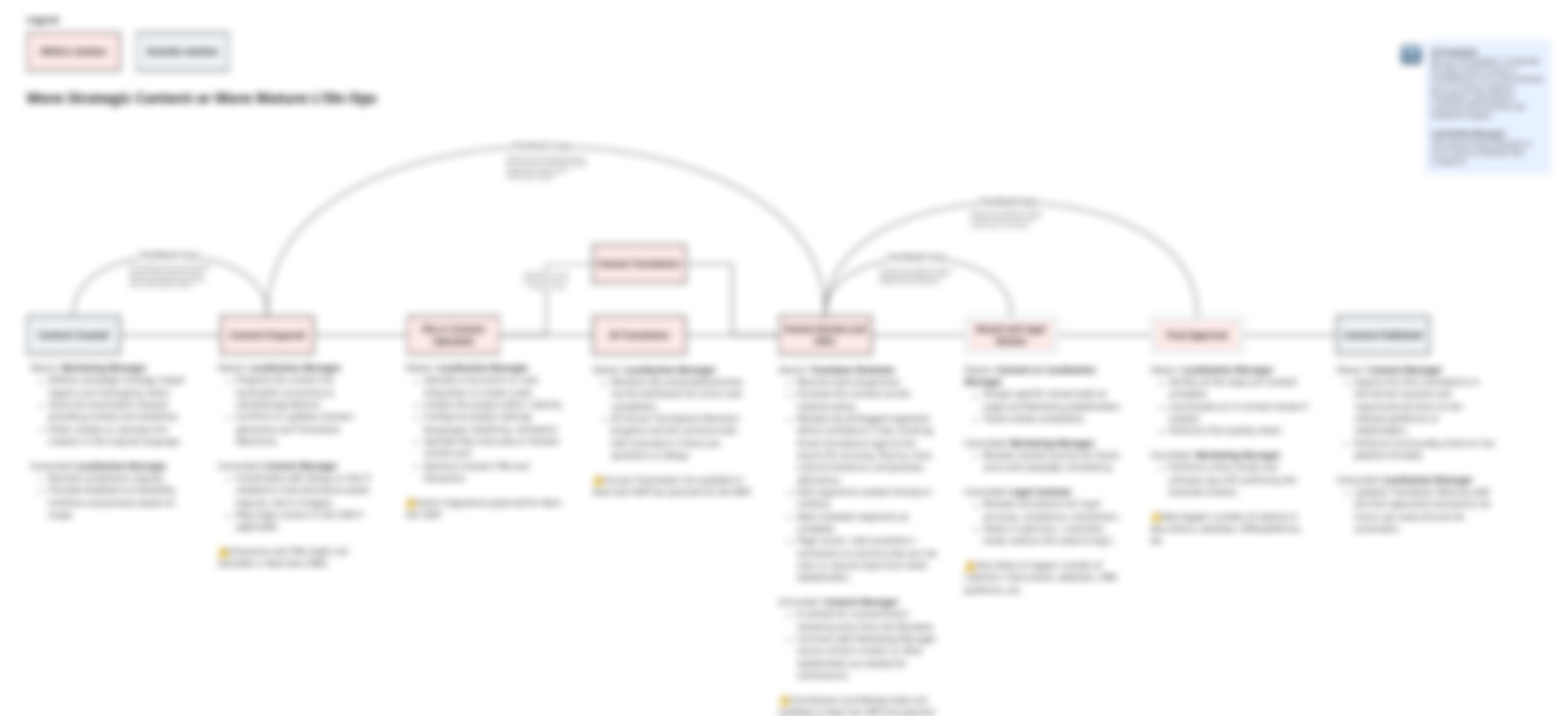
- Mapped personas and workflows for 2026 and 2027: To make sure the product vision and the functionalities of the new platform cover real user needs, we took existing research and transformed it into clear, actionable personas. We then mapped the workflows and user needs associated with each persona, covering both current target user segments and future ones for 2026 and 2027. These visual artifacts were shared across teams and used to inform design, discovery, and prioritization - providing guiding principles so that future product decisions can be grounded in real user needs.
- Redesigned the project setup flow: The original project setup experience in the new iteration was undergoing a redesign to simplify and make it more user-friendly. Our contribution was to close functionality gaps identified by integrating Contributors directly into the setup flow. This ensured teams could add and manage members upfront, laying the groundwork for upcoming Tasks and Workflows.
- Next-Gen strategic alignment: Beyond feature delivery, we took part in shaping the long-term direction of the product. As part of a group of selected product, design, user research, and engineering leads, we joined the Next‑Gen leadership committee, where we helped define scope boundaries and align on the overall product vision. This strategic involvement ensured that day-to-day delivery was connected to the bigger picture and that the product was set up to succeed not just today, but also in future milestones.
Explore and Conquer: Solved for the Client
Initiative 1 - Discovery for Tasks
Problem:
- The Tasks module was envisioned as a core component of the new platform, extending User Management by enabling true collaboration within the platform - specifically, the ability to assign parts of a project to specific users. However, no discovery work had been started, leaving the feature without a clear understanding of user needs, workflows, or requirements. With the responsible PM from the other Squad on paternity leave, the initiative risked losing momentum and delaying a critical milestone.
What has been done:
- Ran discovery workshops with stakeholders across Product, Design, and Engineering
- Framed the Jobs To Be Done for Tasks, aligning them with existing personas and workflows
- Outlined early feature suggestions to guide Milestone 2 planning
- Provided a handover package that gave the returning PM from another Squad a solid foundation to continue the work while rejoining the team.
.png)
Initiative 2 - Enabling a New Pricing Strategy
Problem:
- Lokalise was preparing to launch a new pricing model that shifted billing to a more layered model tied to specific roles and permissions. At the same time, the platform lacked clear service limits for projects, languages, and seats, creating risks of misuse and making it difficult to enforce the new pricing rules. Without clarity on these foundations, the new model risked being inaccurate, unfair, or too complex to implement.
What has been done:
- Defined and shipped the advanced seats model, ensuring the intended roles were billed as advanced (paid) seats while roles with basic permissions remained free.
- Scoped and documented service limits for projects, languages, and seats, giving Engineering clear boundaries to implement without slowing down development.
Initiative 3 - Analytics
Problem:
- Lokalise Analytics had limited support, delivering only basic reporting and missing key data that managers needed. At the same time, the company’s upcoming pricing changes required visibility into new metrics**,** but the existing dashboards couldn’t surface them. Without proper dashboards, both internal teams and customers lacked clarity during this critical transition.
What has been done:
- Took ownership of the Analytics initiative, ensuring a clear direction and roadmap.
- Split dashboards to cover both old and new metrics
- Planned short-term improvements to address immediate needs and outlined the long-term vision for Analytics.
- Wrote a comprehensive PRD for the next strategic phases, aligning Data, Customer Success, and Product teams on priorities.
Side Quests: Processes, Security, and KPIs
- Team structure with new rituals: The squad had been operating without clear product guidance, which created uncertainty on priorities and impacted team morale. We introduced lightweight rituals such as weekly planning sessions, helping the team better prioritize, align, and feel more confident in their work. These changes improved clarity and boosted overall team happiness and productivity.
- High vulnerabilities: We triaged and prioritised critical vulnerabilities in the Lokalise platform, mainly related to permissions. We coordinated with Engineering to close these gaps, strengthening security and ensuring customer accounts were safe.
- KPIs Dashboard: The Growth squads lacked visibility into product health metrics for their domains. We collaborated with the Data team to brainstorm and design a dashboard of key KPIs tailored to the squad’s objectives. This guided KPIs affecting business outcomes, allowing the squad to keep a pulse check on performance and react to any unexpected trends.
Mission Achievements: Delivered Outcomes
💡 Onboarded into a team struggling with delays and brought structure and support that enabled the squad to start delivering ahead of schedule
💡 Turned delayed initiatives in Platform and Analytics into structured plans, leaving the team with work mapped out for the next two months
💡 The initial mission was extended from 2 months to 5 months based on the value delivered and the trust built with the stakeholders
In the Client’s Own Words
Space Crew of this Mission


For Clients: When to Hire Us
You can hire us as an Interim/Freelance Product Manager or Product Owner
It takes, on average, three to nine months to find the right Product Manager to hire as a full-time employee. In the meantime, someone needs to fill in the void: drive cross-functional initiatives, decide what is worth building, and help the development team deliver the best outcomes.
If you're looking for a great Product Manager / Product Owner to join your team ASAP, Product People is a good plug-and-play solution to bridge the gap.

Interested in working with us?
Our Interim/Fractional Product Managers, Owners, and Leaders quickly fill gaps, scale your team, or lead key initiatives during transitions. We onboard swiftly, align teams, and deliver results.
.png)