
Unique Selling Points: How to Find and Sharpen Yours
A guide to finding your unique selling proposition, telling it apart from your value prop, and turning it into a strategy customers remember.


Table of Contents
Audio
A unique selling point is the one thing your product does that a customer cannot get anywhere else, stated plainly enough that a stranger understands it in one read. Most teams think they have one. Far fewer can say it in a single sentence without hedging, listing three features, or reaching for "best-in-class."
That gap matters more than it seems. Product teams spend months building the right thing, then hand marketing a spec sheet instead of a reason to choose them. The result is a launch that reads like everyone else's launch: fast, secure, easy to use, powered by AI. None of that tells a buyer why you, specifically, today. Sales ends up improvising a pitch that shifts from call to call, and prospects notice the inconsistency before they notice the product.
This piece walks through what separates a real unique selling proposition from a wish list, why your USP and your company's value proposition are not interchangeable, and a way to build one that survives contact with a sales call.
What Makes a Unique Selling Proposition Actually Work
A unique selling proposition earns its name by doing something competitors genuinely cannot copy overnight, not something they simply haven't gotten around to yet. "24/7 support" is not a USP if three rivals offer it too. "The only expense tool that reconciles against your bank feed in real time" is, because it names a mechanism, not an adjective.
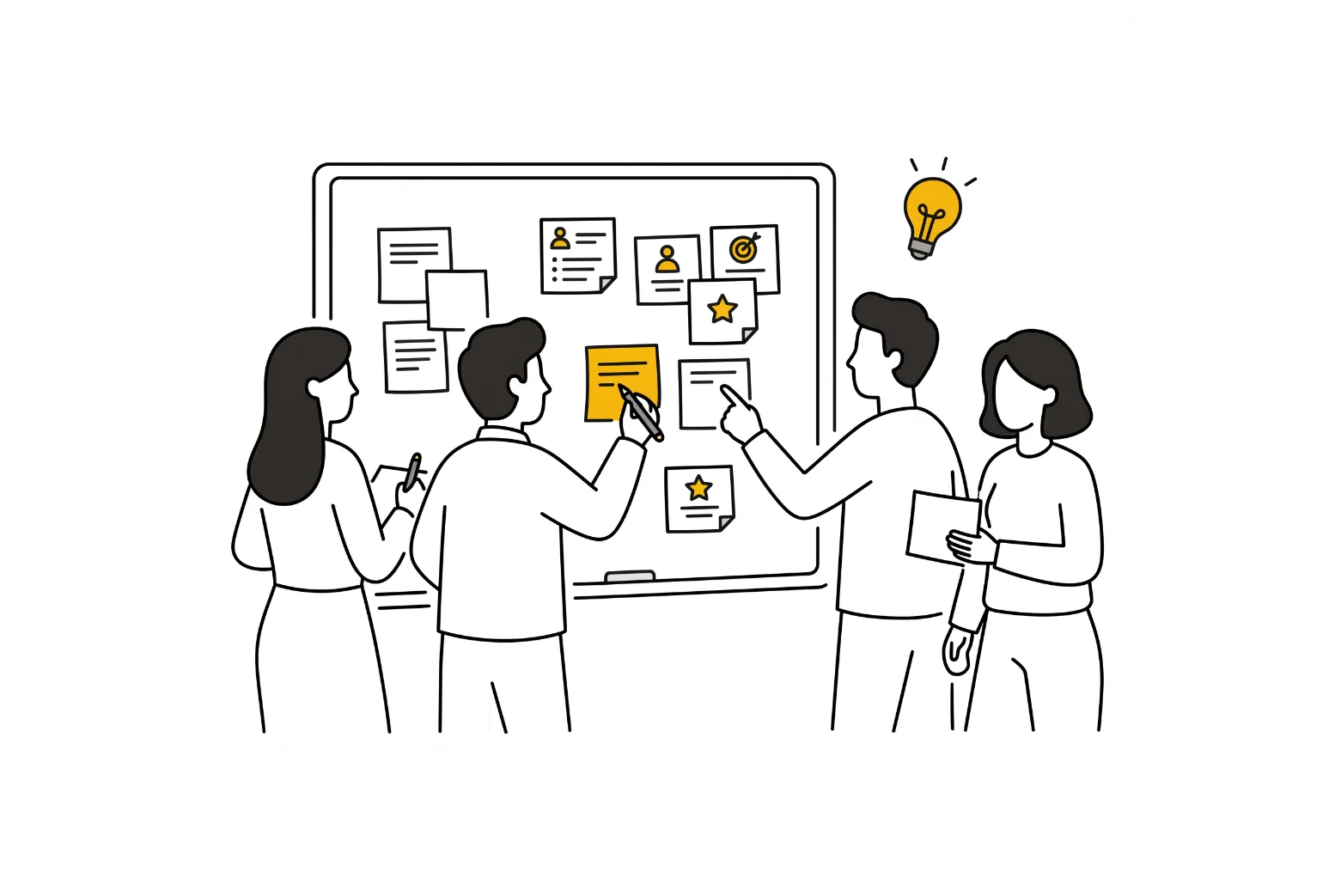
I've sat in enough positioning workshops to know the instinct: someone writes "innovative," "customer-first," or "enterprise-grade" on a sticky note, and the room nods because no one wants to argue. None of those words survive a competitor's website audit. A useful USP names a specific capability, a specific audience, or a specific outcome, and it's uncomfortable to write because it forces you to admit what you're not.
This isn't a branding nicety. Gartner's 2026 brand and business strategy research found that organizations with a strong, clearly articulated brand strategy are twice as likely to exceed their growth goals, largely because sales and marketing stop improvising a different pitch every quarter. A sharp USP is what gives that strategy a spine: it's the sentence everyone in the company, from the SDR to the support agent, repeats the same way.
The test I use with product teams: read your USP out loud to someone outside your market. If they ask "okay, but what does that actually mean," it's still a slogan. If they ask "does that work for X too," you've written something specific enough to defend.
Your Unique Selling Product vs. Your Brand
Here's where teams trip up. A unique selling product, the differentiator baked into one specific offering, is not the same thing as your company's overall value proposition. You can have a dozen unique selling points across a portfolio and still have one value proposition holding the whole company together. Confusing the two is how roadmaps end up with a feature nobody outside the building understands is the point.
Say you sell a project management tool. Your value proposition might be "we help distributed teams stay aligned without more meetings." That's the promise the whole company makes. But your unique selling product, the one to lead with against a specific competitor, might be that your tool is the only one in your segment that lets a manager see blocked work across every team without opening a single board. That's narrower, more concrete, and it's what a sales rep actually says on a call.
This is also where target market definition earns its keep. A USP aimed at everyone convinces no one; the "blocked work visibility" pitch lands hard with ops-heavy engineering teams and does nothing for a five-person design studio, and that's fine. A 2026 study published in IRE Journals on USP and brand building found that a well-articulated selling proposition builds brand salience and emotional connection specifically because it's consistent and narrow, not because it tries to cover every use case at once. Trying to make one USP serve every segment is usually how you end up with none that land anywhere.
Building a Unique Selling Proposition Strategy That Sticks
A unique selling proposition strategy isn't a workshop output, it's a habit of checking your claim against reality on a schedule. Three things keep it honest.
Start with what customers already say, not what you wish they said. Pull the last twenty "why did you choose us over X" answers from sales calls or churn interviews. The phrase that keeps repeating, in the customer's own words, is closer to your real USP than anything a positioning deck will produce.
Then look hard at what competitors can't or won't match. Kantar's research on brand differentiation, drawn from millions of consumer interviews, found that how meaningfully different a brand is perceived to be explains the large majority of its pricing power. That's not a soft metric. A genuine differentiator lets you hold your price when a cheaper competitor shows up, because the buyer isn't comparing on price alone anymore. Mapping competitors properly, the way we break down in our guide to competitive strategy, is what turns "we think we're different" into "here's the gap they can't close in a quarter."
Finally, write it down as a sentence a new hire could repeat correctly after one read, not a paragraph that needs a follow-up meeting to parse. If your support team, sales team, and product team would each describe your USP differently today, that's the actual backlog item, not another feature. Put it on the onboarding deck and see who pushes back; disagreement at that stage is cheaper to fix than a mismatched pitch six months into a sales cycle.
A USP earns its keep when it survives being said out loud to a skeptical prospect. Revisit it whenever a competitor changes their pricing or a segment of customers churns for a reason you didn't expect, since both are signals that what used to be unique might not be anymore.
Getting there takes less brainstorming than most teams assume and more listening to the customers who already picked you. Start with the twenty-call exercise above before your next planning cycle, write the one sentence down, and test whether everyone on the team can say it the same way without looking it up.
FAQ

Interested in working with us?
Our Interim/Fractional Product Managers, Owners, and Leaders quickly fill gaps, scale your team, or lead key initiatives during transitions. We onboard swiftly, align teams, and deliver results.
Read More Posts
September 18, 2026
User Stories Explained: Format, Examples, and Template
Learn the user story format, see real examples, and grab a free template to write clearer, more useful agile backlogs.
September 16, 2026
Onboarding Software: How Product Teams Choose and Use It
Onboarding software splits into HR and product categories. See how to map the user onboarding process, pick tools, and learn from real examples.

September 14, 2026
Measuring App Performance: A Product Metrics Framework
Learn how to measure app performance with a product metrics framework built for B2B teams, plus real examples and benchmarks to guide what to track.