
Target Market: How to Define and Reach the Right Customers
Learn how to define your target market, build a demographics profile, and run a target market analysis that informs every product decision.


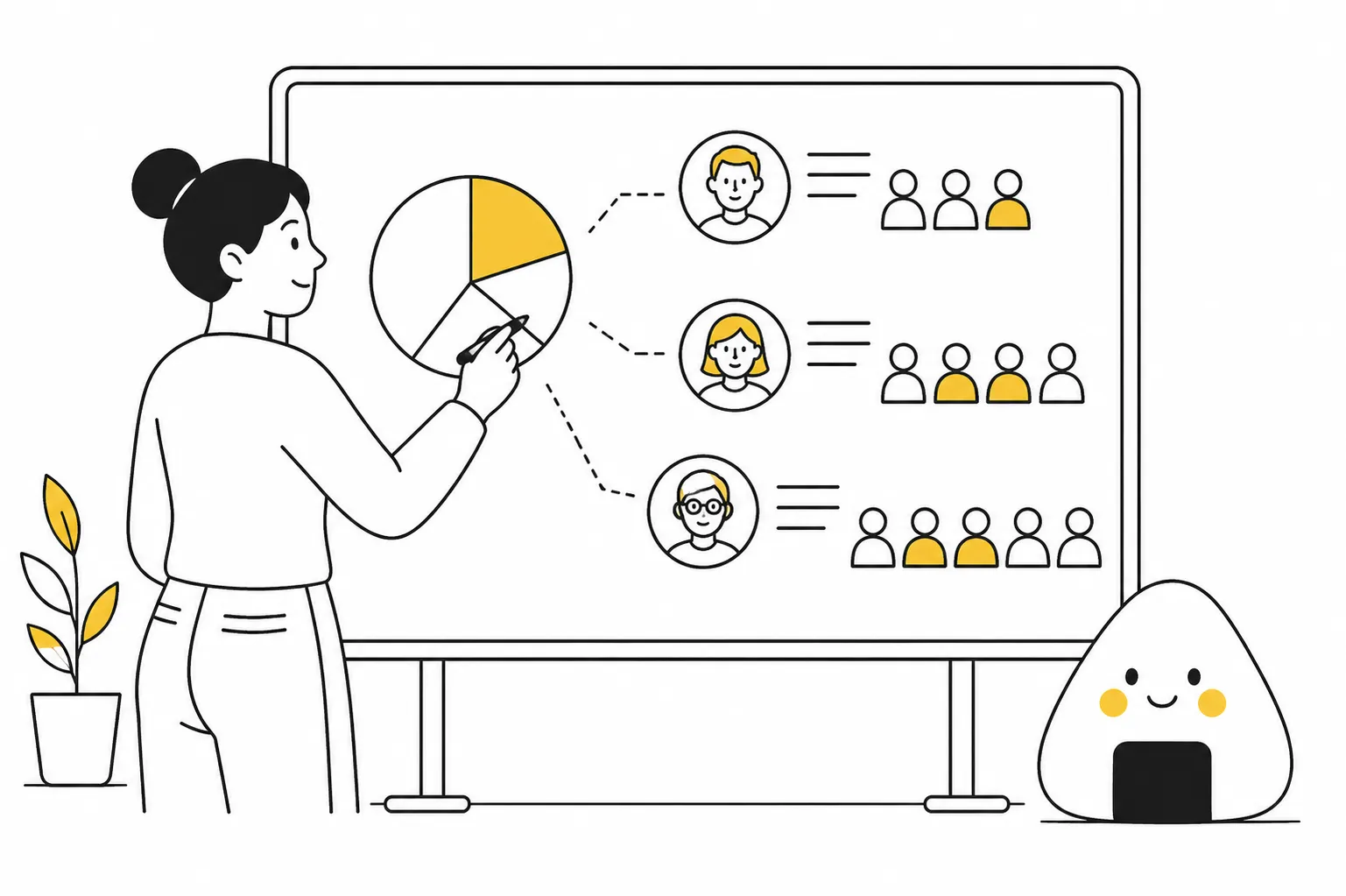
Table of Contents
Target Market: How to Define and Reach the Right Customers
Your target market is the specific group of customers most likely to buy your product, defined by shared characteristics including age, location, income, behavior, or values. Without this definition, every product decision defaults to assumption rather than evidence. Product teams that build without a clear target market almost always discover the problem after they have shipped something no one wanted.
The consequences are well-documented. Research consistently shows that 42% of startups fail because there was no real market need for their product. That is not a technology failure. It is a failure to identify who the product was actually for and whether those people cared enough to pay for it.
This guide covers three areas product managers need to master: how to build a target market demographics profile, how to run a target market analysis that produces actionable outputs, and how to find your target market using structured research methods.
How to Build a Target Market Demographics Profile
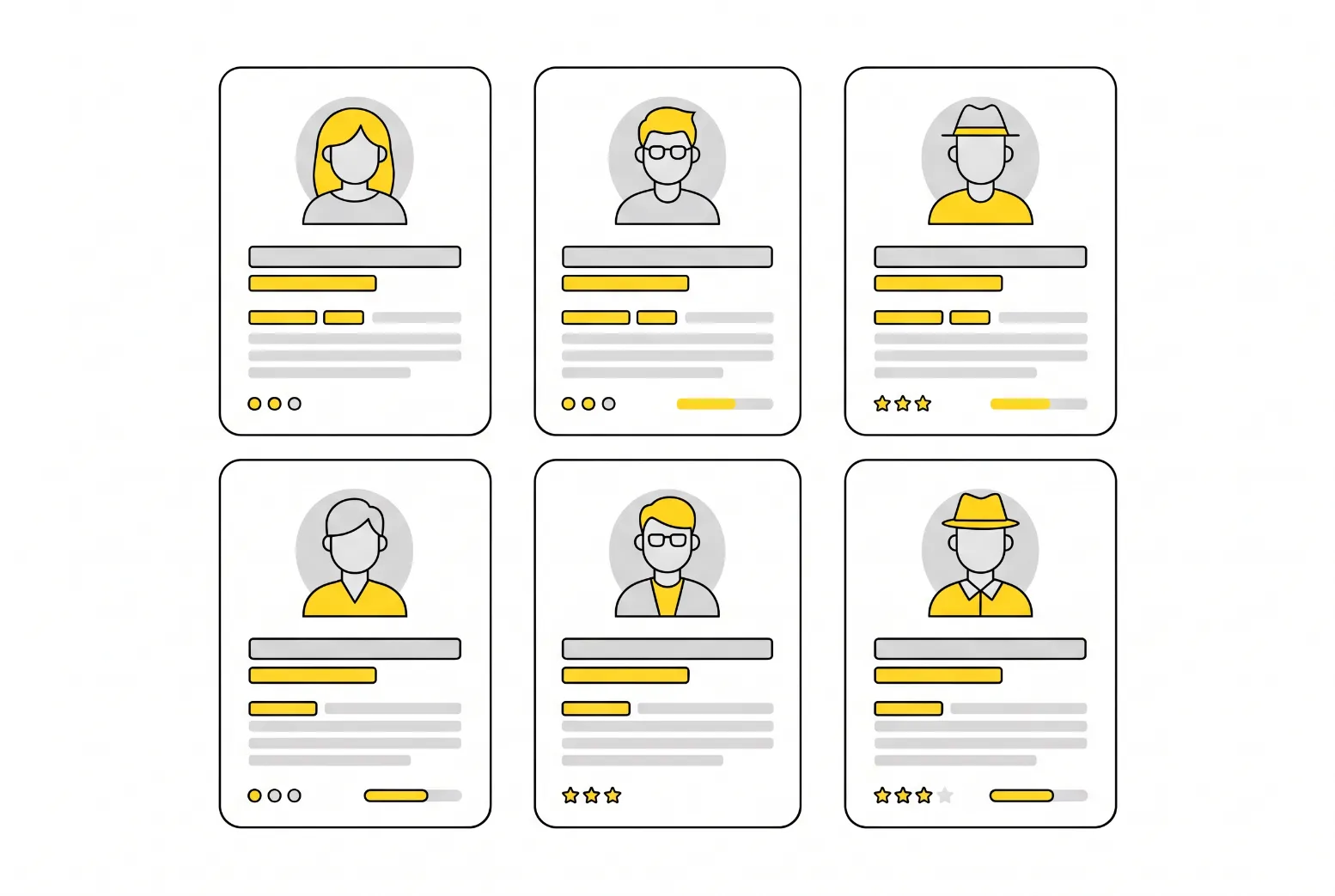
Target market demographics are the quantifiable characteristics that describe who your customers are. They are the starting point for any customer profile and the basis for every subsequent layer of analysis.
There are four core segmentation types used to define a target market:
- Demographic segmentation covers age, gender, income, education level, employment status, and family structure. These are the most accessible data points and typically form the first layer of any profile.
- Geographic segmentation focuses on where your customers live and operate. For global products, geography affects pricing expectations, regulatory requirements, language preferences, and even feature priority.
- Psychographic segmentation goes deeper into values, motivations, attitudes, and lifestyle choices. This is harder to quantify but often more predictive of what customers will actually buy and why they stay.
- Behavioral segmentation looks at how customers interact with products like yours. This includes purchase frequency, loyalty patterns, the benefits they seek, and what triggers a purchase decision.
A useful target market demographics profile combines all four segmentation types. Relying only on basic demographics gives you a flat picture that does not hold up in practice. Two people with identical age, income, and job title can have completely different needs and buying behavior depending on their context, goals, and the specific problem they are trying to solve.
The most reliable way to build this profile is through a combination of primary and secondary research. Primary research means going directly to customers through interviews, surveys, and usage observation. Secondary research draws from existing data sources such as industry reports, Google Analytics audience data, or your CRM.
Your analytics tools are especially useful here. Google Analytics provides demographic breakdowns of your actual website visitors, including age, gender, and interests. This gives you data grounded in reality rather than assumptions. The same applies to your support tickets, which often reveal who is actually using your product and what they struggle with, even if they do not match the customer profile your team assumed.
The goal of a target market demographics profile is not a slide deck. It is a set of working assumptions about your customer that can be tested, updated, and used to make faster, more confident product decisions.
How to Run a Target Market Analysis That Produces Results
A target market analysis is the process of evaluating whether a specific customer segment represents a viable, attractive opportunity for your product. It goes beyond describing who your customers are to assess the size of the opportunity, the intensity of the need, and your competitive position within that segment.
A strong market analysis for product managers covers three core areas:
Market size and growth. Start by sizing the segment. Total addressable market (TAM) gives you the theoretical ceiling, while serviceable addressable market (SAM) reflects the portion you can realistically reach given your distribution model and business constraints. Look at growth trajectory too, not just current size. A medium-sized segment that is growing quickly is often more attractive than a large one that is flattening.
Need intensity. Not every segment feels the same pain. A strong target market analysis identifies whether the problem you are solving is a recurring, critical issue for these customers or something they can manage without your product. Need intensity is one of the strongest predictors of willingness to pay and long-term retention. Segments with high need intensity are where sustainable businesses are built.
Competitive positioning. Assess how well existing products serve this segment. A large segment served well by well-resourced incumbents is harder to enter than a smaller segment that is currently underserved. Use your target market analysis to find white space, not just validate that the market exists.
According to McKinsey, 71% of consumers expect companies to deliver personalized interactions, and 76% get frustrated when that does not happen. Companies that invest in understanding their customers deeply and serve them through targeted, relevant experiences generate 40% more revenue than those that rely on broad, undifferentiated approaches.
For product teams, this means your target market analysis should feed directly into your roadmap. The outputs should inform feature prioritization, pricing, and your go-to-market approach. If your analysis is sitting in a document that no one revisits, it is not doing its job.
How to Find Your Target Market Using Research
Knowing how to find your target market is a practical discipline. It requires combining qualitative and quantitative target market research methods, and it requires genuine openness to having your assumptions challenged.
The best starting point is your existing customer base. If you already have users, look for patterns in who they are and why they bought. Your CRM data, support tickets, and NPS responses contain a significant amount of signal. Identify the customers who get the most value, stay the longest, and refer others. These people define your actual target market, not the theoretical one built in a planning workshop.
If you are in the early stages and building something new, start with customer discovery. This means conducting structured interviews with potential customers to understand their current workflows, the problems they face, and how they are coping today. The goal is to find people who have the problem you are solving and who are actively looking for a better solution. These are your early adopters and they give you the sharpest signal about where to focus.
Beyond interviews, use secondary research to validate assumptions at scale:
- Review industry reports and publicly available market studies
- Use keyword research to understand what problems potential customers are actively searching for
- Analyze competitor reviews and community forums to identify what existing solutions are failing to deliver
- Survey your current users to surface demographic patterns and motivation data you may not have collected at signup
A 2023 peer-reviewed study in Information Systems and e-Business Management found that customer segmentation methods for e-commerce targeting have become significantly more sophisticated as behavioral and transactional data has become more accessible. Businesses that move beyond demographic-only models and incorporate behavioral data produce far more accurate and actionable target market profiles.
The output of your target market research should be a ranked set of customer segments with supporting evidence for each. Your top one or two segments form your core target market. The rest represent expansion opportunities to revisit as your product and go-to-market capability mature.
FAQ
The Foundation Behind Every Good Product Decision
Every strong product decision traces back to a clear picture of who you are building for. Defining your target market through demographics, structured analysis, and ongoing research is not a setup exercise you complete before the real work begins. It is the real work, and it continues throughout the product's life.
Start with what you know, test your assumptions early, and revisit your target market definition as your product and market evolve. The clearer your picture of your customer, the better every subsequent decision becomes, from roadmap priorities to pricing, positioning, and growth.

Interested in working with us?
Our Interim/Fractional Product Managers, Owners, and Leaders quickly fill gaps, scale your team, or lead key initiatives during transitions. We onboard swiftly, align teams, and deliver results.
Read More Posts
October 26, 2026
What Is a Persona? A Product Manager's Practical Guide
A persona is a research-based profile of a target user. Learn what goes into a user persona, how to create one, and where AI helps and fails.

October 19, 2026
How a Convenience Survey Works and When to Trust the Results
A convenience survey is fast and cheap, but easy to misread. Learn how convenience sampling works, where it misleads, and when product teams can use it.

October 19, 2026
Usability Testing: Methods, Types, Tools and Examples
Usability testing shows where real users get stuck. Learn the main types and methods, which tools to use, and how to run a first test this week.