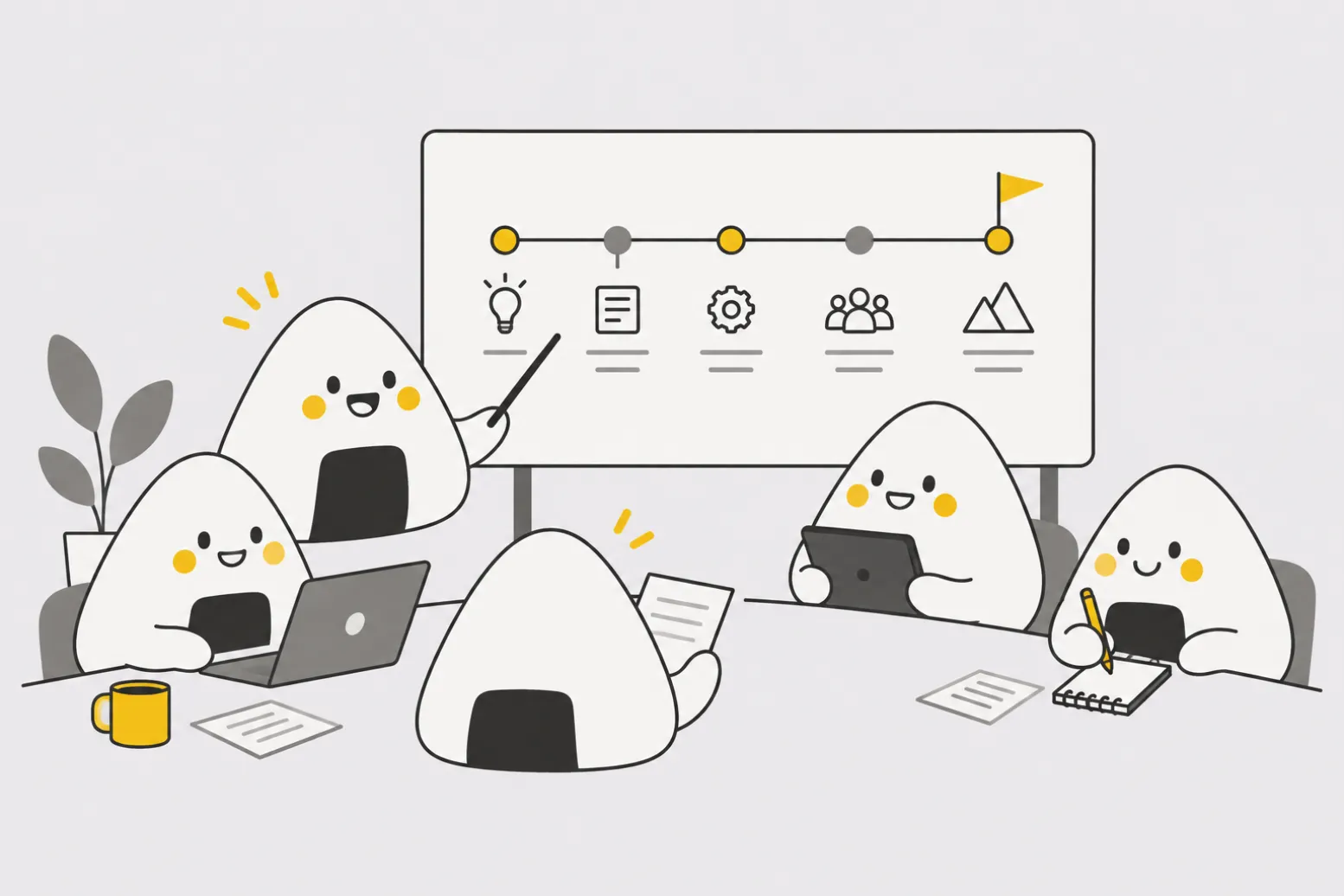

Product Life Cycle: Stages, Strategy, and Management
The product life cycle describes every stage a product moves through, from launch to decline. Learn how to manage each phase with the right strategy, metrics, and team focus.


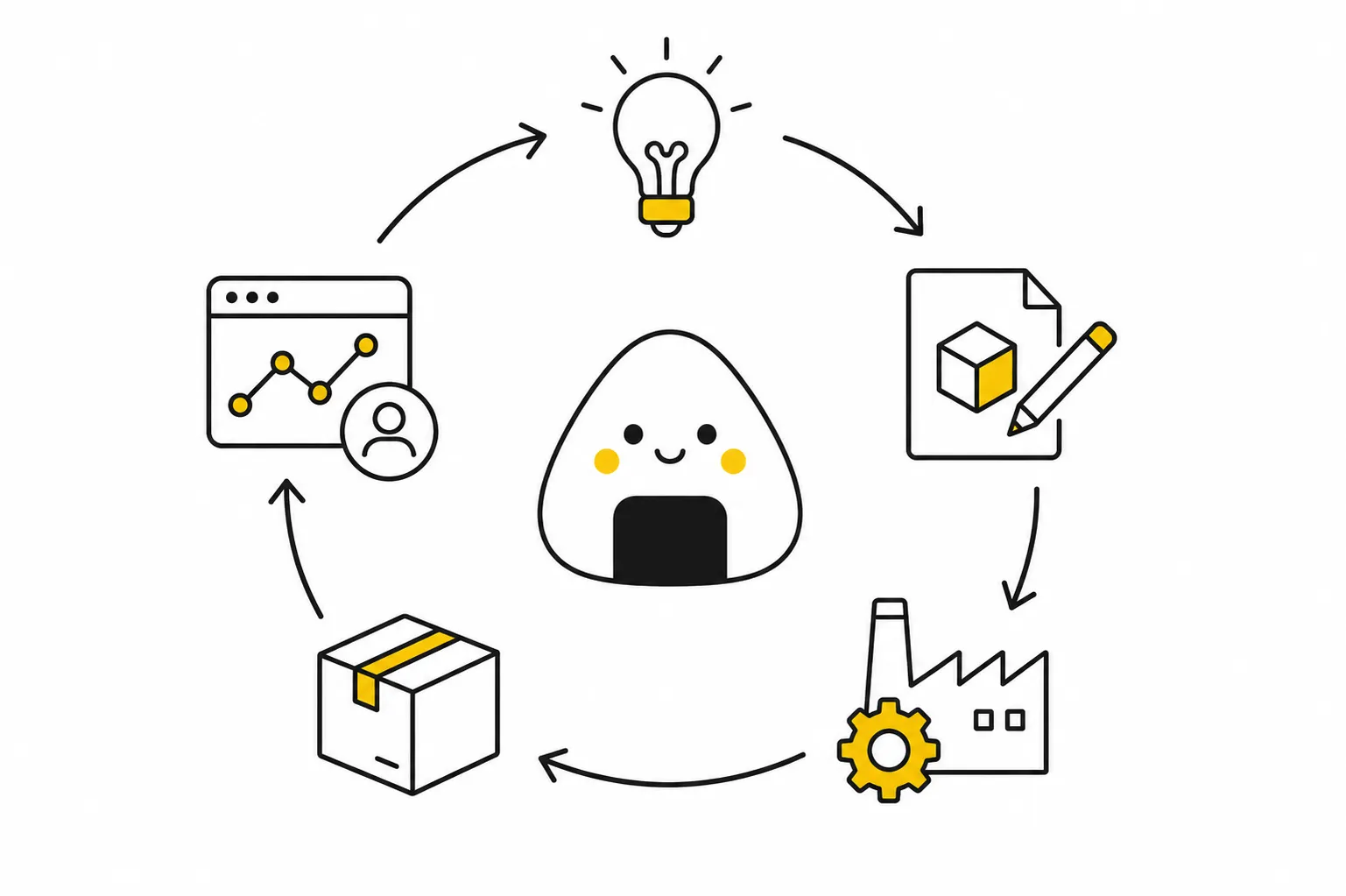
Table of Contents
The product life cycle describes the journey a product takes from its first day on the market to its last. Understanding where your product sits in that journey changes how you prioritise work, allocate resources, and make strategic decisions.
The framework was introduced by economist Theodore Levitt in Harvard Business Review in 1965. In the decades since, it has become one of the most widely used tools in product management because it reflects a pattern that holds across nearly every industry and product type.
What makes the life cycle genuinely useful is not the theory. It is the practical clarity it provides. When you know your product is in growth, you invest differently than when it is in maturity. When you can recognise decline early, you have options. When you cannot, you lose time you will not get back.
This guide covers the four stages of the product life cycle, how the product development life cycle connects to them, and what effective product life cycle management looks like in practice.
The Four Stages of the Product Life Cycle
Every product moves through four core stages: introduction, growth, maturity, and decline. Each stage has distinct characteristics that should shape your strategy, team priorities, and investment decisions.
Introduction
The introduction stage begins at launch. Revenue is low, costs are high, and you are still proving the product's value in the market. Sales grow slowly because awareness takes time to build and customers are cautious about anything unfamiliar. Profit margins are typically negative or minimal, as you are still recovering development investment while spending heavily to acquire early users.
The priority in introduction is finding product-market fit, not scaling. This is why validating an MVP before full investment is so important: it lets you test core assumptions before committing full resources to a direction that may need to change.
Growth
In the growth stage, sales accelerate. Word-of-mouth increases, customer acquisition costs begin to fall, and competitors appear. Profit margins improve as economies of scale take hold. This is the most exciting stage for most teams, but also the one where strategic mistakes are costliest. It is easy to scale the wrong thing quickly when momentum makes everything feel like it is working.
According to the Pragmatic Institute, tracking metrics by lifecycle stage helps teams focus on the signals that actually matter in each phase. In growth, that means customer acquisition rate, referral rate, churn, and market share rather than trying to track everything at once.
Maturity
Maturity is typically the most profitable stage. Growth slows, but revenue is stable and operational costs have levelled out. Competition is at its peak, which creates pricing pressure and raises the bar for differentiation. Product managers in maturity shift focus from acquisition to retention, from new features to reliability, and from top-line growth to margin efficiency.
The risk in maturity is complacency. Teams that stop investing entirely tend to accelerate into decline faster than those who continue making incremental improvements and protecting the customer experience.
Decline
In decline, sales fall. This happens because the market shifts, a disruptive competitor enters, or the problem your product solves becomes less relevant. Decline does not have to mean failure. It means a decision point: reinvest and reposition, find a new segment, or plan a controlled sunset.
Recognising decline early is what gives you options. Teams that catch the signals early, such as slowing growth, rising churn, and falling NPS, have time to act. Teams that wait until revenue is visibly dropping often do not.
The Product Development Life Cycle Explained
The product development life cycle (PDLC) is the process that precedes market entry. Where the four-stage model describes what happens after launch, the PDLC covers discovery, validation, design, build, and release.
Harvard's Division of Continuing Education outlines eight distinct stages in the product management lifecycle, beginning with idea identification and moving through customer research, pivoting, roadmap planning, design, go-to-market strategy, launch, and post-launch management. Cross-functional collaboration and data-driven decision-making are required at every stage.
In practice, the development life cycle works like this:
- Discovery — Identify a problem worth solving. Talk to users, analyse market data, and pressure-test the opportunity before committing resources.
- Validation — Test your assumptions early. Prototypes and customer conversations save significant time and money before production code is written.
- Planning — Build the roadmap and define success metrics. Product roadmap planning is critical here: without a clear prioritisation framework, teams build fast but build the wrong things.
- Development — Engineering, QA, and iterative builds. Track velocity and defect rates to stay on schedule without sacrificing quality.
- Launch — Coordinate across marketing, sales, and support. Set measurable adoption targets and monitor results from day one.
The connection between the PDLC and the broader life cycle matters more than most teams acknowledge. A rushed development phase, one that skips validation or launches without a coherent go-to-market strategy, compresses the introduction and growth stages. Products that enter the market without a tested value proposition often hit decline before they ever find their audience.
Research cited by MIT found that 95% of new products miss the mark, with a lack of validated market need identified as the primary cause. The time invested in the development life cycle is not overhead. It is the single biggest predictor of whether a product reaches growth at all.
Product Life Cycle Management in Practice
Product life cycle management (PLM) is the discipline of actively adjusting your strategy, investment, and team focus as a product moves through each stage. The concept is straightforward. The execution is harder.
Most product teams have a default operating mode, and it rarely matches the stage they are actually in. They apply growth-stage thinking to a product in maturity. They use maturity-stage processes on a product that is already in decline. The mismatch between strategy and life cycle stage is one of the most consistent and costly problems in product management.
Effective PLM starts with reading the signals clearly. Declining NPS despite stable revenue often points to late maturity. High acquisition paired with rising churn is an early decline pattern that many teams miss entirely. Slowing feature adoption signals that users are satisfied but not growing, which is a cue to shift from build mode to retain mode.
Pricing strategy also needs to shift with the life cycle. Introduction-stage products often benefit from freemium or trial-led models to lower the barrier to first use. Growth-stage products can absorb price increases as demand outpaces supply. Maturity-stage products compete on value and switching cost. Decline-stage products face pressure to discount or bundle.
Resource allocation must follow the same logic. Introduction needs discovery and rapid iteration. Growth needs marketing investment and customer success capacity. Maturity needs margin efficiency and retention investment. Decline needs a clear pivot or sunset plan with a defined timeline, not ongoing investment in a direction with diminishing returns.
One of the most common PLM failures in product consulting engagements is organisations applying the same process across a portfolio of products at different stages. A business with three products, one in growth, one in maturity, one in decline, needs three distinct strategies running in parallel. The governance model, the metrics dashboard, and the team operating rhythm all need to reflect where each product actually is.
PLM turns the life cycle from a descriptive model into an active management tool. It gives product leaders a shared language for making decisions at the portfolio level, not just the feature level, and it makes the difference between reacting to change and anticipating it.
Frequently Asked Questions
Conclusion
The product life cycle is not a passive observation framework. It is an active management tool. Every stage demands a different strategy, different metrics, and different team priorities. Understanding which stage your product is in removes the guesswork from resource allocation, pricing decisions, and roadmap calls.
If you are unsure where your product sits, start by auditing your key metrics against each stage's benchmarks. Once you can name the stage, the right strategy becomes considerably clearer.

Interested in working with us?
Our Interim/Fractional Product Managers, Owners, and Leaders quickly fill gaps, scale your team, or lead key initiatives during transitions. We onboard swiftly, align teams, and deliver results.
Read More Posts
September 25, 2026
What Are Roadmaps? A Practical Guide for Product Teams
Roadmaps align teams around what matters most. Learn what a product roadmap is, what belongs on it, and where Jira Advanced Roadmaps fits in.
September 23, 2026
OKR vs KPI: The Real Difference (and How They Work Together)
OKR vs KPI, explained with real examples: what each term means, how they work together, and where KRA fits into the mix.
September 21, 2026
Unique Selling Points: How to Find and Sharpen Yours
A guide to finding your unique selling proposition, telling it apart from your value prop, and turning it into a strategy customers remember.