
Design Thinking and Innovation: A Product Manager's Guide
Let's cover the 5 stages of design thinking, the best training programs and books to develop the practice, and how design thinking and agile work together in modern product teams.


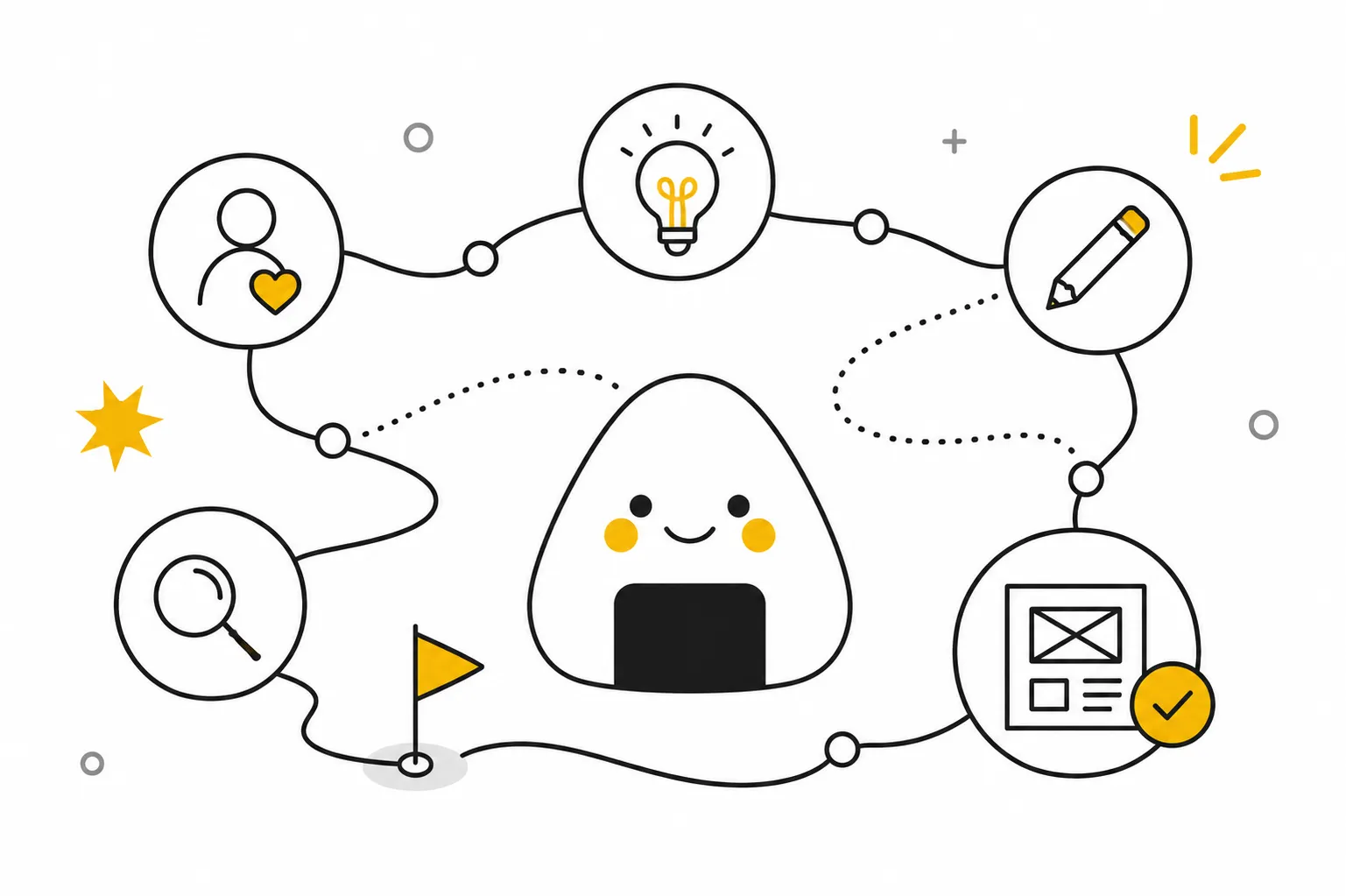
Table of Contents
Design Thinking and Innovation: What Every Product Manager Needs to Know
Design thinking and innovation are not separate disciplines for product teams serious about building things people actually want. Design thinking is a human-centered methodology that begins with genuine user understanding and progresses through a structured five-stage process before a single line of production code is written.
The approach was codified at Stanford's d.school and popularized by IDEO, the firm whose former CEO Tim Brown described design thinking as a mindset applicable not just to product design but to every layer of organizational strategy. Today it is embedded in the product development processes of companies like Apple, Airbnb, and IBM, precisely because it reduces the risk of building the wrong thing at speed.
According to McKinsey's Business Value of Design report, which tracked 300 companies across multiple industries over five years, top-quartile design performers achieved 32% higher revenue growth and 56% higher total returns to shareholders compared to peers. The financial case for design thinking is not theoretical. It is measurable.
This guide covers the 5 stages of design thinking, the best training programs and books to develop the practice, and how to apply it within a modern product team.
The 5 Stages of Design Thinking Explained
The 5 stages of design thinking, as developed by Stanford's d.school, give product teams a repeatable, human-centered framework for problem solving. In practice, the stages are not linear. Teams move between them as user insights evolve, and looping back to an earlier stage is a sign the process is working, not failing.
Empathize
The process begins by building a genuine understanding of the people you are designing for. This means conducting user interviews, observing real behavior in context, and resisting the temptation to project your own assumptions onto the problem. McKinsey's research found that over 40% of companies surveyed did not conduct user research before generating initial design ideas, and that gap is where avoidable product failures begin. Product teams that invest in structured product discovery at this stage consistently arrive at more accurate problem definitions before any solution is proposed.
Define
This stage transforms raw empathy data into a sharp, user-centered problem statement. Rather than "reduce churn by 5%," a well-formed design thinking problem statement might read: "Early-stage users need to see measurable value within their first session or they disengage permanently." That reframe shifts the team from a business metric to a human need, opening up solution space that purely metric-driven framing would never surface.
Ideate
Ideation is structured divergence. The goal is to generate as many potential solutions as possible before evaluating any of them. Techniques like "How Might We" questions, SCAMPER, and worst-possible-idea exercises push teams past their default thinking patterns. The most useful ideas typically emerge only after the obvious ones have been exhausted.
Prototype
A prototype is any artifact that makes an idea concrete enough to learn from. That could be a paper sketch, a clickable wireframe, or a simple landing page with no backend. The goal is to answer a specific question, not to build something polished. A prototype strategy framework helps teams decide what fidelity level is appropriate before investing time in something too detailed to pivot.
Test
Testing in design thinking is observational, not confirmatory. You put the prototype in front of real users and watch what happens without coaching them toward the outcome you want. Insights from testing typically send teams back into ideation or even back to redefine the problem. That loop is the process functioning as designed.
Design Thinking Training and the Best Books to Read
Developing design thinking as a practice requires more than reading a definition. It demands hands-on work with real problems, guided feedback, and repeated application. Fortunately, both formal design thinking training programs and a handful of strong books make the learning curve manageable.
Training programs worth considering
IDEO U's Foundations in Design Thinking Certificate is one of the most respected options available. It is self-paced, built around practical projects, and draws directly on IDEO's methodology. For a more academic setting, MIT Sloan's design thinking program runs over three months and combines theoretical grounding with applied case work.
Stanford's d.school offers an intensive three-and-a-half-day bootcamp that takes participants through the complete five-stage process on a real problem. This format works well for teams that need speed and cannot commit to a multi-week curriculum.
For individual PMs working within budget constraints, the Interaction Design Foundation's online course covers the same foundational material in a seven-week, self-paced format. It is a strong starting point at considerably lower cost than institutional programs.
The design thinking book most PMs read first
The most widely recommended design thinking book for product managers is "Change by Design" by Tim Brown. It makes the case that design thinking is a leadership and business strategy tool, not a creative process reserved for designers. It is grounded in examples from IDEO projects across healthcare, education, and technology, and it reframes innovation as a discipline anyone in an organization can practice.
"Creative Confidence" by Tom and David Kelley, IDEO's founders, is the better starting point if your team is skeptical that creativity applies to their daily work. It dismantles the belief that creativity is a fixed trait rather than a developed skill, and provides concrete exercises to build that capacity deliberately.
For product managers who want something directly actionable in their next sprint, "Sprint" by Jake Knapp and John Zeratsky offers a five-day framework that compresses the core design thinking process into a structured team exercise. No prior training background is required to run it.
Design Thinking and Agile: Using Both Effectively
One of the most common questions product managers raise when they first encounter design thinking is whether it conflicts with agile. It does not. The two methodologies solve different problems and work best when applied sequentially.
Design thinking operates at the discovery and framing level. It is most valuable before a team commits to building anything. Agile operates at the execution level. It is most valuable once the team knows what to build and needs a structured, iterative way to ship it. The most expensive mistake a product team can make is running agile sprints without first completing enough design thinking to confirm they are building the right thing.
A practical integration works as follows: begin with a design sprint, a compressed version of the five-stage process that runs over four or five days, to identify and validate a problem and its solution direction. Move into agile delivery once a prototype has been tested with real users and the insights are solid enough to begin confident scoping. This sequence prevents the team from shipping the wrong solution at speed.
The non-linear nature of design thinking complements agile's built-in tolerance for change. Both methodologies expect that new information will alter the course of the work. The key difference is cadence: design thinking front-loads discovery so that agile sprints can be focused and productive rather than reactive. Teams that sequence both methodologies this way consistently report fewer late-stage pivots and faster time to meaningful output.
Product managers who integrate design thinking and agile effectively tend to treat the design sprint as a pre-sprint ritual: a one-week investment that protects the following months from building in the wrong direction.
FAQ
Conclusion
Design thinking and innovation become practical only when applied consistently. Product managers who run even an abbreviated version of the five-stage process make better decisions because they are grounded in real user behavior rather than internal assumptions about what users need.
If you are new to the methodology, start with a design thinking book like "Change by Design" and explore a structured training program when you are ready to go deeper. Apply what you learn on your next product challenge, and the results will demonstrate the value of the investment.

Interested in working with us?
Our Interim/Fractional Product Managers, Owners, and Leaders quickly fill gaps, scale your team, or lead key initiatives during transitions. We onboard swiftly, align teams, and deliver results.
Read More Posts
September 23, 2026
OKR vs KPI: The Real Difference (and How They Work Together)
OKR vs KPI, explained with real examples: what each term means, how they work together, and where KRA fits into the mix.
September 21, 2026
Unique Selling Points: How to Find and Sharpen Yours
A guide to finding your unique selling proposition, telling it apart from your value prop, and turning it into a strategy customers remember.
September 18, 2026
User Stories Explained: Format, Examples, and Template
Learn the user story format, see real examples, and grab a free template to write clearer, more useful agile backlogs.