

PLG Explained: Strategy, Funnel, and Metrics That Matter
PLG stands for product-led growth. Learn how to build a PLG strategy, map the funnel, and track the metrics that actually predict growth.


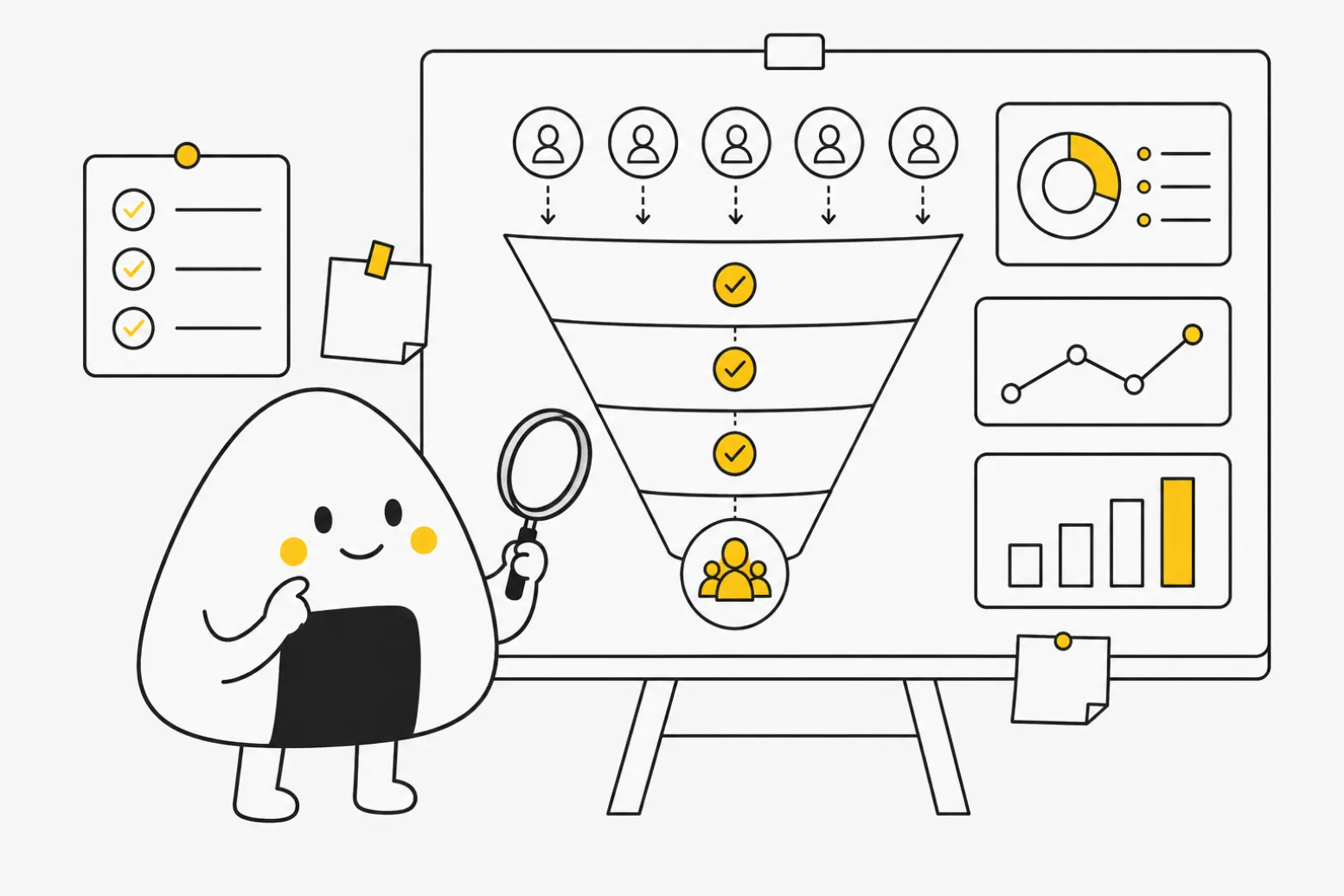
Table of Contents
PLG stands for product-led growth, a go-to-market model where the product itself, not a sales team, drives how people discover, try, and eventually pay for a tool. Instead of a rep walking a prospect through a demo, the product lets someone experience real value first, usually through a free trial or a freemium tier, and an upgrade becomes the natural next step rather than a sales pitch.
The model has become the default starting point for most SaaS companies, but what PLG actually means in practice has shifted as the category matured. Adopting PLG in name only rarely works. Teams that succeed treat it as a company-wide operating model, not a marketing label bolted onto an existing product.
This guide breaks down what a real PLG strategy requires, how the PLG funnel differs from a traditional sales funnel, and which PLG metrics actually predict whether the model is working. It closes with quick answers to the questions product and growth teams ask most often when they are evaluating or refining their approach.
Building a PLG Strategy That Actually Converts
A PLG strategy starts with a single question: can a new user reach real value inside the product without ever talking to a human? If the answer is no, the rest of the strategy does not matter yet.
Getting to yes requires alignment across teams that traditionally operated in silos. Product owns the onboarding experience and the in-product signals that indicate value. Marketing owns how people find the free tier or trial in the first place. Sales, where it still exists, gets involved only once usage data shows a lead is ready, not before.
According to McKinsey's research on the shift from product-led growth to product-led sales, companies that treat PLG as a pure self-serve motion tend to plateau once they need larger accounts. The ones that keep growing add a sales layer on top of the product motion instead of replacing one with the other, using product usage data to decide exactly when a human should step in.
A working PLG strategy usually includes:
- A clear activation moment. The specific action inside the product where a user first experiences the core value, defined precisely enough that the whole team can measure it.
- A frictionless signup path. Every extra form field or approval step between "interested" and "using the product" costs conversions.
- A plan for the edge cases. Enterprise buyers, security reviews, and multi-seat purchases rarely complete through self-serve alone, so the strategy needs a defined handoff to a human.
Well-known PLG products like Slack, Dropbox, and Figma built their entire go-to-market motion around this idea: let people do real work in the product first, and let the upgrade decision follow naturally from that experience.
Mapping the PLG Funnel Stage by Stage
The PLG funnel differs from a traditional sales funnel in one key way: the product experience is the funnel, not something that happens after a deal closes.
Most PLG funnels break down into five stages. Acquisition covers everyone who signs up for a free trial or freemium tier. Activation is the point where a user reaches the "aha moment," the first real taste of the product's core value. Retention tracks who comes back and keeps using the product past that first session. Monetization is the conversion from free to paid. Expansion covers paying customers who add seats, upgrade tiers, or adopt more of the product over time.
Activation deserves the most attention of the five, because every later stage depends on it. A user who never reaches the aha moment will not retain, will not convert, and will not expand, no matter how well the rest of the funnel is designed. Mapping the exact behavior that defines activation for your specific product, not a generic industry benchmark, is the highest-leverage work in the entire funnel.
A product qualified lead, or PQL, is a user whose in-product behavior signals they are close to buying: heavy feature use, hitting a plan limit, or inviting teammates, for example. Tracking PQLs matters because they convert at a far higher rate than leads sourced through marketing alone, and they give a sales team, if one exists, a much better reason to reach out than a cold list.
The PLG Metrics Worth Tracking
Not every metric available in an analytics dashboard is worth a team's attention. A small set of PLG metrics tends to explain most of what is happening in the funnel, and tracking them consistently matters more than tracking a long list occasionally.
OpenView Partners' Product Benchmarks Report, based on survey data from over a thousand SaaS companies, found that companies actively tracking PQLs were 61% more likely to be growing quickly than those that were not, and that freemium companies grew revenue 100% or more year over year at roughly twice the rate of sales-led peers. That gap is a strong argument for building measurement into the PLG motion from day one rather than adding it later.
The metrics worth prioritizing:
- Activation rate: the share of new signups who reach the defined aha moment.
- Free-to-paid conversion rate: how many free or trial users become paying customers, and over what time window.
- Time to value: how long it takes a new user to reach activation, since longer times to value correlate with lower retention.
- Net revenue retention (NRR): whether existing paying customers are expanding, holding steady, or shrinking their spend over time.
ProductLed's data on product-led growth benchmarks shows that trial and freemium conversion rates vary widely by price point and signup friction, which is a useful reminder that a "good" number for one product may be a poor result for another. Our guide to product-led growth frameworks, onboarding, and metrics covers how to set realistic internal benchmarks rather than borrowing someone else's.
FAQ
Start With the Funnel, Not the Label
PLG is not a marketing checkbox. It is an operating model that only works when the product genuinely delivers value before anyone asks for a credit card, and when the whole team, not just product, is measured against that goal.
If your team is calling itself product-led but still cannot point to a defined activation moment or a working set of PLG metrics, that is the place to start. Fix the funnel first, and the growth strategy will follow.

Interested in working with us?
Our Interim/Fractional Product Managers, Owners, and Leaders quickly fill gaps, scale your team, or lead key initiatives during transitions. We onboard swiftly, align teams, and deliver results.
Read More Posts
September 25, 2026
What Are Roadmaps? A Practical Guide for Product Teams
Roadmaps align teams around what matters most. Learn what a product roadmap is, what belongs on it, and where Jira Advanced Roadmaps fits in.
September 23, 2026
OKR vs KPI: The Real Difference (and How They Work Together)
OKR vs KPI, explained with real examples: what each term means, how they work together, and where KRA fits into the mix.

September 21, 2026
Unique Selling Points: How to Find and Sharpen Yours
A guide to finding your unique selling proposition, telling it apart from your value prop, and turning it into a strategy customers remember.