

The Product Manager’s Guide to Mastering Market Research
Master the essentials of market research to build products that resonate. Explore proven types of research, real-world examples, and get a professional market research template to de-risk your roadmap and drive product-led growth.



Table of Contents
Market research is the systematic process of gathering, analyzing, and interpreting information about a target market, including its consumers and competitors. For product leaders, this practice is the bedrock of informed decision-making, ensuring that every feature developed and every strategy launched is backed by data rather than mere intuition. This guide explores how to leverage research to build products that resonate deeply with your audience while maintaining a competitive edge in a shifting landscape.
Understanding the "why" behind user behavior is just as critical as knowing the "what." In the following sections, we will break down the essential methodologies every product team should master, from exploratory qualitative sessions to large-scale quantitative analysis. We will also provide a structural framework you can adapt to your own workflow, helping you move from raw data to actionable product insights with greater speed and clarity.
Effective research does more than just validate existing ideas; it uncovers entirely new opportunities that your competitors might be overlooking. By the end of this article, you will have a comprehensive understanding of how to structure your discovery phases, which tools to prioritize, and how to present your findings to stakeholders in a way that drives immediate buy-in. Whether you are at a seed-stage startup or a global enterprise, these principles remain the gold standard for modern product excellence.
Why is Market Research Important and Types of Market Research
In a volatile economic climate, the risk of building a product that nobody wants is the single greatest threat to a company's survival. Why is market research important? Because it acts as a high-fidelity radar for product teams, identifying hidden obstacles and emerging trends before they impact the bottom line. According to the OECD Economic Outlook 2026, global market dynamics are shifting toward more localized, data-driven consumer demands, making real-time insights a non-negotiable asset for growth. Without a rigorous research cadence, product managers are essentially flying blind, relying on historical assumptions that may no longer hold true in a post-2025 landscape.
When we categorize these efforts, we typically look at two primary types of market research: primary and secondary. Primary research involves collecting original data directly from your specific target audience through methods like user interviews, surveys, and usability testing. This is where you get the "ground truth" unique to your product’s value proposition. Secondary research, on the other hand, involves analyzing existing data sets, such as industry reports from organizations like ESOMAR, which provides a high-level view of global spending and methodology shifts. Balancing these two types allows a product manager to see both the "forest" (macro trends) and the "trees" (individual user pain points).
Integrating these market research methods into your continuous discovery loop ensures that your product roadmap remains agile. For instance, qualitative research might reveal that users find a specific navigation flow frustrating, while quantitative data shows a high drop-off rate at that exact point. By synthesizing these perspectives, you move beyond "what happened" to "why it happened." This depth is what separates market leaders from also-rans. Furthermore, research helps in de-risking high-stakes decisions, such as entering a new geographic territory or pivoting a core feature set. It provides the evidence needed to secure budget and alignment from executive leadership, transforming "I think" into "the data shows."
Beyond risk mitigation, research is a powerful engine for innovation. By observing users in their natural environment or analyzing white spaces in competitor offerings, product teams can identify "unmet needs"—those frustrations users have but haven't yet articulated. This proactive approach allows you to build features that feel like "magic" to the customer. It also fosters a culture of empathy within the engineering and design teams. When developers hear directly from a frustrated user via an interview recording, their motivation to solve the problem often triples. Research isn't just a box to check; it’s the heartbeat of a user-centric organization that prioritizes long-term value over short-term gimmicks.
A Solid Market Research Template with Practical Examples
Execution is where many research initiatives stumble, often because the team lacks a repeatable process. Utilizing a standardized market research template ensures that every study is conducted with scientific rigor and that results are comparable over time. A robust template should start with a clear objective (the "Problem Statement"), followed by the target audience profile, the chosen methodology, and the key questions to be answered. Without this structure, teams often fall victim to "scope creep," gathering mountains of data that don't actually answer the core business question. A well-organized template keeps the team focused on the metrics that matter, such as Customer Acquisition Cost (CAC) trends or Feature Sentiment Scores.
To see this in action, let’s look at some market research examples from the tech industry. Consider a SaaS company looking to improve its onboarding flow. Their research goal might be to "identify the friction points that prevent users from reaching their 'Aha!' moment within the first 48 hours." Using their template, they might select a cohort of 50 new users for moderated remote testing. By documenting every step of the journey, they might find that a "mandatory" tutorial is actually the primary reason for churn. This specific, actionable insight leads to a direct product change: making the tutorial optional and adding "just-in-time" tooltips instead. This is research moving the needle in real-time.
According to the Pragmatic Institute's State of Product Management, top-performing product teams spend significantly more time on outside-in discovery than their lower-performing counterparts. This involves not just looking at your own users, but also performing "competitive intelligence." This doesn't mean copying features; it means understanding the intent behind a competitor's move. For example, if a major competitor suddenly shifts their pricing from per-user to usage-based, a quick research sprint—including secondary analysis and perhaps a few "non-customer" interviews—can reveal if the market is moving toward a more flexible cost model. This allows your team to prepare a counter-strategy before losing significant market share.
Finally, the output of your research should always be a set of "Recommended Actions." Data without a "so what" is just noise. Your template should conclude with a section that translates findings into roadmap items or experimental hypotheses. For instance, if research shows that 70% of your power users are also using a specific third-party integration, the recommendation might be to build a first-party version of that integration to increase stickiness. This closes the loop between discovery and delivery, ensuring that the work of the researcher directly informs the work of the developer. By treating research as a continuous, templated discipline rather than a one-off project, you build a "knowledge bank" that the entire company can draw from for years to come.
FAQs
Conclusion
Mastering market research is the difference between guessing what your users want and knowing exactly what they need. By implementing a structured approach—utilizing both primary and secondary data—product managers can navigate the complexities of 2026's global economy with confidence and precision.
Remember that the goal of research is not to produce a massive report that sits on a digital shelf, but to spark meaningful action. Use your templates, learn from industry examples, and keep the "why" at the center of every sprint to ensure your product remains an essential part of your customers' lives.

Interested in working with us?
Our Interim/Fractional Product Managers, Owners, and Leaders quickly fill gaps, scale your team, or lead key initiatives during transitions. We onboard swiftly, align teams, and deliver results.
Read More Posts
October 7, 2026
Monetized Products: What It Means and How to Plan Yours
A monetized product earns revenue from the value it delivers. Learn how to build a monetization strategy for software and apps, and which model fits.
October 5, 2026
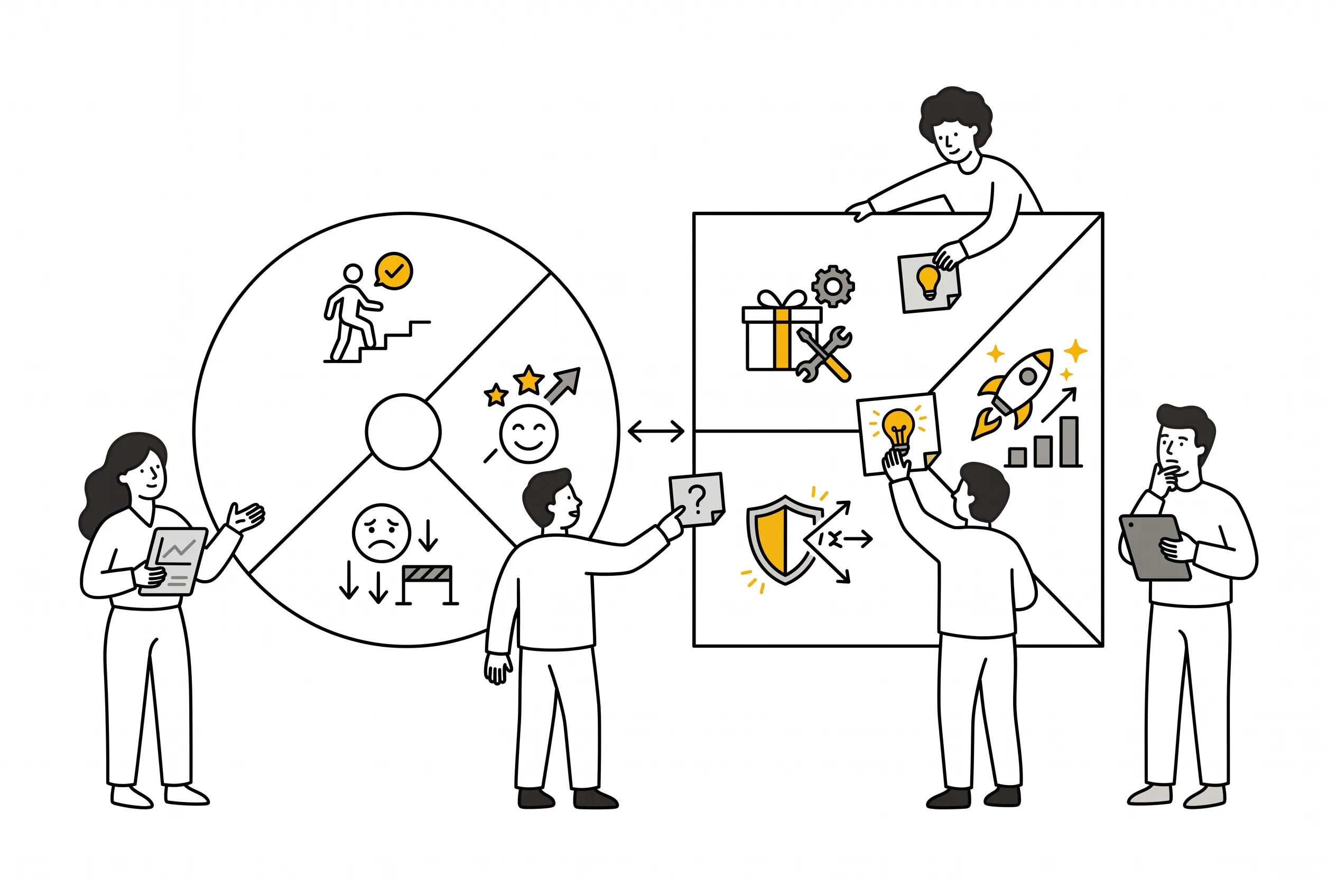
Value Proposition: What It Is and How to Write One That Sells
A value proposition tells a specific customer why your product beats their current option. Learn the meaning, canvas examples, and how to test yours.
July 17, 2026
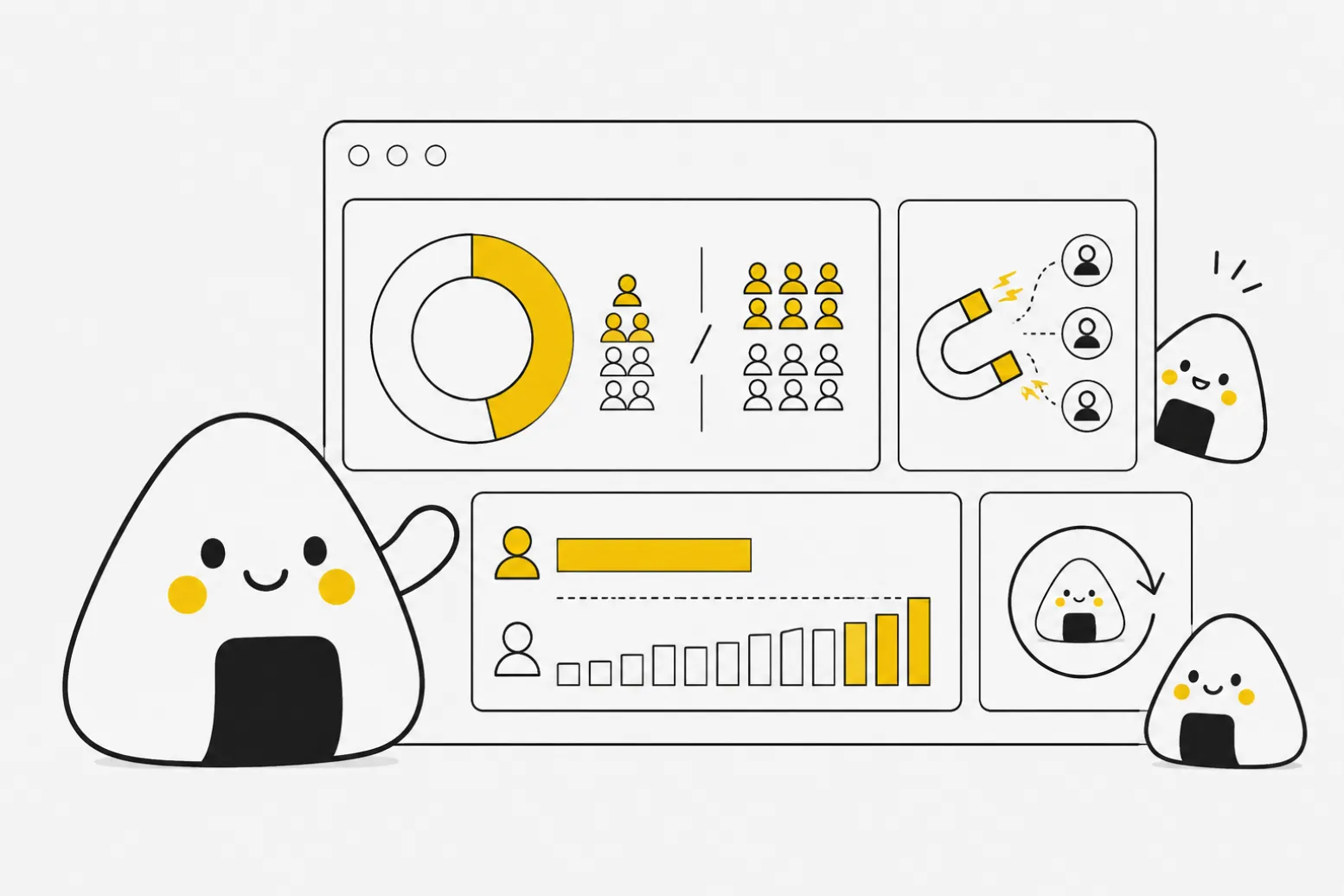
Product Stickiness: Definition, Metrics, and How to Improve It
Product stickiness measures how often users return to your product. Learn the DAU/MAU formula, real benchmarks, and how to improve it.