

The AI Paradox: Why Your Next High-ROI Product Hire Is a Junior PM
If you want to accelerate AI transformation and actually deliver great products faster, doubling down on junior talent is one of the highest-leverage investments you can make right now. Here is why


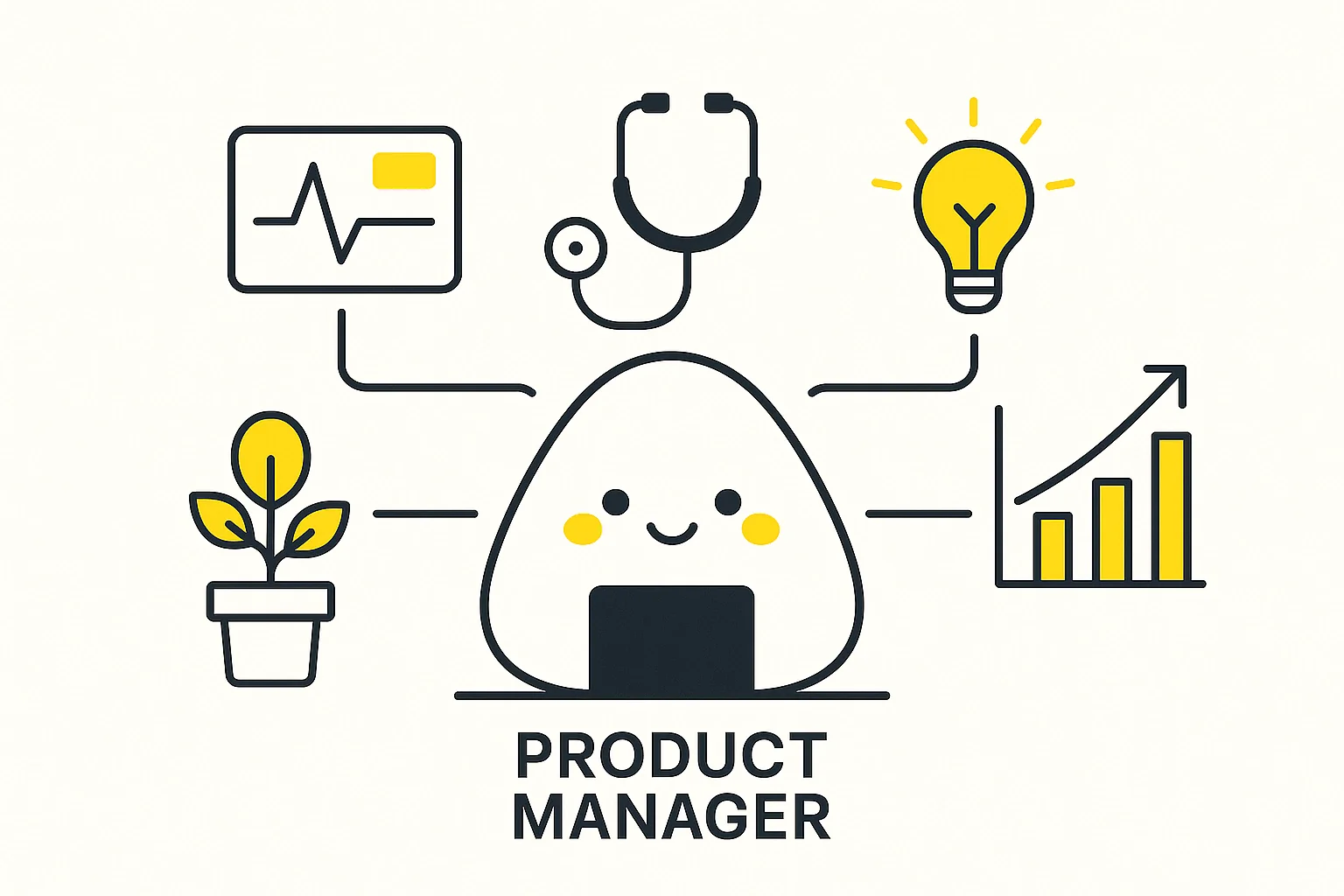
Table of Contents
Right now, there is a pervasive and dangerous assumption circulating in the tech industry: AI is wiping out the need for junior talent. The prevailing narrative suggests that because Large Language Models (LLMs) can synthesize transcripts, write Jira tickets, and groom backlogs in seconds, companies only need to hire seasoned, senior Individual Contributors. The logic seems sound on the surface—why pay an entry-level Product Manager to do what an algorithm can do practically for free?
But from where I sit—overseeing a team of 50 in-house Product Management Consultants at Product People, and running roughly 150 client missions a year for everyone from publicly listed giants like Zalando and eBay to post-PMF scale-ups like DeepL—this "senior-only" mindset is a massive strategic blind spot.
If you want to accelerate AI transformation and actually deliver great products faster, doubling down on junior talent is one of the highest-leverage investments you can make right now. Here is why the industry has it backward, and how you should actually be deploying the next generation of product leaders.
The Doctor Residency Model of Product Management
To understand the value of junior PMs, we have to rethink how product sense is built. Product Managers are a lot like doctors: they absolutely need hands-on practice, real-world exposure, and repetitions to build good clinical judgment. You cannot learn product sense exclusively from a textbook, and you certainly cannot learn it by simply watching a senior PM prompt an AI.
Historically, junior PMs cut their teeth on the "grunt work." Today, companies assume that by automating that work, the junior role is obsolete. But investing in junior PMs is an investment in your company’s future execution muscle. At Product People, we treat this as an opportunity to train our own flavor of PMs—professionals who aren't just native to AI, but who know how to leverage it to drive actual business outcomes rather than just generating noise.
From Content Creators to AI Editors
There is a common "best practice" emerging where leaders simply hand junior PMs an enterprise ChatGPT license and tell them to go faster. This is a mistake.
The real best practice is showing them exactly how you use these tools via raw, unfiltered co-working sessions. You have to show them where the AI works beautifully, and where it fails hilariously. From there, we give our junior and mid-level PMs clear, outcome-oriented tasks. We don't dictate the "how." We give them the budget to experiment with various AI tools, but with one strict requirement: they must make decisions and rigorously justify the choices they’ve made.
What you want to cultivate in Junior and Mid-level PMs is exceptional critical thinking and the ability to learn incredibly fast in a new domain.
Here is the ultimate competitive advantage a human junior PM has over AI: Junior PMs learn from their mistakes and systematically improve over time. LLMs, on the other hand—even those boasting massive context windows—will frequently and confidently repeat the exact same errors. We need junior PMs to act as the editors, evaluators, and critical thinkers who catch those hallucinations.
"Vibe Coding" and Bypassing Corporate Bureaucracy
Let’s look at what this looks like in practice. Recently, we were building content pages with Make and Gemini. It wasn’t a senior architect who optimized the workflow—it was a junior PM who figured out the edge cases where the model was hallucinating. That same junior PM optimized our API credit usage by breaking down massive requests into smaller, manageable chunks, ensuring the final end-copy actually resonated with a human reader.
But perhaps the most striking example of junior PM leverage happened during a pitch to a massive enterprise in the maritime industry. Traditionally, building a functional demo for a client of this size requires a cross-functional squad, weeks of alignment, and agonizing internal resource allocation discussions.
Instead, a Junior PM on our team used Cursor and Claude Code to "vibe code" a working demo. They bypassed the internal resource bottlenecks entirely, spun up a functional prototype, and helped win the trust of the client. We can make pretty decks all day long, but at Product People, we prefer to deliver outcomes. Empowered juniors are delivering those outcomes faster than ever.
The Trio Model: De-Risking Junior Talent for Enterprise Clients
Of course, when you are working with major corporations or post-M&A transformations, clients inherently crave safety. They want the assurance of a 10-year resume. So, how do we convince them to trust this new breed of AI-empowered junior talent?
In the past, this was an uphill battle. Today, the Product People brand carries trust, and many of our clients are repeat partners. But structurally, we de-risk the engagement using what we call the "Trio Model."
Every client mission is staffed with three people: the client-facing PM (who might be junior or mid-level, executing rapidly with AI), a back-up/buddy, and a supervisor. The supervisors are Senior or Lead PMs. They don't micromanage the execution; instead, they shape the strategic direction and navigate the complex, political terrain that invariably comes with enterprise environments. This gives the client the safety net and seasoned advisory they demand, while still benefiting from the sheer velocity and execution power of the junior PM.
The Bottleneck Has Shifted: The Future Product Team
As AI code assistants mature, the broader economics of product development are shifting fundamentally. Many predict we will need fewer developers to ship the same amount of code. Consequently, companies will need fewer traditional PMs whose sole job historically consisted of Agile coordination, orchestration, and unblocking engineering pipelines.
Code is no longer the bottleneck.
Because the barrier to shipping software has plummeted, speed to market, demand generation, monetization, and retention have suddenly become infinitely harder. The market will be flooded with products. In this new reality, business- and growth-focused PMs will be in higher demand than ever.
Building the AI "Devil’s Advocate"
If junior PMs aren't spending their first three years coordinating developers, how do we train them for this high-stakes, growth-focused future? How do they get the reps they need?
There is still a fundamental need to understand PRD creation and ticket shaping. But instead of relying on slow human feedback loops, we are building automated friction. For one of our clients, we built internal AI agents using Glean, Zapier, NotebookLM, and Gemini to act as a "devil's advocate" for our PMs.
When a Jira ticket is moved into a specific state, this internal AI agent automatically checks the ticket against regulatory compliance, the internal knowledge repo, and product management best practices. It then actively pushes back on the PM. The junior PM has to deal with the frustration of rewriting, redoing, and sharpening their logic—perfectly simulating the pushback they would get from real developers and senior stakeholders. It is a high-repetition sandbox that builds resilience and sharpens critical thinking.
Stop Hunting Unicorns. Build Them.
The companies that win the next decade won't be the ones holding out for an impossibly expensive, senior-only product team. They will be the ones who recognize that AI has turned junior PMs into highly leveraged, fast-learning execution engines. By pairing them with the right AI tools, strong senior supervision, and a culture that demands critical thinking over blind automation, you can accelerate your product delivery in ways that were impossible three years ago.
Invest in the residency. Let the AI do the grunt work, and let your PMs do the thinking.
And if you are ready to build the future of product management, we are hiring: https://job-boards.eu.greenhouse.io/productpeople)

Interested in working with us?
Our Interim/Fractional Product Managers, Owners, and Leaders quickly fill gaps, scale your team, or lead key initiatives during transitions. We onboard swiftly, align teams, and deliver results.
Read More Posts
September 16, 2026
Onboarding Software: How Product Teams Choose and Use It
Onboarding software splits into HR and product categories. See how to map the user onboarding process, pick tools, and learn from real examples.
September 14, 2026
Measuring App Performance: A Product Metrics Framework
Learn how to measure app performance with a product metrics framework built for B2B teams, plus real examples and benchmarks to guide what to track.

September 11, 2026
Quantitative Investigation: How to Measure Digital CX
Learn how quantitative investigation turns website and app data into a real digital customer experience strategy, with metrics that matter.