

What Is Ops? Meaning, Roles, and AI's Growing Role
What is ops? Learn what the term means, what an ops manager does, and how AI is reshaping IT operations today.


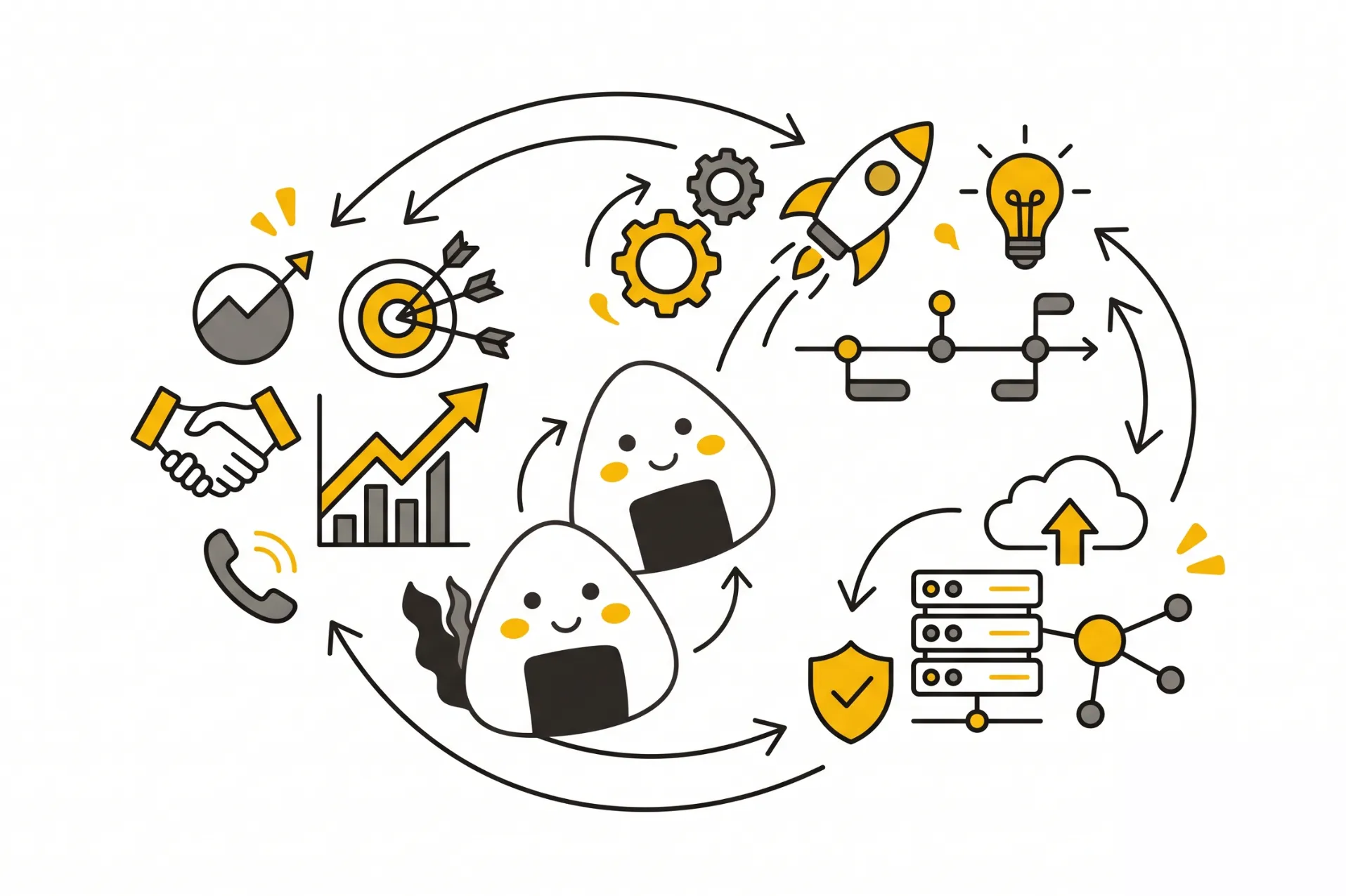
Table of Contents
Audio
Ops is short for operations: the systems, people, and processes that keep a company running day to day. Where strategy defines what a business wants to achieve, ops is the function that makes sure it actually happens, consistently and at scale.
The term shows up everywhere in modern companies, and that is part of what makes it confusing. Sales Ops, Marketing Ops, Product Ops, and IT Ops all use the same word to describe different work in different departments. Each one exists to remove friction so the core team, whether that is sales reps, marketers, or engineers, can focus on their highest-value work instead of administrative overhead.
This article breaks down what ops actually means, what an ops manager does day to day, how production differs from operations, and where artificial intelligence is already changing how operations teams work. By the end, you should be able to explain ops clearly to anyone who asks, and know where to look if you are building or scaling an ops function of your own.
What Does an Ops Manager Do?
An ops manager is responsible for making sure a business or team runs smoothly, efficiently, and within budget. According to the U.S. Bureau of Labor Statistics, the median annual wage for general and operations managers was $102,950 in May 2024, and employment in the role is projected to grow about as fast as the average for all occupations through 2034.
The day-to-day work spans four core areas:
- Process optimization: improving workflows, tools, and best practices across teams so work moves faster with fewer errors.
- Resource coordination: managing budgets, vendor relationships, inventory, and staffing so the right resources are available when needed.
- Staff leadership: recruiting, training, and supervising the people who execute daily operations.
- Quality and compliance: monitoring KPIs, running quality checks, and keeping the organization aligned with legal and regulatory requirements.
The scope changes depending on context. A Sales Ops manager focuses on CRM systems, territory planning, and forecasting. A Product Ops manager sits between product, engineering, and go-to-market teams, coordinating launches and making sure customer feedback actually reaches the roadmap. An IT Ops manager owns uptime, infrastructure, and incident response.
What ties all of these together is the underlying job: architecting efficiency. An admin schedules a meeting. An ops professional builds the system that makes sure the right people, the right data, and the right follow-up tasks happen automatically every time a meeting like it occurs. That distinction, building repeatable systems rather than handling one-off tasks, is what separates ops work from general administrative support.
The Difference Between Production and Operations
Production and operations are related but not the same, and mixing them up leads to muddled reporting and misplaced ownership.
Operations management is the broader discipline. It covers all the activities involved in creating and delivering a product or service, and it exists in every kind of organization, whether or not that organization manufactures anything. A hospital has operations. A logistics company has operations. A software business has operations.
Production management is a subset that applies specifically to companies that make physical goods. It covers the factory floor: inventory levels, production scheduling, and quality control on the manufacturing line itself.
The clearest way to separate the two is by objective:
- Production Management
- Focuses on manufacturing and factory processes only.
- Goal: Produce the highest quality output in the least time and at the lowest cost.
- Example: Managing quality control on a production line.
- Operations Management
- Covers all business activities across any industry.
- Goal: Optimize the use of all company resources.
- Example: Scheduling appointments in a hospital or planning delivery routes in a logistics company.
In practice, the two work together. A manufacturer's production team decides how goods get made; its operations team makes sure the wider business, procurement, logistics, staffing, and customer service, functions around that production process. Large organizations typically need both functions staffed and aligned, since strategic planning only translates into results when day-to-day operations can actually execute it.
AI Use Cases in IT Operations
Artificial intelligence is changing how operations teams, and IT operations teams specifically, do their jobs. AIOps, artificial intelligence for IT operations, applies machine learning to automate event correlation, anomaly detection, and root cause analysis across IT environments.
The scale of adoption is significant. A June-July 2025 McKinsey survey of 101 chief operating officers at manufacturers with at least $1 billion in revenue found that only 2% report AI is now fully embedded across all operations, while roughly two-thirds are still at the exploration or targeted-implementation stage. At the same time, 23% say they are actively scaling agentic AI somewhere in the enterprise.
The most common IT Ops use cases today include:
- Incident detection and resolution: machine learning models compare live system signals against historical baselines, flagging genuine anomalies and consolidating repeated alerts tied to the same root cause.
- Predictive capacity planning: AI analyzes historical and seasonal demand patterns to scale infrastructure up or down automatically, instead of running oversized systems year-round.
- Automated root cause analysis: by keeping a live map of service dependencies, AI-driven tools identify what a failure affects the moment it happens, cutting diagnostic time significantly.
- Documentation and knowledge management: AI captures workflow changes in real time and keeps internal documentation current without manual upkeep.
According to IBM, AI-powered forecasting tools can reduce forecasting errors by up to 50%, and one AI-based visual inspection system reached 97% accuracy identifying manufacturing defects, compared to 70% for human inspectors on the same line. The pattern across these examples is consistent: AI does not replace the operations function, it removes the manual, repetitive work that used to consume most of an ops team's time, freeing people for judgment calls machines still cannot make.
FAQs
Conclusion
Ops is not a single job or department, it is the discipline of turning strategy into consistent, repeatable execution, whatever form that takes in your organization. Whether you are hiring your first ops manager, separating production from operations in your reporting, or evaluating where AI can remove manual work from your IT operations, the goal is the same: build systems that run reliably without needing to reinvent them every time.
If you are scaling a product organization and want operations built the right way from the start, explore how a dedicated Product Operations function can standardize discovery, roadmapping, and measurement across your teams.
Interested in working with us?
Our Interim/Fractional Product Managers, Owners, and Leaders quickly fill gaps, scale your team, or lead key initiatives during transitions. We onboard swiftly, align teams, and deliver results.
Read More Posts
January 28, 2026
Mastering Product Prioritization with the RICE Score
Master the RICE score framework to prioritize your product roadmap with data. Learn how to calculate reach, impact, confidence, and effort to align stakeholders and maximize ROI.
January 12, 2026
Feature Parity: Definition, Strategy, and When It Matters
Understand feature parity in product management. Learn exactly when matching competitor features is crucial and when to focus on differentiation instead.

January 4, 2026
Product Experience: Build Better PX That Converts
Product experience made practical: define PX, improve your digital product experience, and align teams with product experience management, fast.