

What Is a Product Marketing Manager? Role, Skills, and Salary
A product marketing manager turns product value into messaging and GTM execution. Learn about the role, key skills, and typical salary ranges for 2026.


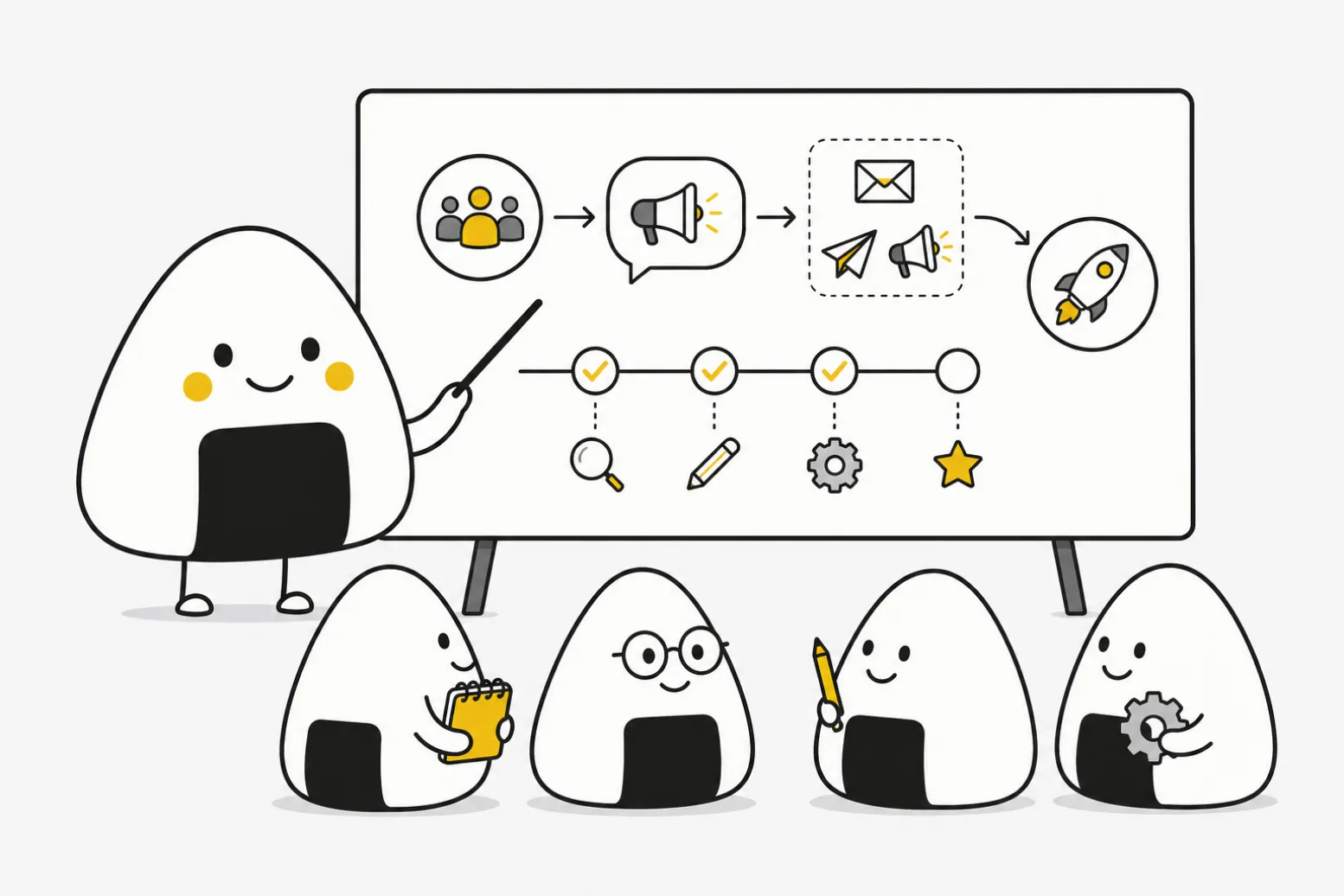
Table of Contents
A product marketing manager is the person responsible for turning a product's value into a story the market actually buys, covering positioning, messaging, pricing input, and the launch plan that gets a product in front of the right customers. The role sits between product, sales, and marketing, translating what a product does into why anyone should care.
Companies confuse this role with product management constantly, and the confusion is understandable since both jobs research the same customers and depend on each other to succeed. But product managers build the product. Product marketing managers make sure the market understands it, adopts it, and eventually pays for it.
This article covers what product marketing actually is, how the product marketing manager role differs from product management, what a realistic salary range looks like in 2026, and where to see product marketing done well in practice.
What Is Product Marketing?
Product marketing is the function responsible for positioning a product, pricing it, and getting it in front of the right buyers. It sits at the intersection of product, sales, and demand-generation marketing, translating technical features into messages that convince someone to try or buy.
A product marketing manager, often shortened to PMM, owns four things in most organizations: market and competitive research, positioning and messaging, go-to-market planning for new launches, and sales enablement, meaning the materials and training a sales team needs to sell the product confidently.
According to the Product Marketing Alliance's State of Product Marketing Report, 78.7% of PMMs are now responsible for sales enablement, up from 64.3% the year before, and 88.8% work closely with product management day to day. Both numbers point to the same trend: the role is expanding beyond launch decks into a genuine bridge between what gets built and what gets sold.
Product marketing shows up differently depending on company stage and product type, but a few examples illustrate the range of the work:
- Positioning shifts. Slack rebuilt its messaging around "productivity" once it stopped being just a chat tool, showing how positioning evolves as a product matures.
- Launch campaigns. A new feature announcement, complete with in-app messaging, an email sequence, and a sales deck, is a PMM-owned deliverable in most SaaS companies.
- Customer proof. Case studies and reviews collected and packaged by product marketing give sales teams third-party validation they cannot manufacture themselves.
- Competitive battlecards. One-page comparisons that arm sales reps with a fast, accurate answer when a prospect asks how a product is different from a competitor's.
None of this happens in isolation. A PMM's output is only as strong as the customer and market research behind it, which is why the strongest product marketers spend as much time in user interviews and win-loss calls as they do writing copy. Our breakdown of product marketing management, positioning, and GTM launches goes deeper into how this plays out inside a real launch cycle.
Product Marketing vs. Product Management
Product marketing and product management get confused constantly, largely because both roles talk to customers, both roles influence the roadmap, and both roles report success by whether the product actually sells.
The clearest way to separate them is by the question each role owns. A product manager answers "what should we build, and in what order?" A product marketing manager answers "why does this matter, and how do we get it in front of the right people?"
Our guide to product management vs. product marketing breaks this down in more detail, including where the two roles overlap and where handoffs commonly break down.
Where the PMM role sits organizationally varies by company. Some businesses place product marketing inside the marketing department, reporting up through a CMO. Others place it inside the product organization, reporting to a CPO or VP of Product, on the theory that whoever owns positioning should sit closest to the people building the product. Neither structure is universally correct, but the reporting line tends to predict where the function's incentives lean: toward pipeline and campaign performance in a marketing-led structure, or toward product usage and retention in a product-led one.
In practice, the two functions succeed or fail together. McKinsey's research on enterprise tech go-to-market found that for every successful product launch, roughly four fail, a gap that widens whenever product and product marketing hand off a launch without a shared understanding of positioning and readiness. A product manager can ship a genuinely useful feature, but if product marketing never translates it into language a buyer understands, adoption stalls anyway. The reverse is also true: no amount of clever messaging saves a product that does not solve a real problem.
Product Marketing Manager Salary and Career Path
Product marketing manager salary data varies more than most roles because the title covers everything from a junior sales-enablement job to a senior strategic position setting company-wide positioning, and pay differs sharply by region.
In Europe, the Product Marketing Alliance's European salary survey puts the median product marketing manager salary at €64,761, with average total compensation, including bonus and stock, at €75,006. The UK leads the region at a median of €80,274. Germany runs somewhat higher on base pay by other estimates, with entry-level PMMs averaging around €66,000 and senior-level managers with eight or more years of experience averaging roughly €106,000.
For comparison, the U.S. Bureau of Labor Statistics puts the median for marketing managers broadly, the closest tracked category, at $161,030 (roughly €150,000) as of May 2024. The gap is real, and it reflects a stronger base-salary and equity culture in US tech, so treat US figures as context rather than a benchmark for a European hire.
A few factors reliably move the number:
- Company stage. Enterprise software and late-stage tech companies typically pay more than early-stage startups, though startups sometimes offer meaningful equity to compensate.
- Scope. A PMM who owns pricing strategy and executive-level positioning commands more than one focused purely on sales-enablement collateral.
- Industry. B2B SaaS and fintech product marketing roles tend to pay above the market average, while consumer and nonprofit roles tend to pay below it.
- Location. Hubs like London, Berlin, and Amsterdam carry a premium over national medians, even for remote roles at companies that adjust pay by location.
Career progression typically runs from associate or senior PMM, to lead or principal PMM, to head of product marketing, and eventually to VP of Marketing or CMO for those who move toward general marketing leadership. Others move laterally into product management or GTM strategy roles, since the two disciplines share enough overlap that the transition is common in both directions.
FAQ
Make the Story Match the Product
A product marketing manager's job is simple to state and hard to do well: make sure the market understands, wants, and can buy what the product team built. Get the positioning right, and every other GTM motion, sales, demand gen, and customer success, moves faster.
If your team is launching without a clear owner for positioning, messaging, or sales enablement, that gap is worth closing before the next release, not after it stalls in the market.

Interested in working with us?
Our Interim/Fractional Product Managers, Owners, and Leaders quickly fill gaps, scale your team, or lead key initiatives during transitions. We onboard swiftly, align teams, and deliver results.
Read More Posts
September 28, 2026
PRD Meaning: What a Product Requirements Document Really Is
PRD meaning explained: what a product requirements document covers, who writes it, and how to build a PRD template your team will actually use.

September 25, 2026
What Are Roadmaps? A Practical Guide for Product Teams
Roadmaps align teams around what matters most. Learn what a product roadmap is, what belongs on it, and where Jira Advanced Roadmaps fits in.
September 23, 2026
OKR vs KPI: The Real Difference (and How They Work Together)
OKR vs KPI, explained with real examples: what each term means, how they work together, and where KRA fits into the mix.