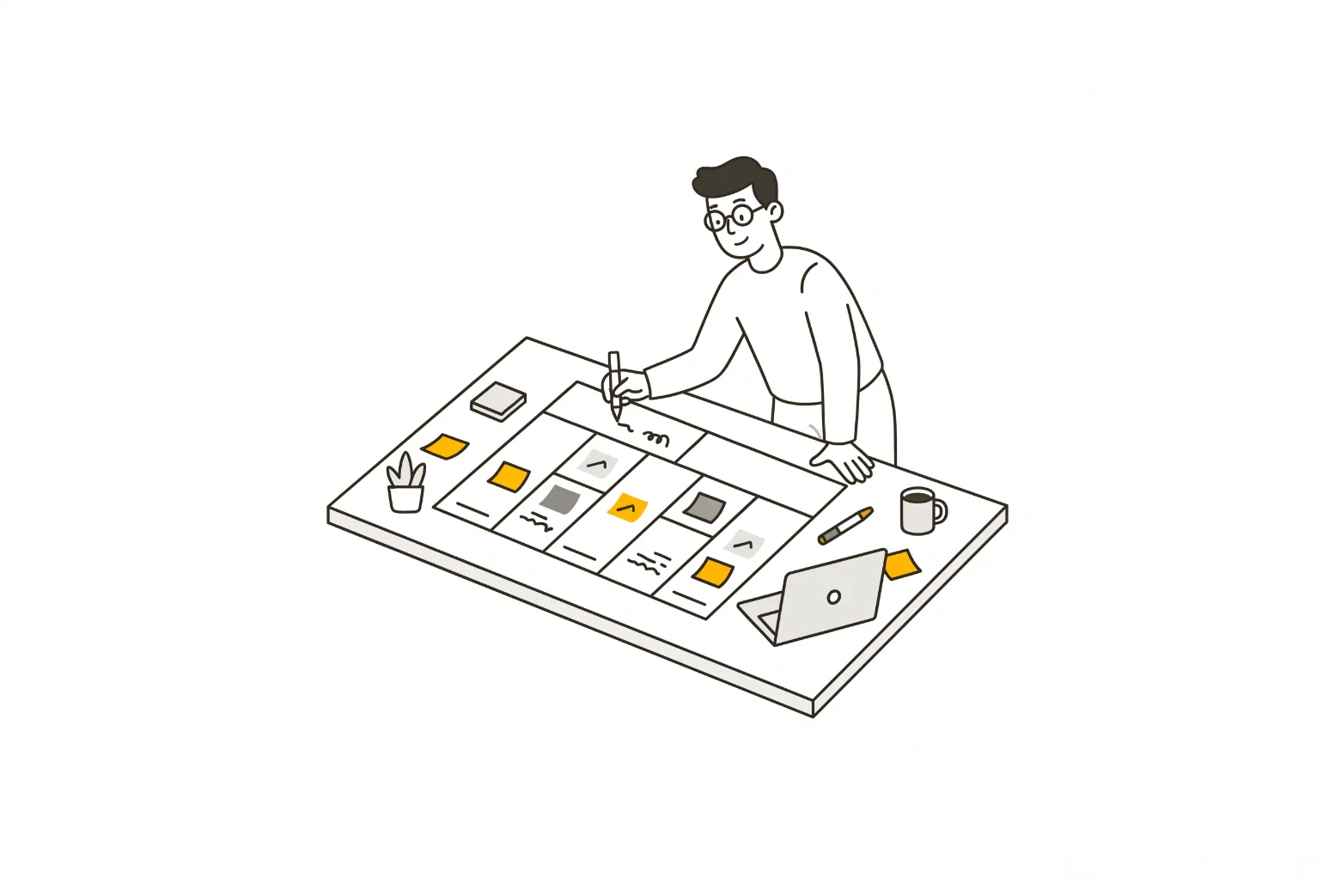

Product Owner Explained: Role, Duties, and Key Differences
A product owner owns the backlog and decides what a Scrum team builds next. See how the role differs from a product manager and project manager.


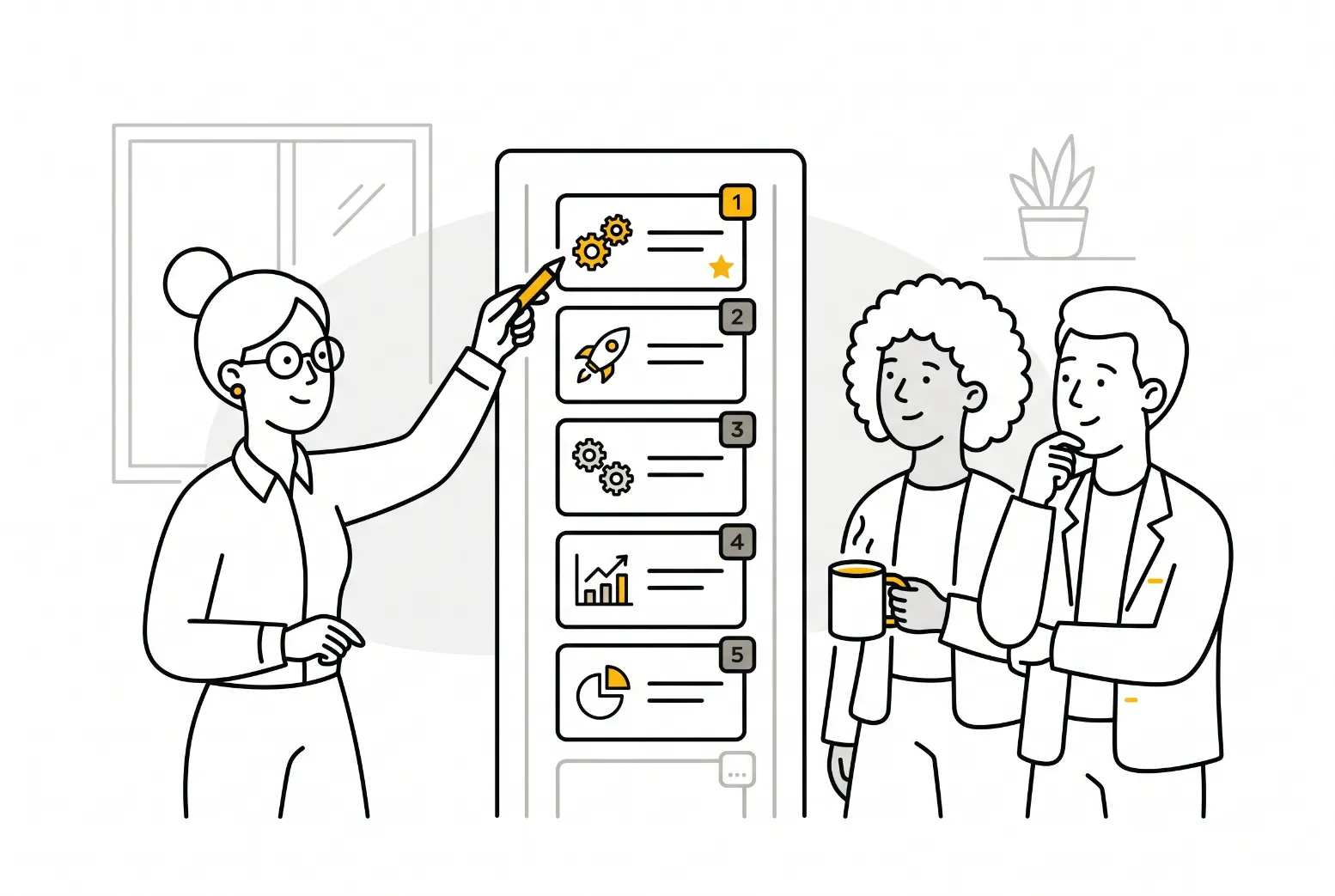
Table of Contents
Audio
A product owner is the person on a Scrum team who owns the backlog and decides, item by item, what the team builds next. That decision-making authority is the whole job in a sentence, though in practice it stretches into stakeholder meetings, sprint reviews, and more disagreements about priority than most job descriptions admit.
Companies bring in interim product owners for a reason: the role is deceptively easy to describe and genuinely hard to do well. Get the accountability wrong and you end up with a title that exists on an org chart but does nothing in a sprint planning meeting, while engineers keep pinging three different people to find out what to build next.
Answering what is a product owner in one sentence is the easy part. The harder part is that "product owner" sits close enough to "product manager" and "project manager" that teams use the three interchangeably, then wonder why decisions stall. The rest of this piece pulls those roles apart and looks at what a product owner actually does, day to day.
Product Manager vs Product Owner: Two Different Jobs
The fastest way to tell a product manager and a product owner apart is to ask who answers to the market and who answers to the sprint. A product manager is thinking about pricing, competitors, and whether the roadmap still matches where the business is headed six months out. A product owner is thinking about whether the three stories sitting at the top of the backlog are ready enough for Thursday's planning session.
That split gets blurry at smaller companies, where one person often does both jobs under a single title, and it turns into a mess almost every time the team scales past a handful of engineers. We've written a full breakdown of how product managers, product owners, and project managers split apart, because most teams eventually need all three functions covered, whether or not they use all three titles.
According to the Scrum Guide, the product owner "is accountable for maximizing the value of the product resulting from the work of the Scrum Team," full stop, with no mention of market strategy or competitive positioning. That's the tell. A product owner's accountability is bounded by what the team is building right now, not by where the product sits in the wider market.
The friction shows up in a familiar meeting: a stakeholder asks the product owner why a feature isn't on the roadmap, and the honest answer is that roadmap decisions were never theirs to make. Teams that name this split early fix it with a five-minute conversation. Teams that don't spend two quarters arguing about it instead, usually in a recurring meeting nobody enjoys, with the same slide re-presented each time under a slightly different title.
What Does a Product Owner Do Each Sprint?
On any given day, a product owner is doing some mix of three things: refining backlog items so engineers aren't guessing at requirements, protecting the sprint from a last-minute pile of new requests, and translating between what a customer actually said and what a developer needs to hear.
The unglamorous truth is that most of the job is writing. Acceptance criteria that hold up under a tired engineer's questions at 4pm on a Friday, backlog descriptions that don't require a Slack thread to interpret, release notes nobody reads until they're missing and everybody complains. Scrum.org points to communication skills and empathy, not technical authority, as what separates a good product owner from a title-only one, which tracks with how the job plays out in practice. Nobody follows a product owner because of a job title; they follow because the backlog makes sense and the priorities hold up under pressure.
There's a specific kind of failure worth naming here: the product owner who treats the backlog like a wishlist instead of a decision. Every item stays "high priority" because saying no to a stakeholder feels uncomfortable, and six months later the team is staring at forty open tickets with no real order to them. A product owner who can't make a call and defend it isn't doing the job, whatever the Jira board says.
Good product owners also sit in on customer calls, not because they need another meeting on the calendar but because one confused sentence from a real user is worth more than three internal debates about what that user probably meant. It's a small habit that separates a product owner who's guessing from one who actually knows.
Product Owner vs Project Manager: Not the Same Role
Mixing up a product owner and a project manager is an easy mistake, and it usually comes from the fact that both roles sit in planning meetings and both get asked "when will this ship." The difference is what each one is accountable for once that question lands.
A project manager owns the plan: timeline, budget, resourcing, and whether the team is tracking against dates that were already promised to someone upstairs. A product owner owns the backlog: what's being built, in what order, and why. Atlassian's agile guide draws the same distinction, noting that a product owner's authority over the backlog doesn't extend to the schedule or the budget funding the work.
Put both roles in the same room on a delayed project and the split becomes obvious. The project manager is recalculating the timeline and flagging risk to leadership. The product owner is deciding which remaining backlog items still deliver enough value to justify keeping in scope, and which get cut so the deadline holds. Neither call outranks the other; they're just different calls, made against different constraints, and a good working relationship between the two roles usually shows up as fewer surprises in that same meeting.
Teams that skip a dedicated product owner often hand backlog decisions to whoever is already in the room, frequently the project manager, and the backlog quietly drifts toward whatever ships fastest rather than what matters most. That's usually the moment a company starts looking at bringing in an interim product owner rather than continuing to split an accountability across a role that was never built to hold it.
FAQs
Conclusion
A product owner's job comes down to one uncomfortable skill: making backlog calls that someone will disagree with, then explaining why the call was right anyway. Everything else, the ceremonies, the writing, the stakeholder meetings, exists to support that one decision.
If your team is arguing about who owns the backlog, that's usually a sign the role hasn't been assigned clearly, not that the role doesn't matter. Name who's accountable first, then build the rest of the process around them.

Interested in working with us?
Our Interim/Fractional Product Managers, Owners, and Leaders quickly fill gaps, scale your team, or lead key initiatives during transitions. We onboard swiftly, align teams, and deliver results.
Read More Posts
October 15, 2026
Lean Canvas: What It Is and How to Fill It Out Step by Step
A lean canvas is a one-page plan that turns your startup idea into testable assumptions. See the template, the nine boxes, and how to fill it out.

October 12, 2026
Semantic Differential Scale: How to Measure Perceptions Right
Learn how a semantic differential scale works, when to pick it over a Likert scale, and how to build one that shows how users really perceive your product.
October 9, 2026
Let the numbers do the talking
Senior leaders talk numbers. How to justify roadmap decisions with business impact, and which guardrails tell you when to skip the analysis.