

User Personas: Meaning, Examples, and UX Best Practices
Learn what user personas mean, see sample user persona examples, and discover how to apply them in UX and product management.


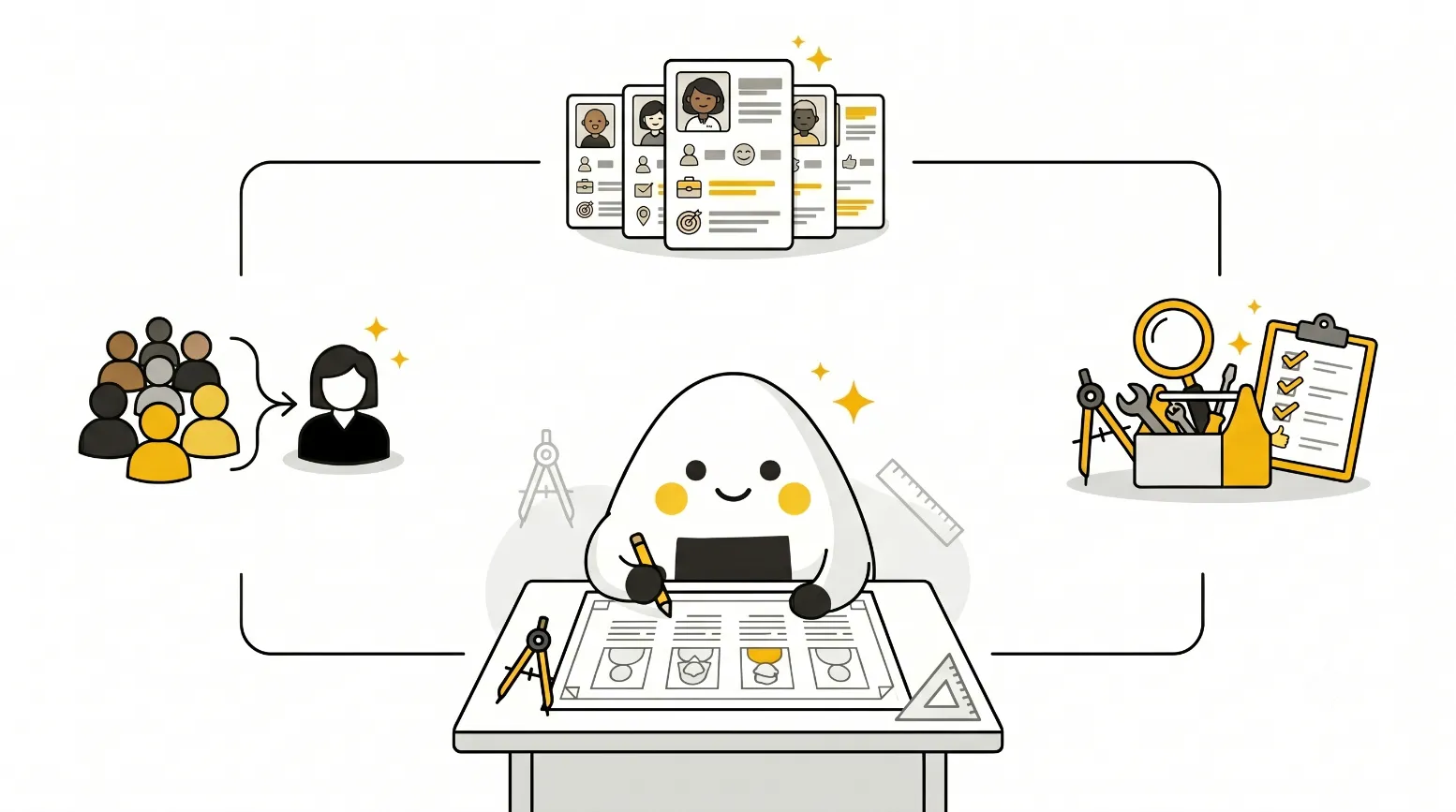
Table of Contents
The meaning of a user persona is a fictional but research-grounded representation of the real people your product serves. Personas give product and design teams a shared, concrete picture of who their users are, what they want to achieve, and what gets in their way.
Most products fail not because of poor technology, but because teams build for users they never properly defined. Personas solve that by grounding every product decision in validated data gathered from interviews, surveys, and behavioral observation. When a product manager, designer, and engineer all refer to the same persona during planning, alignment comes faster, and feature debates are easier to resolve.
This article covers the full meaning of user personas, what a strong sample user persona looks like, and how to put them to practical use in UX and product work.
Why User Personas Are Essential in Product Teams
User personas are one of the most widely used tools in product development because they translate abstract user data into a human story that teams can remember and act on. Nielsen Norman Group describes personas as powerful UX deliverables that take advantage of the human tendency to be more captivated by concrete instances than generalizations. That is exactly why a named, detailed persona lands differently with a team than a slide full of user statistics.
Without personas, product teams default to building for themselves or for a vague, shapeless "average user." This leads to features that miss real needs and roadmaps driven by internal assumptions rather than user evidence. A well-defined set of user personas prevents that drift by making the end user an ever-present reference point in every decision.
Effective user personas typically include:
- Name and photo: A realistic identity that makes the persona feel human and memorable
- Demographics: Age, job title, industry, and technical fluency
- Goals: What the user is trying to accomplish with the product or workflow
- Pain points: The specific friction and frustrations they face today
- Behaviors: How they work, what tools they use, where they go for information
- A defining quote: A first-person statement that captures their mindset
A good set of user personas is not a one-time deliverable. Teams that practice rigorous product discovery revisit their personas whenever new research surfaces patterns that challenge earlier assumptions. Personas should evolve as the product and its users evolve.
It is also worth distinguishing personas from user segments. A segment is a real, measurable group of users sharing characteristics such as company size or pricing tier. A persona is a fictional character built from that segment's data, designed to make the abstract emotionally tangible for the team.
What a Sample User Persona Looks Like
A sample user persona is only valuable if it is built on real research. The most common mistake teams make is constructing personas from guesswork rather than from interviews, usability tests, or behavioral analytics data. The Interaction Design Foundation recommends starting from observed patterns in your research rather than from a demographic template.
Here is a concrete user persona example for a B2B SaaS product aimed at product managers:
Name: Sara, 33, Senior Product Manager at a 250-person SaaS startup
Goals: Ship features faster without sacrificing quality, reduce the number of status meetings in her week, and build a roadmap that engineering and leadership both believe in.
Pain points: Spends most of her time managing stakeholder expectations rather than doing discovery. Cannot get dedicated engineering time for user research. Has her roadmap frequently derailed by last-minute requests from Sales.
Behaviors: Uses Notion for documentation, Linear for issue tracking, and Slack for communication. Reads product newsletters on her commute. Prefers short, data-backed arguments over long Word documents.
Defining quote: "I know what our users need. Getting everyone else on the same page is the hard part."
This persona is actionable because it tells the team who Sara is, what she is trying to achieve, and the specific professional context shaping her decisions. A team building a roadmap tool for Sara would make different product choices than one designing for a completely different user type.
For teams with multiple user types, two to three distinct sample user personas are usually sufficient. More than that dilutes focus rather than improving it. Roman Pichler's persona template for agile teams is a practical one-page format that forces the prioritization that makes personas genuinely useful.
User Persona UX: How Personas Shape Product Design
In UX practice, a user persona is not just a research artifact. It is an active decision-making tool that should be referenced at every stage of the design process, from early discovery through to usability testing.
Here is how user persona UX application works across the product cycle:
Discovery and ideation. When generating feature ideas, teams use the persona as a filter: "Would Sara actually care about this?" Features that do not connect to a defined persona's goals or pain points become easier to deprioritize before they consume engineering time.
Writing user stories. Personas anchor user stories with specificity: "As Sara, I want a live roadmap view so I can share progress without building a separate presentation." This is more useful in sprint planning than the generic "As a user, I want to see my roadmap."
Prioritization. Competing features become easier to rank when tied back to a persona's documented goals and frustrations. If a feature does not help Sara achieve something she explicitly cares about, it has a weaker claim on the backlog.
Usability testing. Recruiting participants who match the persona profile ensures test feedback comes from the right users. It also helps teams weight qualitative findings accurately: friction that would stop Sara deserves more attention than friction affecting a peripheral user type.
Stakeholder communication. Personas make user needs concrete for non-technical stakeholders. A story about Sara struggling to align her team lands in a leadership review in a way that aggregate user data does not.
For teams earlier in the product lifecycle, pairing personas with structured customer discovery interviews ensures those personas are built on direct evidence rather than assumptions drawn from secondary research.
FAQ
Know Your User Before You Build
User personas turn user research into something a whole team can build around. When they are rooted in real data and referenced consistently through discovery, design, and delivery, they improve decision quality and reduce the time spent debating features that should never have been considered.
If you are not yet using personas, three to five user interviews are enough to build a first draft based on real evidence. From there, test its accuracy as you learn more and update it when your research challenges what you thought you knew.
Interested in working with us?
Our Interim/Fractional Product Managers, Owners, and Leaders quickly fill gaps, scale your team, or lead key initiatives during transitions. We onboard swiftly, align teams, and deliver results.
Read More Posts
September 11, 2026
Quantitative Investigation: How to Measure Digital CX
Learn how quantitative investigation turns website and app data into a real digital customer experience strategy, with metrics that matter.

September 10, 2026
Power is Not Always Formal
Product People founder Mirela Mus on getting things done without formal authority, and what she looks for in a leader who can do the same.
September 9, 2026
How to Collect and Actually Use Customer Feedback
Customer feedback only helps if you collect it well and act on it. Real examples, collection methods, and how to close the loop.