
Product Validation Defined: What Validating Means for PMs
Learn what product validation means, how the process works, and how to use MVP validation to test ideas before you build. A practical guide for product managers.


Table of Contents
Validating a product idea before you build it is one of the most important disciplines in product management — and one of the most frequently skipped. Product validation is the process of confirming that a product or feature addresses a genuine user need before you invest significant time and money building it. Done well, it turns assumption-driven guesswork into evidence-based decisions.
The stakes are high. According to CB Insights' analysis of 431 VC-backed startups that shut down since 2023, poor product-market fit accounts for 43% of failures. Many of those failures were avoidable with structured validation earlier in the process.
This article explains what validating means in a product context, how the product validation process works in practice, and how to use MVP validation to test your riskiest assumptions quickly.
What Is Product Validation?
Product validation is the act of confirming that a proposed product, feature, or idea is worth building, before you build it. It answers the core question: are we solving the right problem for the right people? That is distinct from product verification, which asks whether you built the product correctly. Both matter, but validation must come first.
In practice, validating means gathering evidence from potential users and the market to test whether your assumptions hold. It is not a one-time event. It is an ongoing discipline that runs from early discovery through to post-launch iteration.
Teams that skip validation often fail in ways that are hard to predict. They ship features nobody uses, build tools that address symptoms rather than root causes, or target user personas that do not exist in meaningful numbers. The problem rarely becomes visible until significant development resources have already been spent.
What separates product validation from general research is its hypothesis-driven structure. You start with a specific belief, for example, "users lose time reconciling invoices manually because finance teams lack real-time spend data", and then design activities to prove or disprove it. That precision is what separates useful validation from confirmation bias dressed up as research.
Strong validation typically covers four dimensions:
- Desirability: Do people actually want this solution?
- Feasibility: Can your team build it with available resources?
- Viability: Does it generate sustainable value for the business?
- Usability: Can users interact with the product effectively?
Each dimension calls for different methods, and high-performing product teams check all four before committing to a full build. Skipping any one dimension creates a different category of risk, you can build something technically impressive that nobody wants, or something genuinely desired that your team cannot sustain.
The Product Validation Process Step by Step
The product validation process is not a rigid checklist, but it follows a logical sequence. Here is how effective product teams approach it.
Define your riskiest assumptions first. List everything you believe to be true about the problem, the user, and the proposed solution. Then rank these by risk and which assumptions, if wrong, would kill the product concept entirely? Start validating those.
Design targeted experiments. For each high-risk assumption, choose a research method that will generate clear signal quickly. Common options include:
- User interviews, for understanding the depth and context of the problem
- Surveys, for quantifying how widespread a pain point actually is
- Concept testing, for gauging early reaction to a proposed solution
- Landing page tests, for measuring real-world demand before building
- A/B tests, for comparing solution variants with live users
Set success criteria before you start. This is the discipline most teams skip. "At least 60% of respondents cite this as a top-three pain point" is a useful threshold. "People seemed interested" is not. Defining thresholds in advance removes the temptation to interpret weak results as promising because you want the idea to work.
Synthesise and decide. Review results honestly. Did the evidence support your assumption, contradict it, or remain inconclusive? Use this to make a go/no-go call: build it, pivot the approach, or run another experiment with a refined hypothesis.
Repeat as you build. Validation does not end at discovery. As development progresses, validate usability through prototype testing, validate messaging through positioning experiments, and validate retention through early cohort data. Each stage reduces a different category of risk.
For teams embedding this practice into their regular rhythm, continuous product discovery provides a structured approach for making validation a weekly habit rather than a one-off exercise before major bets.
MVP Validation: Test Your Idea Before You Build
MVP validation is the most widely used form of product validation at the idea stage. A minimum viable product is the smallest version of a product that allows you to test a specific hypothesis with real users. The goal is not to launch a complete product, it is to learn as fast as possible with as little investment as possible.
MVP validation works best when teams are precise about what they are testing. "Does this problem exist?" is a different question from "Will people pay for our solution?" Each requires a different kind of MVP and different success criteria.
Common MVP approaches include:
- Concierge MVP: You manually deliver the service while users interact with the output. No technology required. Useful for testing whether the outcome creates value before automating the delivery.
- Wizard of Oz MVP: Users believe they are interacting with an automated product, but a human is doing the work behind the scenes. Effective for validating AI or complex automation features before building the infrastructure.
- Landing page MVP: A simple page describing the proposed product with a waitlist or sign-up CTA, used to measure genuine demand before development begins.
- Prototype MVP: A clickable visual simulation of the product experience, built without functional code, used to test usability and desirability early.
Eric Ries formalised the build-measure-learn cycle that underpins MVP validation, subsequently explored in HBR as a fundamental shift in how product teams approach risk. The insight was direct: small experiments waste far less time and money than building full products on unvalidated assumptions.
Understanding what an MVP actually is and how it differs from a beta or a full launch is foundational for any PM applying this framework. If you are newer to the concept, Product People's guide to MVP meaning sets out the key distinctions clearly.
The critical discipline with MVP validation is defining what success looks like before you start. Sign-up rates on a landing page, engagement levels in user interviews, or conversion data on a prototype, all of these need specific thresholds set in advance. Without them, motivated reasoning takes over and teams find ways to read weak signals as encouraging.
Frequently Asked Questions
Conclusion
Product validation is not a luxury for teams with extra time. It is the process that keeps you from building the wrong thing at scale. Whether you are assessing a new product concept or testing a single feature addition, the principle is the same: test your riskiest assumptions first, with real users, before committing to a full build.
Start small. Pick one assumption from your next project and design one experiment to test it before writing a single line of code. That is how the habit begins, and how product teams consistently ship things people actually want.

Interested in working with us?
Our Interim/Fractional Product Managers, Owners, and Leaders quickly fill gaps, scale your team, or lead key initiatives during transitions. We onboard swiftly, align teams, and deliver results.
Read More Posts
October 7, 2026
Monetized Products: What It Means and How to Plan Yours
A monetized product earns revenue from the value it delivers. Learn how to build a monetization strategy for software and apps, and which model fits.
October 5, 2026
Value Proposition: What It Is and How to Write One That Sells
A value proposition tells a specific customer why your product beats their current option. Learn the meaning, canvas examples, and how to test yours.
October 1, 2026
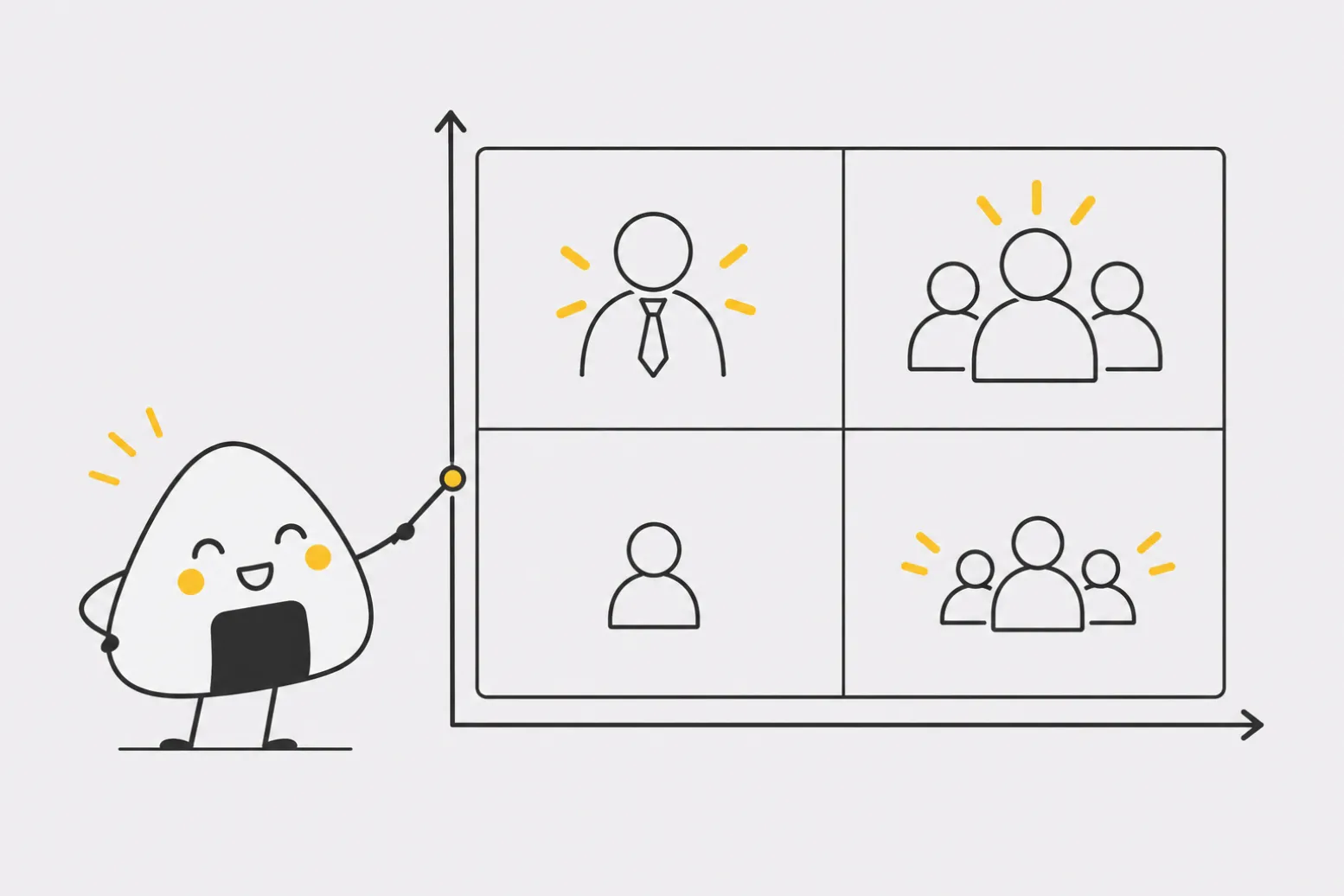
How to Map and Manage Stakeholders with Mendelow's Matrix
Mendelow's matrix sorts stakeholders by power and interest. Learn the four quadrants, see a worked product example, and avoid the common mapping mistakes.